
Why Is Granular Bentonite for Pond Sealing the Preferred Choice for Agricultural Reservoirs?
2026-06-27
Managing water resources in agricultural, municipal, and industrial sectors demands dependable containment infrastructure. Seepage represents one of the most persistent challenges in pond management, leading to water loss, soil instability, and potential environmental liabilities. To address these vulnerabilities, engineers and project managers frequently turn to natural clay solutions. Implementing granular bentonite for pond sealing has proven to be a highly dependable, cost-effective, and ecologically sound method for establishing impermeable barriers in various soil environments. Manufactured with high-grade sodium bentonite, Jinshi provides the industry with reliable materials designed to withstand hydrostatic pressure and preserve water assets indefinitely.
The Mineralogical Science Behind Bentonite Swelling
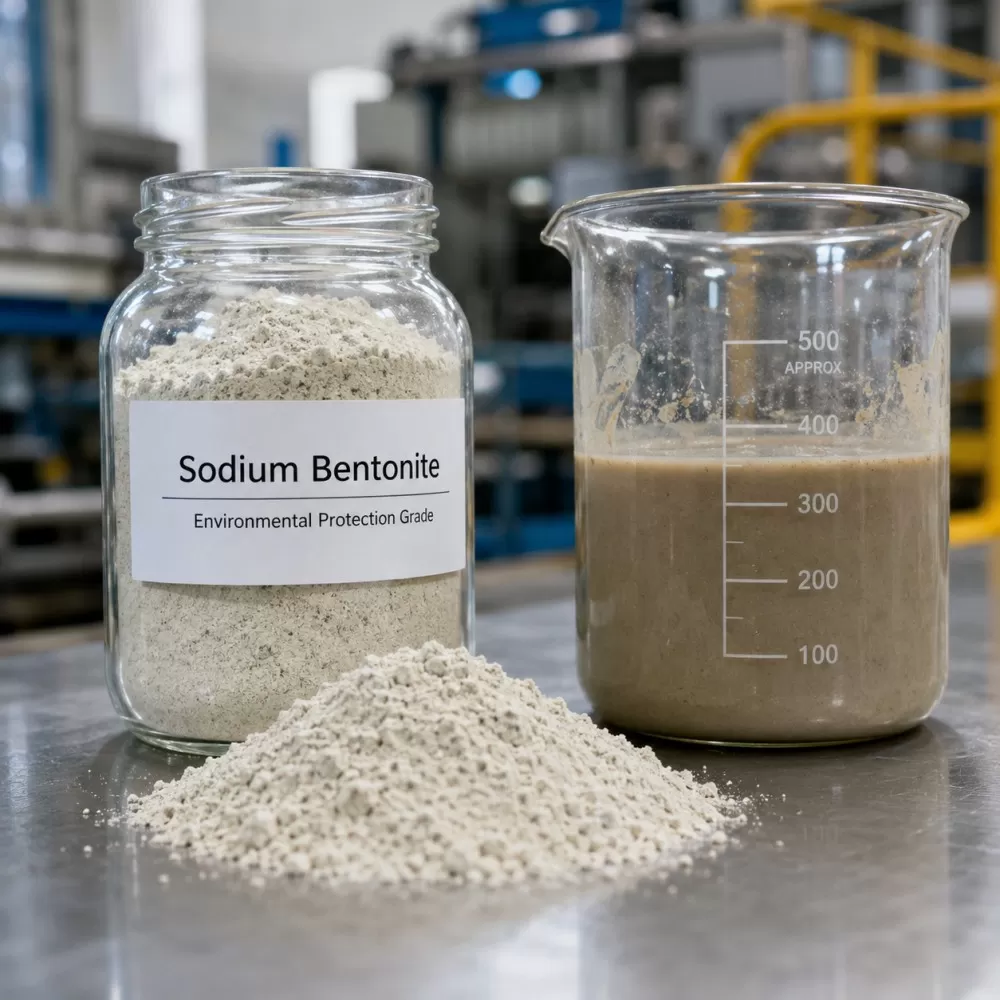
Understanding the effectiveness of sodium bentonite requires looking closely at its mineralogical composition. This clay consists primarily of montmorillonite, a three-layer clay mineral structured with an octahedral alumina sheet sandwiched between two tetrahedral silica sheets. This specific atomic arrangement creates a high negative surface charge that attracts water molecules and exchangeable cations, primarily sodium (Na+), into the interlayer spaces.
When exposed to moisture, the sodium ions hydrate, causing the interlayer spacing to expand dramatically. This swelling action allows high-quality sodium bentonite to expand up to 15 to 18 times its dry volume. As the clay particles swell within the void spaces of surrounding soil, they form a dense, cohesive, and highly plastic gel. This gel fills the interstitial spaces between sand and gravel particles, reducing the hydraulic conductivity of the soil matrix to values as low as 1 x 10⁻⁷ to 1 x 10⁻⁹ centimeters per second. This extremely low permeability effectively halts the downward and lateral movement of water, creating a durable hydraulic seal.
Primary Challenges in Pond Sealing and Soil Permeability
Successful water containment is frequently impeded by the inherent physical properties of the local soil. Coarse-grained soils, such as sands and gravels, possess high macroporosity, allowing water to drain rapidly under the influence of gravity and hydrostatic pressure. Even cohesive soils with higher clay content can suffer from structural defects, such as macro-pores, root channels, or structural fractures, which facilitate preferential flow paths for water leakage.
Alternative containment systems, such as synthetic geomembranes, present their own set of difficulties. These liners are vulnerable to mechanical punctures during installation, ultraviolet degradation over time, and damage from burrowing animals or root intrusion. Repairing a punctured synthetic liner often requires complete draining of the pond and specialized welding equipment. In contrast, a natural clay barrier using granular bentonite for pond sealing offers self-healing properties. If the seal is punctured or disturbed, the surrounding unhydrated or partially hydrated clay swells to fill the void, restoring the integrity of the barrier without human intervention.
Operational Methodologies for Using Granular Bentonite for Pond Sealing
Selecting the appropriate installation method depends on the pond's construction status, the nature of the existing soil, and the availability of earthmoving equipment. The three primary field-proven methodologies include the blanket method, the mixed-in method, and the direct pour method.
The Blanket Method (Pure Clay Barrier)
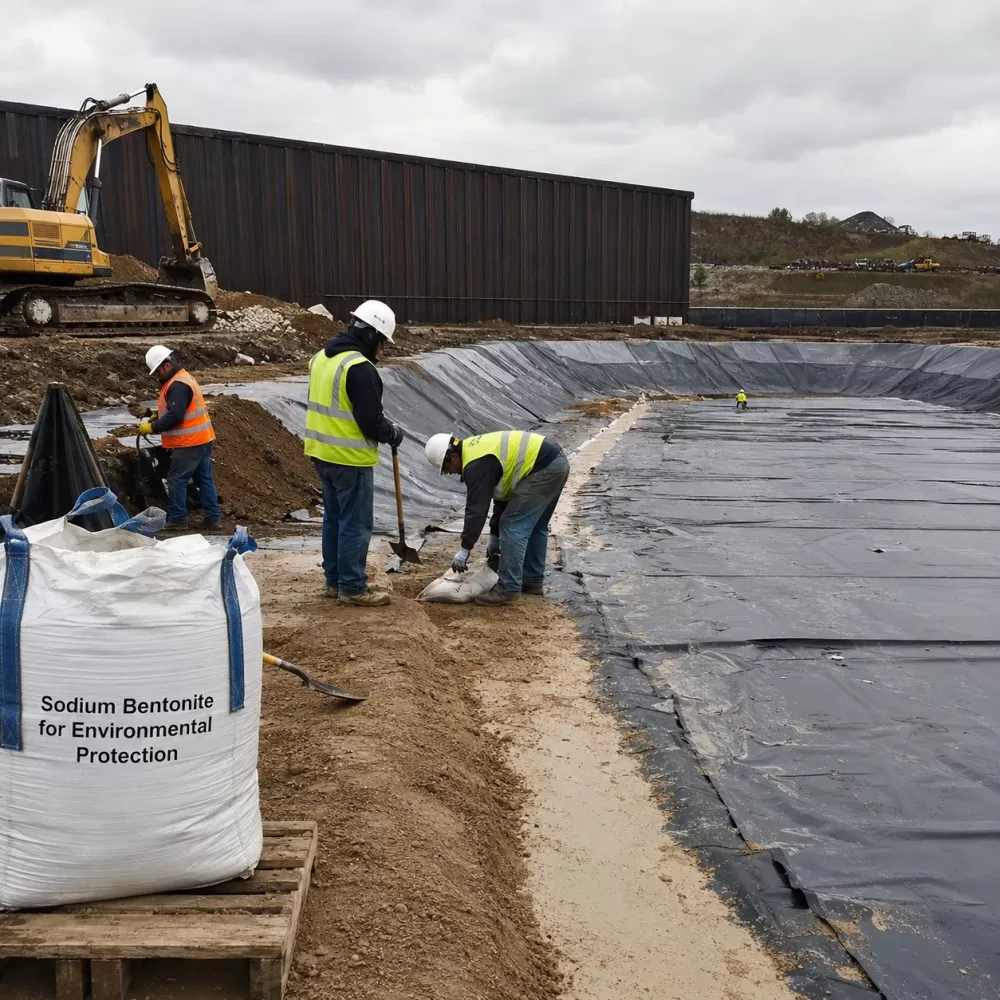
This method is highly recommended for soils with high porosity, such as coarse sand or fractured rock, where mixing bentonite into the existing soil is insufficient to block the large void spaces. The process involves the following operational steps:
Subgrade Preparation: Clear the entire pond basin of vegetation, tree roots, rocks, and debris. Grade the slopes to a maximum steepness of 3:1 to prevent the sliding of the clay layer.
Application: Uniformly distribute granular bentonite across the prepared subgrade. The application rate typically ranges from 3 to 5 pounds per square foot, depending on the anticipated water depth and soil structure.
Protection Layer: To prevent the bentonite from washing away or drying out, immediately cover the dry clay layer with a 6-to-12-inch layer of fine-grained native soil, free of sharp stones.
Compaction: Compact the soil cover using a smooth-drum roller or sheepsfoot compactor to secure the layers in place before hydration.
The Mixed-In Method (Soil-Clay Matrix)
When the native soil contains a balanced mixture of sand, silt, and clay, blending the bentonite directly into the soil is often the most economical approach. This creates a stabilized, low-permeability composite liner:
Soil Pulverization: Disk or rototill the dry pond bed to a depth of 4 to 6 inches, breaking up clods to achieve a uniform soil texture.
Bentonite Spreading: Distribute the granular clay evenly over the pulverized soil surface using a agricultural spreader or manual methods.
Blending: Rototill the area again, thoroughly blending the bentonite with the top 4 to 6 inches of native soil to ensure uniform distribution without leaving localized pockets of pure clay or pure sand.
Moisture Adjustment and Compaction: Adjust the moisture content of the mixture to its optimum level (typically 12% to 18% moisture) and compact the matrix to a minimum of 90% Standard Proctor Density.
The Direct Pour (Sprinkling) Method
For existing ponds that cannot be drained, granular bentonite can be applied directly through the water column. This approach relies on gravity and the high density of the granules to target active leaks:
Leak Identification: Locate areas of localized water loss, often signaled by whirlpools, rapid bank drop-offs, or soft, saturated soils on the downstream side of a pond dam.
Targeted Application: Cast the granular bentonite directly onto the water surface over the identified leak zone. The dense granules sink directly to the pond bottom without dispersing prematurely into a fine suspension, which would occur with powdered bentonite.
Hydration and Sealing: Upon reaching the pond floor, the granules absorb water, swell within the cracks and crevices of the leaking zone, and form an impermeable gel block.
Selecting Particle Size: Why Granular Outperforms Powdered Clay
The physical structure of the clay material plays a decisive role in both installation efficiency and the long-term durability of the seal. Bentonite is commercially available in various forms, including fine powders, granular particles, and large chips. For most pond sealing projects, the granular form is preferred due to several physical advantages:
| Physical Property | Powdered Bentonite (200 Mesh) | Granular Bentonite (8-30 Mesh) | Bentonite Chips (1/4" - 3/8") |
|---|---|---|---|
| Wind Resistance | Poor (High drift during dry application) | Excellent (Minimal dust and drift) | Excellent (Zero drift) |
| Hydration Rate | Rapid (Prone to premature clumping) | Controlled (Allows time for compaction) | Slow (Requires prolonged hydration) |
| Water Column Settling | Suspends in water (Ineffective for deep pours) | Sinks rapidly (Ideal for wet application) | Sinks rapidly (Best for deep point leaks) |
| Soil Interstitial Fit | Sits on surface of soil pores | Fills medium-to-large void matrices | Fills large fractures and rock voids |
Granular bentonite, processed to sizes comparable to coarse sand or small seeds, strikes a balance between ease of handling and high sealing performance. Its weight ensures it remains in place during dry spreading, even under moderate wind conditions, protecting workers from inhaling fine dust. Furthermore, the controlled hydration rate of granules ensures that the clay does not swell instantly upon contact with soil moisture, allowing operators adequate time to complete grading and compaction processes.
Evaluating Soil Types and Calculating Application Rates
To ensure a successful seal, the dosage of granular bentonite must be calibrated against the soil classification of the pond bed. Sandy and gravelly soils require significantly more clay to plug their larger pores compared to silty or clay-heavy soils. The following table provides standard engineering estimates for dry application rates:
| USCS Soil Classification | Soil Description | Bentonite Application Rate (lbs/sq. ft) |
|---|---|---|
| GW / GP | Well-graded to poorly-graded gravels | 5.0 – 6.0+ (May require a clay blanket layer) |
| SW / SP | Well-graded to poorly-graded sands | 4.0 – 5.0 |
| SM / SC | Silty sands to clayey sands | 3.0 – 4.0 |
| ML / CL | Inorganic silts to low-plasticity clays | 2.0 – 3.0 |
Prior to executing large-scale installations, it is prudent to conduct a physical soil analysis. Simple field tests, such as the "mason jar test," can provide a rough estimation of sand, silt, and clay percentages. For larger industrial or municipal impoundments, submitting soil samples to a geotechnical laboratory for hydraulic conductivity testing with varying bentonite amendment ratios is highly recommended to determine the most cost-efficient and structurally sound dosing strategy.
Water Chemistry and Its Impact on Sodium Bentonite Swelling
The chemical composition of the water used to fill the pond plays an important role in the expansion performance of sodium bentonite. Sodium bentonite achieves its maximum swelling volume when hydrated with clean, fresh water. The presence of dissolved minerals, salts, and divalent cations—such as calcium (Ca2+) and magnesium (Mg2+)—can interfere with the clay's hydration process.
In environments with highly saline water or high hard-water mineral concentrations, a process called cation exchange can occur. The divalent calcium or magnesium ions displace the single-charged sodium ions within the clay's crystal lattice. This reduces the thickness of the diffuse double layer surrounding the clay particles, leading to significantly lower swelling capacity and higher permeability. When sealing brackish ponds, industrial runoff basins, or waste containment facilities, it is vital to source high-purity sodium bentonite, such as that produced by Jinshi, which is specifically selected for its robust mineralogical stability, or to consider polymer-treated bentonite variants designed to resist ionic interference.
Quality Control and Site Maintenance
The longevity of a bentonite seal depends on maintaining stable moisture conditions and protecting the clay layer from mechanical damage. Once the pond is sealed, compacted, and filled, the water pressure helps keep the clay hydrated and compacted. However, if the pond water level fluctuates significantly, exposed bentonite along the shoreline can dry out, crack, and lose its sealing capacity. This is known as desiccation cracking.
To protect the seal along fluctuating shorelines, apply a thicker protective soil cover—often 12 to 18 inches of well-compacted silty sand or fine gravel—to insulate the bentonite from air exposure and wind erosion. Wave action can also erode the protective soil cover. Installing riprap or stone armoring along the high-water line prevents wave erosion from exposing and washing away the underlying granular bentonite. Regular inspections of the pond banks for animal activity, tree growth, and erosion channels will help maintain the system for decades.
Frequently Asked Questions
Q1: What is the optimal application rate of granular bentonite for pond sealing?
A1: The application rate depends on the existing soil composition and the depth of the water. For silty sand soils, a rate of 3 to 4 pounds per square foot is generally sufficient. For highly porous sandy or gravelly soils, the rate should be increased to 5 to 6 pounds per square foot, or applied as a pure clay blanket layer.
Q2: Can granular bentonite be applied to a pond that is already filled with water?
A2: Yes, the direct pour or sprinkling method allows granular bentonite to be applied to active ponds. Because the granules are dense, they sink through the water column directly to the bottom where they hydrate and seal localized leaks, whereas powdered clay would float or disperse into suspension.
Q3: How long does a granular bentonite seal last under normal conditions?
A3: Since sodium bentonite is a naturally occurring volcanic clay mineral, it does not decompose, rot, or degrade over time. As long as the clay layer remains hydrated and is protected from physical disturbance, erosion, and tree roots, the seal will remain active indefinitely.
Q4: What soil types require the highest concentration of bentonite?
A4: Coarse-grained, poorly-graded soils such as clean gravels and uniform sands have the largest void spaces and require the highest concentration of bentonite. In contrast, fine-grained soils with some natural clay content require minimal bentonite to achieve low permeability.
Q5: How does water chemistry affect the swelling capacity of sodium bentonite?
A5: Highly saline water or water high in dissolved calcium and magnesium can limit the swelling capacity of sodium bentonite through cation exchange. If you are sealing a pond containing brackish water or industrial runoff, it is advisable to test the water chemistry first to determine if a specialized formulation is required.
Partner with Jinshi for Commercial and Agricultural Sealing Solutions
Sourcing high-quality raw materials is the foundation of any successful civil or agricultural containment project. When sourcing granular bentonite for pond sealing, working with an established producer like Jinshi ensures that your material meets strict mineralogical standards for montmorillonite content, swelling index, and particle size distribution. We work closely with engineers, contractors, and land managers to provide the volume, logistics, and technical guidance necessary for large-scale applications. For volume pricing, product specifications, and logistical coordination for your upcoming project, please contact our technical sales team to submit an inquiry today.