
4 Engineering Methods for Applying Sodium Bentonite Clay for Ponds
2026-06-26
Managing water retention in agricultural reservoirs, industrial containment basins, and municipal water features presents distinct civil engineering challenges. Subsurface soil profiles often exhibit high permeability, leading to steady water loss through gravity-driven infiltration. This seepage compromises the utility of the containment structure and can destabilize surrounding embankments. To mitigate this issue, engineers and project managers rely on low-permeability clay liners. High-swelling sodium bentonite clay for ponds has proven to be a highly reliable and cost-effective natural sealant when properly integrated into the soil matrix.
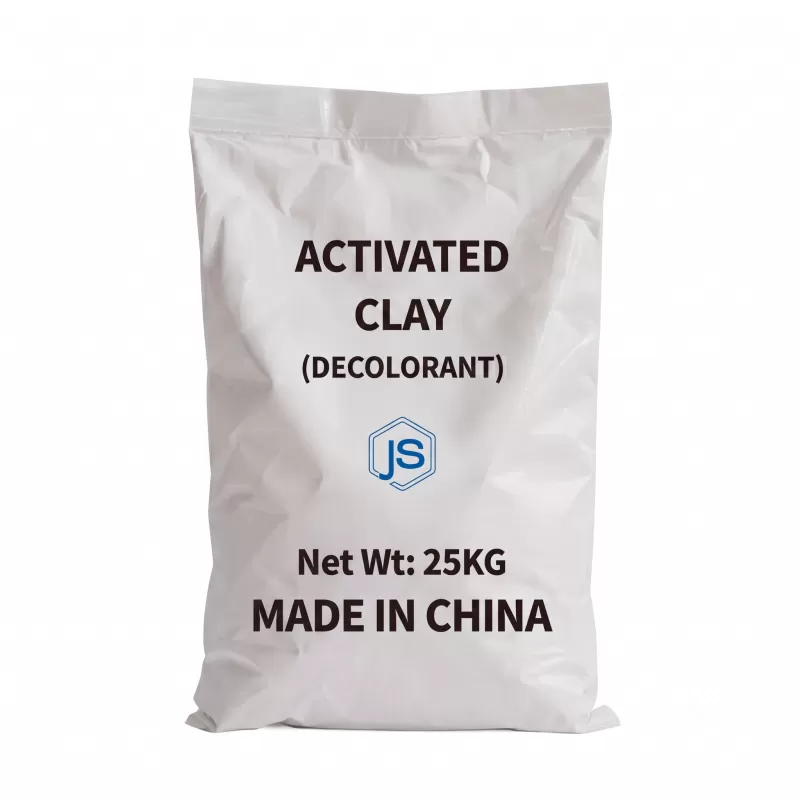
Jinshi provides high-grade sodium bentonite clay for ponds engineered to meet the stringent hydraulic conductivity standards required for municipal, agricultural, and industrial containment projects. Understanding the underlying mineralogical properties, geotechnical testing protocols, and installation techniques is necessary to achieve a durable, low-permeability barrier.
The Mineralogical Mechanics of Seepage Control
Bentonite is a volcanic ash deposit that has weathered over millions of years, transforming primarily into clay minerals of the smectite group. The primary active component in sodium bentonite clay for ponds is sodium montmorillonite. From a chemical perspective, montmorillonite is a three-layer aluminosilicate mineral consisting of an octahedral alumina sheet sandwiched between two tetrahedral silica sheets. This crystalline structure possesses a net negative charge, which is balanced by exchangeable sodium (Na+) cations located in the interlayer spaces between the clay platelets.
When this dry clay comes into contact with water, the highly polar water molecules are drawn into the interlayer spaces, hydrating the sodium cations and causing the crystalline lattice to expand. Under unconfined conditions, sodium bentonite can absorb several times its dry weight in water, expanding to fifteen to twenty times its dry volume. When confined within a soil matrix, this swelling pressure forces the expanded clay particles into the interstitial voids between sand grains and gravel pieces. The resulting gel blocks the flow paths of water, reducing the hydraulic conductivity of the soil-bentonite layer to less than 1 x 10^-7 centimeters per second.
Geotechnical Soil Assessment Prior to Treatment
Before applying sodium bentonite clay for ponds, a thorough geotechnical assessment of the existing soil is necessary. The physical characteristics of the native soil dictate both the application rate of the clay and the installation method required. Granular soils containing high percentages of sand and gravel lack the fine particles needed to prevent water movement, requiring a higher concentration of bentonite. Conversely, silty and clay-rich soils already possess some inherent sealing capability and require less additive.
Engineers typically utilize sieve analysis (ASTM D422) and Atterberg limits testing (ASTM D4318) to classify the native soil under the Unified Soil Classification System (USCS). Soil types classified as Clean Sands (SP, SW) or Gravels (GP, GW) require a substantial bentonite barrier because they lack fine-grained cohesive materials. Soils classified as Silty Sands (SM) or Clayey Sands (SC) are ideal candidates for the mixed-in method, as they contain a balanced distribution of particle sizes that, when blended with bentonite, form a dense, impermeable matrix.
Moisture-density relationships, determined via the Standard Proctor Compaction Test (ASTM D698), are also vital. Bentonite requires a specific moisture content to hydrate and compact effectively. If the native soil is too dry during installation, the clay will not swell uniformly; if it is too wet, the soil will become unstable and cannot be compacted to the dry density required to withstand hydraulic head pressure.
Calculations and Application Rates
Determining the correct application rate of sodium bentonite clay for ponds involves balancing technical performance with material costs. Application rates are typically specified in pounds per square foot (lbs/sq.ft.) or kilograms per square meter (kg/m²). The required rate depends on the depth of the water column, the permeability of the native soil, and the purity of the bentonite used.
Coarse Sand and Gravel Soils: These highly permeable soils require a heavy application. Standard specifications call for 5 to 8 lbs/sq.ft. (approx. 24 to 39 kg/m²) of high-swell bentonite to ensure all large voids are filled.
Medium Sands and Silty Sands: These soils have moderate void spaces. A rate of 3 to 5 lbs/sq.ft. (approx. 15 to 24 kg/m²) is typically sufficient to achieve the desired hydraulic barrier.
Silt and Clay-Rich Soils: Because these soils already contain fine particles, they require less modification. An application rate of 2 to 3 lbs/sq.ft. (approx. 10 to 15 kg/m²) is generally adequate to seal micro-fissures and guarantee long-term performance.
For reservoirs with a water depth exceeding ten feet, the hydrostatic pressure increases significantly. In such cases, the thickness of the soil-bentonite liner must be increased, or the application rate must be scaled upward to resist the increased hydraulic gradient and prevent piping or blowout failures.
Standard Engineering Methods for Installation
Applying sodium bentonite clay for ponds requires precise execution to ensure a continuous, uniform barrier. Gaps or thin spots in the application will result in localized seepage points that can compromise the structural integrity of the entire reservoir. There are three primary installation methods employed by contractors.
The Mixed-In (Soil-Bentonite) Method
This method is highly reliable for constructing new ponds or lining large reservoirs where heavy earthmoving equipment can operate. It involves blending the bentonite directly with the native soil to create a homogenous barrier layer.
The site is cleared of organic matter, large stones, and debris, and the subgrade is graded to the specified design contours.
Dry sodium bentonite is distributed evenly across the prepared surface using a calibrated agricultural spreader or a drop spreader at the calculated application rate.
A rotary tiller or disc harrow mixes the dry bentonite into the top four to six inches of the native soil to ensure a uniform distribution.
Moisture is added via a water truck equipped with a spray bar until the soil-bentonite mixture reaches its optimum moisture content (typically 1% to 3% wet of optimum, as determined by the Proctor test).
The mixture is compacted using a pneumatic-tired or vibratory smooth-drum roller to achieve at least 90% to 95% of Standard Proctor dry density.
The Blanket Method
The blanket method is preferred when the native soil is highly gravelly or contains rock fragments that cannot be easily mixed with bentonite. It creates a distinct, continuous layer of pure clay protected by a soil cover.
The excavation is over-excavated by approximately six to twelve inches below the final design grade to accommodate the protective cover layer.
The subgrade is compacted and smoothed to eliminate sharp protrusions that could puncture or disrupt the clay blanket.
A continuous, uniform layer of dry sodium bentonite is applied to the surface, typically at a rate of 5 to 6 lbs/sq.ft.
A six-to-twelve-inch layer of clean, fine-grained soil is carefully placed over the bentonite layer. This cover soil must be deposited without using tracked equipment directly on the exposed clay to avoid displacing the material.
The cover layer is compacted to protect the underlying bentonite from drying out, cracking, or eroding due to wave action and water currents.
The Sprinkling Method (Under-Water Treatment)
This approach is utilized primarily for existing, filled ponds that exhibit localized leaks, or when draining the water body is not logistically or financially viable. It relies on gravity to deposit granular or pelletized bentonite over the leak site.
The general location of the leak is identified through visual observation of wet spots on the downstream embankment, dye testing, or thermal imaging.
Granular or pelletized sodium bentonite is applied to the water surface directly above the suspected leak. Pellets are preferred because they sink quickly to the bottom before hydrating.
Upon reaching the pond bed, the bentonite pellets absorb water, expand into a dense clay mass, and are drawn into the active leak paths by the downward flow of water, effectively sealing the voids.
Quality Control and Material Standards
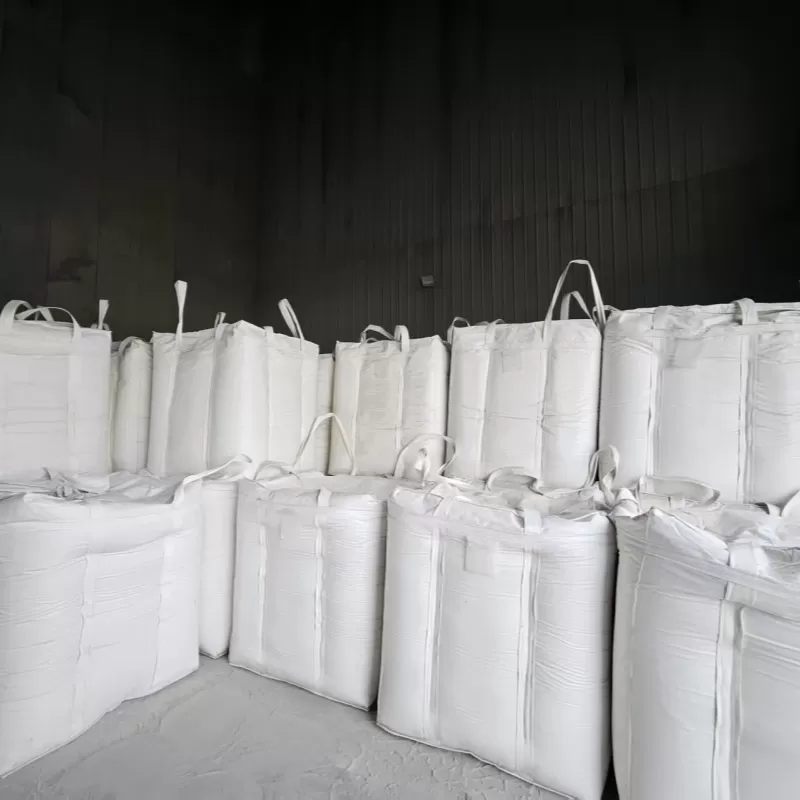
The success of a clay liner installation depends on the physical properties of the raw material. Jinshi manufactures sodium bentonite clay for ponds under strict quality control standards to ensure consistent swell index and low fluid loss values. Industrial and municipal projects typically require submittals of manufacturer test reports showing compliance with specific ASTM standards.
The Free Swell Index (ASTM D5890) is a critical parameter, requiring a minimum swell of 24 mL per 2 grams of dry clay to ensure sufficient expansion capability. Fluid loss tests (ASTM D5891) measure the permeability of the clay slurry under pressure, with lower values indicating a higher-quality seal. Additionally, the moisture content of the packaged material must be kept below 12% to prevent pre-hydration during transport and storage, which can reduce the effectiveness of the clay upon final installation.
Addressing Common Operational Vulnerabilities
While sodium bentonite clay for ponds is a highly durable solution, certain environmental and physical factors can degrade the performance of the barrier if not addressed during the design phase. Dry-wet cycling is a significant concern for ponds with fluctuating water levels. If the clay liner is exposed to the atmosphere, it can dry out and develop shrinkage cracks. When water levels rise again, these cracks may allow initial seepage before the clay has sufficient time to re-hydrate and swell. Providing a thick soil cover of at least eight to twelve inches over the clay layer isolates the bentonite from atmospheric drying, preserving its hydrated state.
Vegetation and biological activity also present challenges. Deep-rooting aquatic plants, such as reeds and cattails, can penetrate the clay liner, creating preferential flow pathways for water when the roots decay. Burrowing animals, such as muskrats or crayfish, can physically disrupt the integrity of the compacted soil-bentonite layer. Designers should specify a layer of coarse rip-rap or gravel armor over the soil cover in shallow areas to discourage burrowing pests and prevent erosion from wind-driven wave action.
Water chemistry can also affect the swelling capacity of the clay. Highly saline water or water containing high concentrations of calcium and magnesium ions can inhibit the hydration of the sodium montmorillonite platelets. Through a process known as cation exchange, divalent calcium ions can replace the monovalent sodium ions in the clay lattice, converting the material into calcium bentonite, which has a much lower swelling capacity. When sealing industrial wastewater basins or brackish ponds, a chemical analysis of the water should be conducted. Jinshi can provide specially modified bentonite formulations designed to resist ionic interference and maintain a stable seal under challenging chemical conditions.
Frequently Asked Questions
Q1: How much sodium bentonite clay for ponds do I need for a standard agricultural reservoir?
A1: The required quantity depends primarily on the composition of your native soil. For silty sand or clayey sand soils, an application rate of 3 to 5 pounds per square foot is standard. For highly permeable gravel or clean sand, you will need 5 to 8 pounds per square foot. Multiplied across the surface area of the pond, a one-acre pond typically requires between 65 to 170 tons of bentonite, depending on soil conditions and installation depth.
Q2: Can I apply sodium bentonite clay for ponds directly into a full pond?
A2: Yes, utilizing the sprinkling method with granular or pelletized bentonite is possible for active leaks. However, this method is generally reserved for localized repairs rather than lining an entire pond. For comprehensive, long-term seepage control, draining the pond, grading the subgrade, and installing a compacted soil-bentonite liner or clay blanket is the most effective approach.
Q3: How long will a sodium bentonite clay liner last?
A3: Because sodium bentonite is a natural clay mineral, it does not decompose, rot, or degrade over time. If the liner is protected from physical disruption, erosion, and deep root penetration by an adequate soil cover, the sealing performance will remain effective indefinitely.
Q4: What is the difference between sodium bentonite and calcium bentonite for pond sealing?
A4: Sodium bentonite contains sodium ions in its crystal lattice, allowing it to swell up to fifteen to twenty times its dry volume when hydrated. Calcium bentonite contains calcium ions and has a much lower swelling capacity, usually expanding to only two to three times its dry volume. Consequently, sodium bentonite is the preferred choice for industrial and civil engineering pond sealing applications due to its superior void-filling properties.
Q5: Will bentonite harm the aquatic life or fish in my pond?
A5: No, sodium bentonite is an all-natural clay mineral that contains no organic chemicals or toxic additives. It is completely safe for fish, livestock, and aquatic plants. During the initial application, the water may temporarily appear muddy or cloudy, but the clay particles will settle to the bottom over several days, leaving the water clear and safe.
B2B Procurement and Engineering Consultation
Selecting the appropriate grade and calculating precise application rates for large-scale municipal, agricultural, or industrial projects requires careful geotechnical evaluation. Jinshi specializes in manufacturing and distributing high-yield sodium bentonite clay for ponds, meeting rigorous industrial standards for fluid loss, swelling capacity, and mineralogical purity. Our technical engineering team is available to assist you in analyzing soil test data and determining the most cost-effective application strategy for your project.
For technical product data sheets, bulk pricing structures, or logistics coordination for domestic and international shipments, please contact our commercial sales office. We welcome your detailed inquiries and look forward to collaborating on your upcoming water containment and civil engineering projects.