
3 Standard Methods for Applying Sodium Bentonite Pond Sealer in Commercial Projects
2026-06-25
Water containment is a primary challenge in civil engineering, agricultural planning, and industrial wastewater management. When constructing reservoirs, aquaculture facilities, or decorative water features, matching soil permeability with the correct barrier material dictates the longevity of the project. Traditional synthetic liners can be prone to punctures and degradation over time. Consequently, civil engineers and project managers frequently look to natural, self-healing mineral barriers. Applying a high-quality bentonite pond sealer is a highly effective, chemically stable method to reduce water seepage through porous soils.
Jinshi provides high-grade sodium bentonite tailored to meet the strict demands of industrial-scale containment projects. Understanding the mechanical properties of clay minerals, soil classification, and proper application techniques is necessary to achieve a reliable low-permeability barrier.
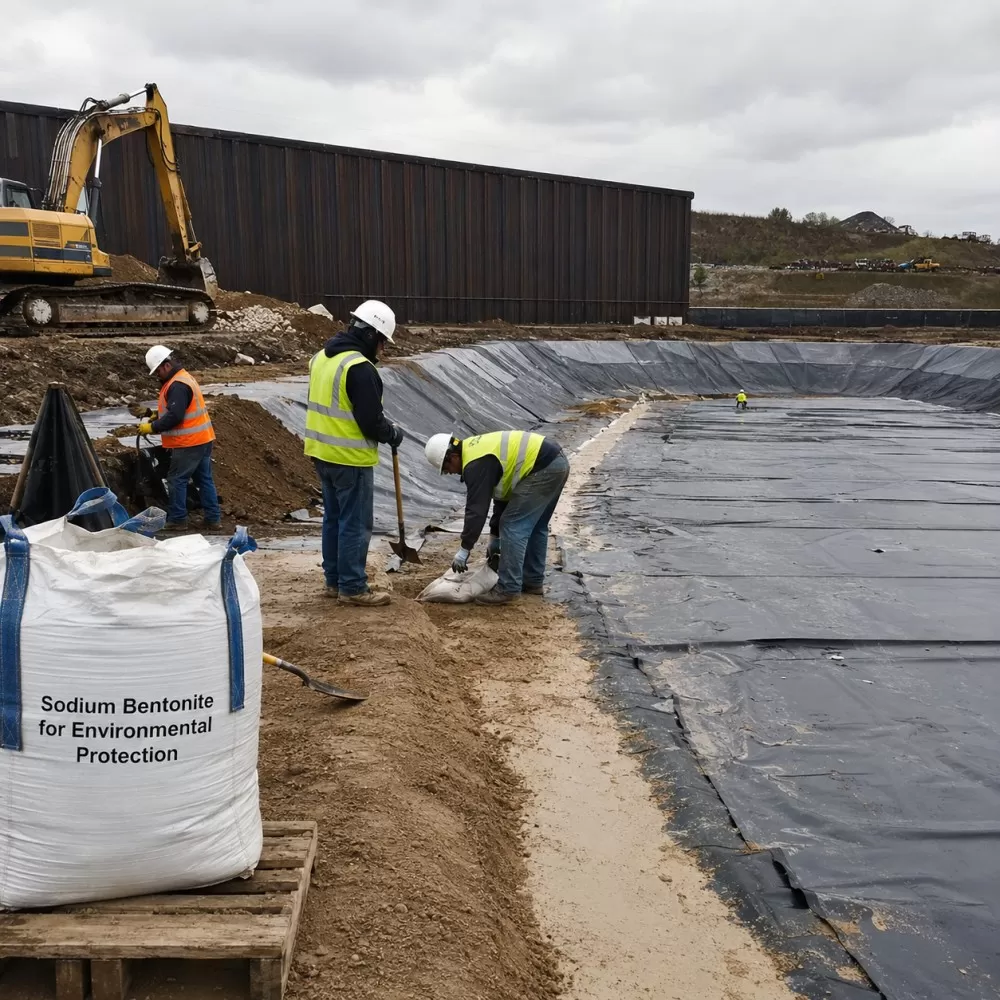
The Science of Sodium Bentonite as a Sealing Agent
The performance of sodium bentonite relies on its unique mineralogical composition, which consists primarily of montmorillonite. Montmorillonite is a three-layer clay mineral featuring a central alumina octahedral sheet sandwiched between two silica tetrahedral sheets. This structural layout possesses a high net negative charge, which is balanced by exchangeable sodium cations situated between the crystalline layers.
When exposed to water, these sodium ions hydrate, causing the interlayer spacing to expand. This swelling capability allows high-grade sodium bentonite to absorb several times its dry weight in water, expanding up to 15 to 20 times its original volume. Once fully hydrated in a confined space, the clay particles swell against each other and the surrounding soil matrix. This action fills the voids and capillaries within the soil, creating a highly dense, impermeable barrier with hydraulic conductivity levels often reaching $10^{-7}$ or $10^{-8}$ centimeters per second.
In contrast to synthetic geomembranes, sodium bentonite offers self-healing properties. If the seal is punctured by roots, wildlife, or minor structural shifts in the subgrade, the adjacent clay particles re-hydrate and expand into the newly formed void. This mechanism ensures long-term integrity without the maintenance costs associated with polymer-based barriers.
Assessing Soil Types and Determining Application Rates
Before applying a bentonite pond sealer, a thorough analysis of the native soil at the project site is required. The soil composition directly determines the quantity of clay needed per square foot and the specific installation methodology. Soil testing typically involves sieve analysis and Atterberg limits to identify the ratio of sand, silt, and clay.
Coarser soils demand a higher application rate because they lack the fine particles necessary to assist in forming a tight mineral matrix. The following baseline specifications outline typical requirements for various soil profiles:
| Soil Classification | Soil Characteristics | Recommended Bentonite Rate (lbs/sq. ft.) |
|---|---|---|
| Clayey Silt / Silty Clay | High fine particle content, naturally low permeability. | 2.0 to 3.5 |
| Silt / Sandy Silt | Moderate fines, requires structural filling. | 3.5 to 5.0 |
| Clean Sand / Silty Sand | High permeability, extensive void space. | 5.0 to 7.5 |
| Gravelly Sand / Fractured Soil | Extremely coarse, high potential for massive seepage. | 7.5 to 10.0+ (May require a secondary soil amendment) |
Applying insufficient material in coarse gravel or sand can result in localized containment failure, as the water pressure may bypass the thin clay barrier. Conversely, over-applying in high-clay native soils can be uneconomical. Proper laboratory testing of local soil samples combined with Jinshi product specifications ensures an optimal balance between material cost and sealing performance.
Standard Application Methodologies for Commercial Projects
Depending on the stage of pond construction, the state of the basin, and the equipment available, engineers rely on three primary installation techniques.
The Mixed Blanket Method
This technique is widely considered the most reliable approach for new pond construction where the basin can be completely drained and graded. It involves blending the sodium bentonite directly with the existing native soil to form an engineered, low-permeability liner.
Site Preparation: Grade the basin to the desired slope, removing all large rocks, tree roots, organic debris, and sharp objects that could disrupt the uniformity of the layer.
Clay Distribution: Spread the specified quantity of Jinshi sodium bentonite evenly across the dry basin floor. This is typically achieved using agricultural seeders, fertilizer spreaders, or specialized bulk spreading equipment.
Soil Blending: Use a rototiller, disc harrow, or stabilizer to thoroughly blend the clay into the top 4 to 6 inches of native soil. This creates a homogeneous soil-clay mixture.
Compaction: Compact the blended layer using a sheepsfoot roller or pneumatic compactor. The soil-bentonite mix should be compacted to at least 90% to 95% of Standard Proctor Density at optimum moisture content to ensure the voids are minimized.
Cover Layer: Apply a protective 4-to-6-inch layer of clean native soil or gravel over the compacted barrier to shield it from erosion, desiccation, and mechanical damage.
The Pure Blanket Method
When native soils are extremely coarse or contain high levels of soluble salts that could interfere with the blending process, a continuous layer of pure bentonite is preferred.
Excavation: Over-excavate the pond basin by approximately 6 to 12 inches below the final target grade.
Laying the Barrier: Apply a uniform, continuous layer of dry bentonite pond sealer directly over the excavated subgrade. Care must be taken to prevent thin spots, particularly on slopes.
Cover and Protect: Carefully backfill the basin with 6 to 12 inches of fine-grained soil or aggregate, taking care not to disturb or displace the underlying clay layer with heavy machinery.
Compaction: Roll and compact the protective soil cover to stabilize the entire containment system before filling the reservoir with water.
The Sprinkling Method (Wet Application)
For existing bodies of water where draining is physically or financially impractical, the sprinkling method is used as a localized treatment. This method is primarily suited for targeted repairs rather than lining an entire reservoir.
Material Selection: Granular bentonite is required for this application, as fine powder will drift on the water surface and fail to sink to the target area.
Application: Cast the granular clay directly onto the water surface over the suspected leak zones. The heavy granules sink directly to the pond bed.
Hydration and Sealing: As the granules reach the bottom, they absorb water, swell, and are drawn into the active leakage pathways by the downward hydraulic gradient, eventually plugging the voids.
Engineering Calculations for Bulk Requirements
Accurate material calculations are crucial for large-scale procurement and logistics. Underestimating material needs can lead to project delays, while overestimating increases shipping and handling costs. The following formula outlines how to determine the total tonnage of clay required for a project:
$$\text{Total Material (lbs)} = \text{Surface Area (sq. ft.)} \times \text{Application Rate (lbs/sq. ft.)}$$
For example, to calculate the requirement for a reservoir with a bottom surface area of 50,000 square feet and a sandy silt soil profile requiring an application rate of 5 pounds per square foot:
$$\text{Total Material} = 50,000 \times 5 = 250,000 \text{ lbs}$$
Converting this value to short tons:
$$\text{Total Tons} = \frac{250,000 \text{ lbs}}{2,000 \text{ lbs/ton}} = 125 \text{ tons}$$
Jinshi ships sodium bentonite in various packaging options, including bulk pneumatic trucks for large industrial installations and 1-ton bulk bags (super sacks) for sites with standard material handling equipment. Proper storage on-site is required; the material must be kept dry and protected from moisture before application to prevent premature hydration.
Overcoming Operational Challenges During Installation
Several environmental and chemical factors can impact the swelling efficiency of bentonite clay barriers. Managing these variables during the planning phase is highly important for project success.
Water Quality and Ionic Interference
The swelling of sodium bentonite depends on the hydration of the sodium ions within the clay platelet structure. If the water to be impounded contains high concentrations of dissolved minerals, particularly divalent cations like calcium ($Ca^{2+}$) or magnesium ($Mg^{2+}$), an ion exchange reaction can occur. This exchange replaces the sodium ions with calcium ions, converting the material into calcium bentonite, which has a significantly lower swelling capacity.
When dealing with brackish water, hard water, or run-off containing high chemical loads, pre-treatment water testing is advised. If high salinity or hardness is identified, specialized polymer-treated bentonite or modified clay blends may be necessary to maintain barrier integrity.
Compaction and Moisture Control
A common cause of barrier failure is inadequate compaction of the soil-bentonite layer. Clay particles must be densely packed to prevent the mechanical force of the impounded water from displacing the hydrated gel. The soil mixture must be close to its optimum moisture content during compaction. If the soil is too dry, the clay will not bind properly; if it is too wet, the machinery will cause rutting and shearing, compromising the continuity of the barrier.
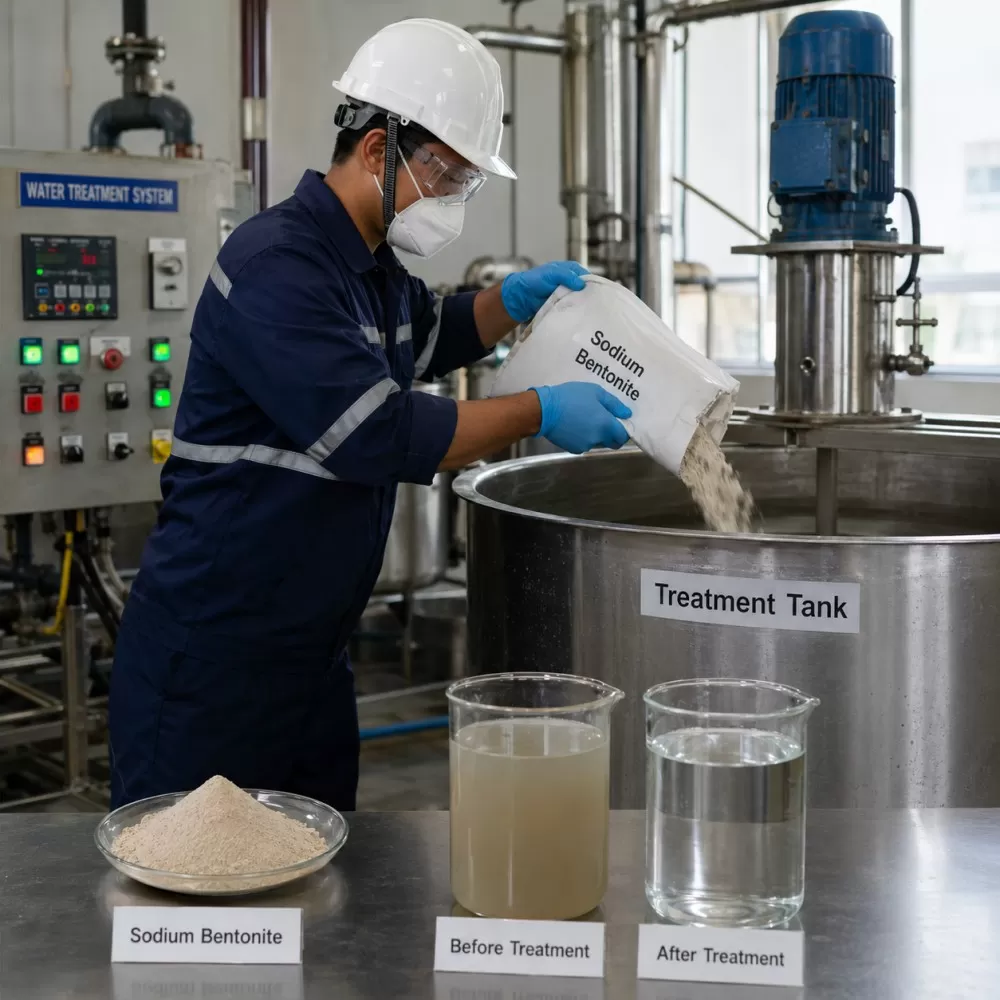
Sourcing High-Quality Clay Materials
The mineralogical purity of the sodium bentonite is the single most critical factor in determining its performance as a pond sealer. Low-grade clays with high concentrations of inert minerals like silica, feldspar, or gypsum will not exhibit the swelling capacity needed to achieve low hydraulic conductivity.
Jinshi controls the sourcing, processing, and testing of its sodium bentonite products. By maintaining strict quality control parameters, including monitoring the montmorillonite content and particle size distribution, Jinshi ensures that each shipment delivers consistent, predictable swelling performance in the field. This consistency simplifies the engineering design phase and minimizes variations in soil permeability across the project site.
Project Inquiries and Consultations
Every containment project presents unique challenges, from complex geological profiles to aggressive water chemistry. Determining the exact application rate, selecting the correct particle size distribution, and choosing the right installation method require experienced engineering support.
For detailed technical datasheets, bulk pricing structures, or customized material formulations, please submit an inquiry with your project specifications, soil test reports, and volume requirements. The engineering team at Jinshi is available to assist in optimizing your containment designs and ensuring a durable, natural seal for your reservoir or pond project.
Frequently Asked Questions
Q1: How long does a sodium bentonite clay barrier last once installed?
A1: Because sodium bentonite is a naturally occurring volcanic mineral, it does not decay, oxidize, or break down over time like synthetic rubber or plastic liners. As long as the clay barrier remains hydrated and protected from erosion by a soil cover layer, it will remain functional indefinitely, matching the lifespan of the surrounding geological formations.
Q2: Can bentonite pond sealer be applied to a pond that is already filled with water?
A2: Yes, utilizing the sprinkling method with granular bentonite is possible for active ponds. However, this method is less precise than a dry, compacted installation. It is best suited for plugging localized leaks rather than sealing an entire basin. For comprehensive sealing, draining the pond and compacting a soil-clay blend is highly recommended.
Q3: Will the clay material harm fish, plants, or livestock?
A3: No, sodium bentonite is completely natural, non-toxic, and chemically inert. It is safe for aquatic life, plants, and livestock. It is often used in aquaculture and farm ponds without any adverse ecological effects. The only temporary impact is a slight turbidity in the water immediately after application, which settles quickly.
Q4: How does freezing weather affect a hydrated bentonite barrier?
A4: Unlike rigid synthetic liners that can crack in freezing conditions, a hydrated bentonite barrier is highly flexible. While the water within the clay matrix may freeze, the clay accommodates the expansion. Upon thawing, the clay self-heals and retains its original low-permeability structure, provided it is buried under a sufficient protective soil layer to prevent erosion from ice movement.
Q5: Can I use bentonite if my pond soil is highly gravelly or rocky?
A5: Extremely coarse soils can be challenging because the voids between the rocks are too large for the clay to bridge on its own. In these conditions, it is necessary to first import a layer of finer soil (like silt or fine sand) to blend with the rocks, or to use a significantly higher application rate of bentonite combined with a thick, pure blanket layer to ensure complete coverage.