
How Does Sodium Bentonite Pond Sealer Prevent Seepage in Permeable Soils?
2026-06-24
Water conservation and containment in civil engineering, agricultural irrigation, and industrial waste management demand robust, long-term barrier solutions. Seepage from containment basins not only leads to significant water loss but also presents severe environmental liabilities if contaminants escape into the local water table. To address these challenges, engineers and land managers rely on natural clay barriers. High-swelling sodium bentonite pond sealer has established itself as one of the most reliable and cost-effective mineral sealants available for reducing soil permeability and achieving permanent water retention.
Understanding the mineralogical properties, application methodologies, and engineering calculations involved in deploying these clay barriers is necessary for ensuring project success. Jinshi offers high-purity sodium bentonite products processed specifically to meet the rigorous demands of civil engineering and agricultural containment projects.
The Mineralogical Mechanism of Sodium Bentonite
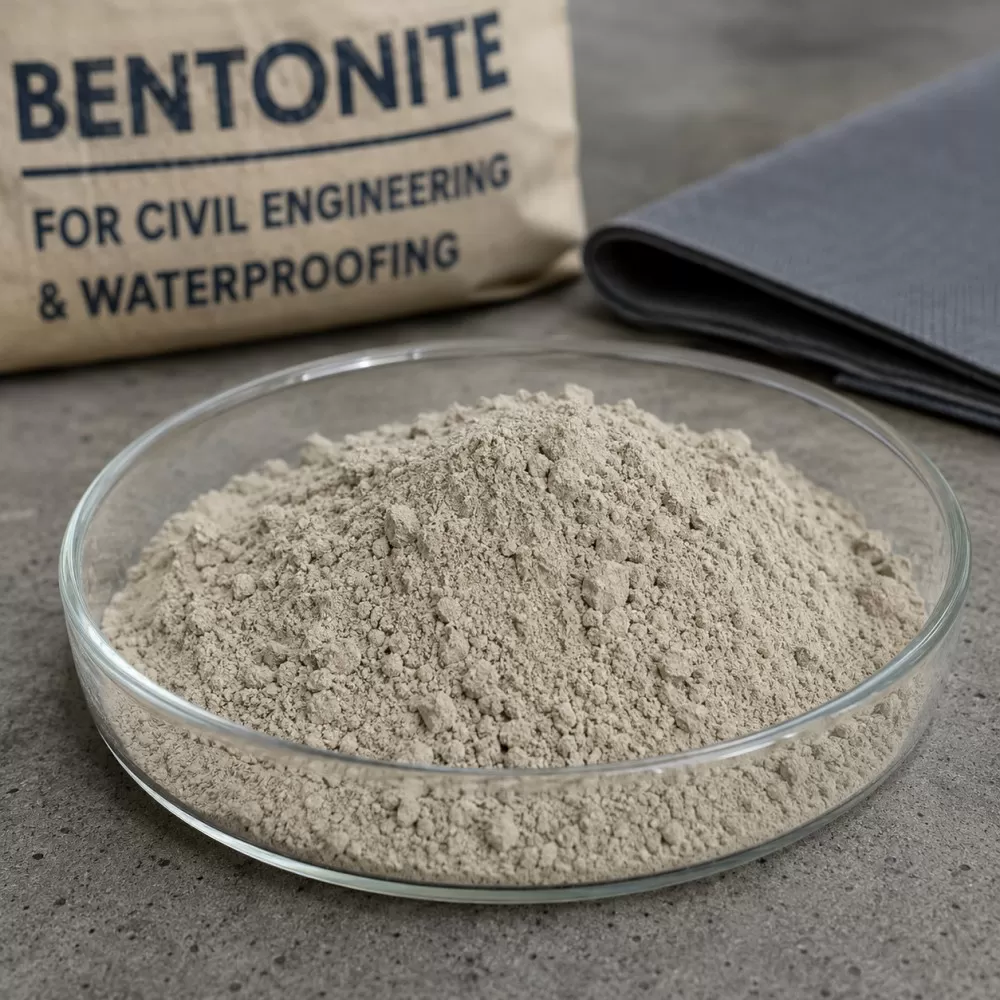
The exceptional sealing performance of sodium bentonite lies in its unique mineral structure. Primarily composed of montmorillonite, a three-layer clay mineral, it consists of an octahedral alumina sheet sandwiched between two tetrahedral silica sheets. The crystalline structure carries a net negative charge, which is balanced by exchangeable sodium (Na+) cations residing in the interlayer spaces between the clay plates.
When exposed to water, these sodium ions hydrate, causing water molecules to be drawn into the interlayer spacing. This hydration process expands the crystalline lattice, allowing the clay to swell up to fifteen to twenty times its dry volumetric size. When this expansion occurs under confinement within soil voids, the swelling clay exerts significant swelling pressure against surrounding soil particles. The expanded gel fills the interstitial spaces, forming an extremely tight, low-permeability barrier with a hydraulic conductivity often measuring less than 1 x 10^-7 centimeters per second.
In contrast to calcium bentonite, which has a much lower swelling capacity due to the divalent nature of calcium ions, the monovalent sodium ions in the Jinshi product line allow for maximum water absorption and swelling. This physical transformation creates a self-healing, flexible membrane that resists cracking and shifting, adjusting naturally to localized settling of the pond basin.
Evaluating Subsurface Soil Mechanics and Permeability
Before applying a sodium bentonite pond sealer, a thorough assessment of the existing soil profile is required. Soil texture, particle size distribution, and hydraulic conductivity dictate the specific application rate and method. Soils are generally classified based on their sand, silt, and clay content.
Coarse-Grained Soils (Gravel and Clean Sands): These soils exhibit high permeability due to large void spaces. They lack the fine particles necessary to hold bentonite in place, requiring a higher application rate or the construction of a thicker clay blanket.
Mixed-Grained Soils (Silty Sands and Sandy Silts): These formations represent an ideal matrix for bentonite blending. The existing silts fill medium-sized voids, allowing the swelling clay to easily seal the remaining micro-pores.
Fine-Grained Soils (Silts and Clays): While already exhibiting relatively low permeability, some native clays are prone to cracking when dry. Integrating a sodium bentonite layer stabilizes these formations and prevents preferential flow paths from developing.
Conducting a sieve analysis and determining the plastic limit, liquid limit, and moisture-density relationship (Proctor test) of the native soil helps engineers establish the exact quantity of clay sealant needed. Jinshi provides technical support to interpret these geological parameters, ensuring that the selected application density matches the physical realities of the site.
Field Proven Application Methods
Deploying sodium bentonite pond sealer successfully requires matching the installation technique to the site conditions, equipment availability, and whether the reservoir is currently dry or filled with water.
The Mixed Blanket Method (In-Situ Blending)
For dry basins, the mixed blanket method is highly recommended due to its structural stability and uniform distribution. This process integrates the clay directly into the native soil matrix.
The first phase involves grading the pond basin, removing all large rocks, tree roots, and organic debris that could interfere with compaction. Once the subgrade is prepared, the dry sodium bentonite pond sealer is distributed evenly across the surface at the calculated rate. A rototiller, disc harrow, or specialized soil stabilizer blends the clay into the top four to six inches of soil.
Following blending, moisture control is verified. The soil-bentonite mixture must be at or slightly above optimum moisture content to ensure proper compaction. A heavy roller, such as a sheep’s foot or smooth-drum roller, compacts the treated layer to at least 90% to 95% Standard Proctor density. A final protective layer of clean, untreated soil or gravel is placed over the compacted barrier to prevent drying, cracking, and erosion from wave action.
The Pure Blanket Method (Layered Barrier)
In highly permeable soils, such as fractured bedrock or pure sand, in-situ mixing may not provide a sufficient barrier. The pure blanket method involves placing a continuous, uninterrupted layer of pure sodium bentonite directly over the prepared subgrade.
This method requires careful preparation to ensure a smooth, uniform surface. The dry clay is applied in a continuous layer, typically varying from one to two inches in thickness, depending on the water depth and hydraulic head. Great care must be taken during application to avoid drift from wind and to prevent tearing or puncturing the clay layer. Immediately after spreading, the clay is covered with a minimum of six to twelve inches of native soil or aggregate to confine the bentonite, preventing it from eroding or washing away when the pond is filled.
The Sprinkling and Slurry Methods (Active Leak Mitigation)
When a pond is already filled with water and draining it is impractical, alternative localized treatment methods must be applied. The sprinkling method involves casting granular sodium bentonite directly onto the water surface over the suspected leak zone. Because sodium bentonite is denser than water, the particles sink to the pond bottom, where they hydrate, expand, and are drawn by the downward current into the structural voids and fissures causing the leak.
While convenient, this wet application method carries inherent limitations. It relies on the natural movement of water to carry the clay to the seepage points. In areas with significant underwater currents or steep slopes, the clay may disperse before settling, reducing its effectiveness compared to dry-installation methods.
Calculating Material Application Rates
Calculating the correct dosage of sodium bentonite pond sealer is a balance between engineering requirements and economic factors. Insufficient application leads to continued seepage, while excessive application increases material and logistics costs.
The general application density is determined by the soil classification and the anticipated hydraulic pressure (water depth):
Clayey Silt / Silty Clay: 2.0 to 3.0 pounds per square foot (approx. 10 to 15 kg/m²)
Sandy Silt / Fine Sand: 3.0 to 5.0 pounds per square foot (approx. 15 to 25 kg/m²)
Coarse Sand / Gravelly Sand: 5.0 to 8.0 pounds per square foot (approx. 25 to 40 kg/m²)
Fractured Rock / Highly Porous Formations: 8.0 to 12.0+ pounds per square foot (approx. 40 to 60+ kg/m²)
To calculate the total tonnage required for a project, the surface area of the pond bottom and slopes must be accurately mapped. For example, a reservoir with a total wet perimeter surface area of 50,000 square feet requiring an application rate of 4.0 pounds per square foot will require 200,000 pounds (100 short tons) of sodium bentonite. Jinshi packages bulk materials in both convenient 25 kg bags and 1.0 to 1.5 metric ton bulk bags to accommodate different handling machinery and construction scales.
Quality Metrics and Material Selection
Not all bentonite clays perform equally in hydraulic containment applications. The sealing efficiency is directly related to the physical properties of the raw mineral feed and the milling process. The industry relies on standardized ASTM testing to verify material quality.
Key quality parameters include:
Free Swell Index (ASTM D5890): Measures the volumetric expansion of 2 grams of dry bentonite in water. High-grade sodium bentonite should exhibit a minimum free swell of 20 mL, indicating strong hydration potential.
Fluid Loss (ASTM D5891): Evaluates the filtration properties of a clay slurry under pressure. Lower fluid loss numbers indicate a more impermeable filter cake layer.
Particle Size Distribution (Sieve Analysis): Granular bentonite (typically 8 to 30 mesh) is preferred for sprinkling applications and windy outdoor installations to prevent dust loss. Fine powder bentonite (typically 200 mesh) is ideal for uniform dry blending with native soils.
Jinshi ensures rigorous quality control throughout the mining and processing stages, delivering consistent mineral compositions that meet or exceed standard civil engineering specifications for low-permeability barriers.
Physical Site Management and Maintenance
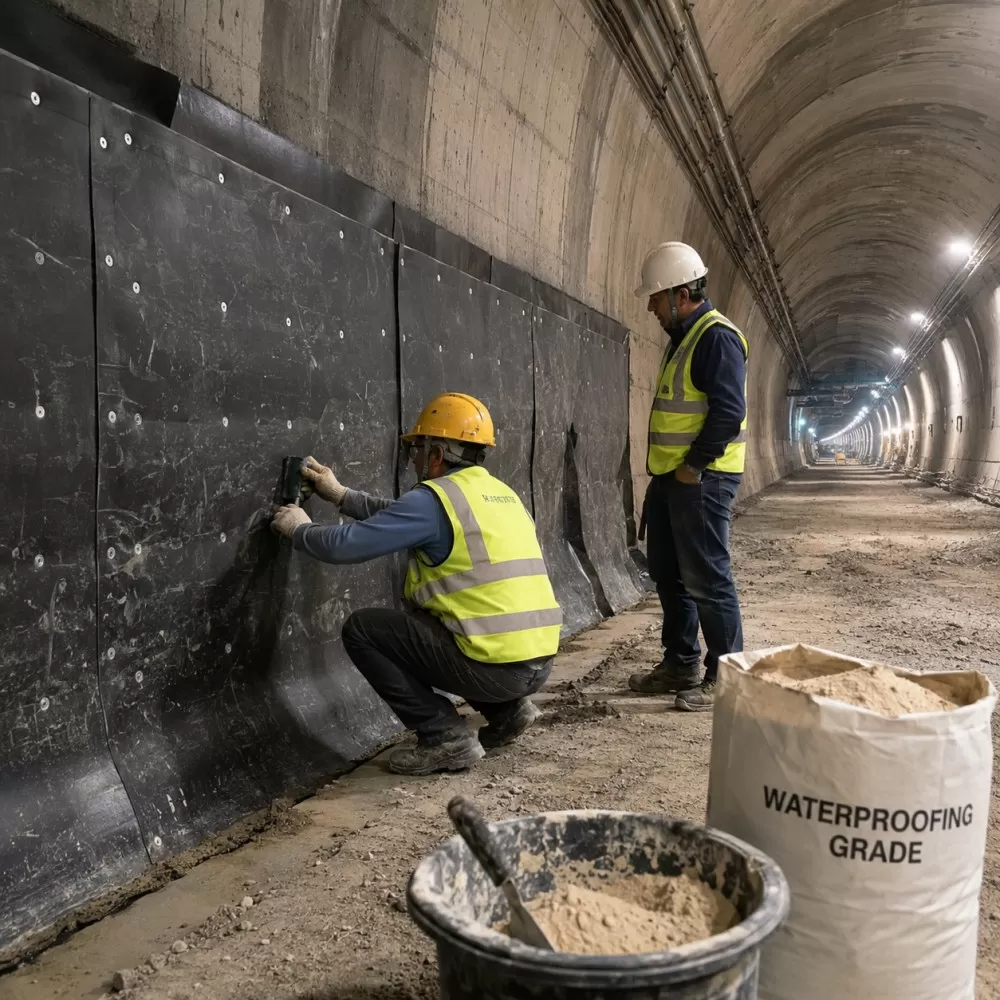
The longevity of a sodium bentonite clay barrier depends heavily on post-installation management. Because bentonite is a natural mineral, it does not degrade over time when kept in its hydrated state. However, physical disruption can compromise the integrity of the seal.
Erosion control is a primary consideration. The inflow areas of the pond, where streams or runoff pipes discharge, must be armored with rip-rap, geotextiles, or concrete splash pads to prevent the moving water from eroding the protective soil cover and exposing the underlying bentonite. Similarly, pond shorelines should be protected against wave erosion with vegetation or stone barriers.
Vegetation management is also necessary. Deep-rooted plants, such as willows or cattails, can penetrate the clay liner, creating preferential flow pathways along their root structures. Standard practice involves maintaining a clean turf or shallow-rooted vegetative cover on the inner slopes to prevent deep root penetration while stabilizing the cover soil.
Furthermore, cycles of complete drying and wetting can cause clay liners in shallow ponds to crack during dry spells. Maintaining a minimum water depth or utilizing a thicker protective soil cover helps regulate soil moisture, keeping the bentonite permanently hydrated and functioning as designed.
Frequently Asked Questions
Q1: Is sodium bentonite pond sealer safe for fish and
livestock?
A1: Yes, sodium bentonite is an entirely natural,
chemically inert clay mineral. It contains no synthetic chemicals, additives, or
toxic polymers, making it completely safe for aquaculture, farm animals,
wildlife, and surrounding vegetation.
Q2: How long does a sodium bentonite clay liner last?
A2:
Because sodium bentonite is a stable natural mineral, it does not decompose or
lose its swelling properties over time. As long as the physical barrier is
protected from mechanical erosion, deep root penetration, and extreme
desiccation, the seal will remain effective indefinitely.
Q3: Can I use sodium bentonite in ponds with high
salinity?
A3: High concentrations of dissolved salts or calcium in
the water can interfere with the swelling mechanism of sodium bentonite by
replacing sodium ions with divalent ions, which reduces the clay's hydration
capacity. For brackish or saline water containment, pre-treatment or specialized
salt-resistant bentonite formulations are required.
Q4: Can sodium bentonite be applied in freezing
conditions?
A4: While the dry clay itself is unaffected by cold
temperatures, freezing can impact soil moisture and compaction efforts during
installation. For optimal results, dry-blended installations should be performed
when soil temperatures allow for proper moisture conditioning and compaction,
avoiding frozen subgrades.
Q5: What is the difference between granular and powder bentonite for
sealing?
A5: Granular bentonite consists of larger particles that
sink faster in water, making it ideal for direct application to filled ponds.
Powdered bentonite has a much larger surface area and blends thoroughly with dry
native soils, providing a highly uniform barrier when compacted using the mixed
blanket method.
Inquire About Your Project Requirements
Selecting the correct grade, grain size, and application volume of sodium bentonite is vital for achieving a permanent, leak-proof seal. Jinshi works closely with B2B clients, civil engineers, agricultural developers, and industrial site managers to supply reliable clay materials tailored to site-specific soil conditions and logistics networks.
For custom volume pricing, packaging options, laboratory sieve analysis, or detailed logistical scheduling, please contact our technical sales department. Submit an inquiry today with your project dimensions and soil characteristics to receive an engineered material estimate from our technical team.