
Bentonite Clay Pond Sealer: The Complete Geotechnical Sealing Guide
2026-09-03
Water retention within earthen impoundments, agricultural reservoirs, and industrial containment basins presents significant geotechnical hurdles. Subsurface seepage not only depletes critical water reserves but destabilizes subgrade embankments over prolonged operational lifecycles. A properly engineered bentonite clay pond sealer provides an impermeable, self-healing geological barrier that arrests hydraulic transport through porous substrates. Achieving an unyielding containment layer mandates an authoritative understanding of sodium montmorillonite mineralogy, hydraulic conductivity parameters, site-specific soil mechanics, and rigorous installation protocols.
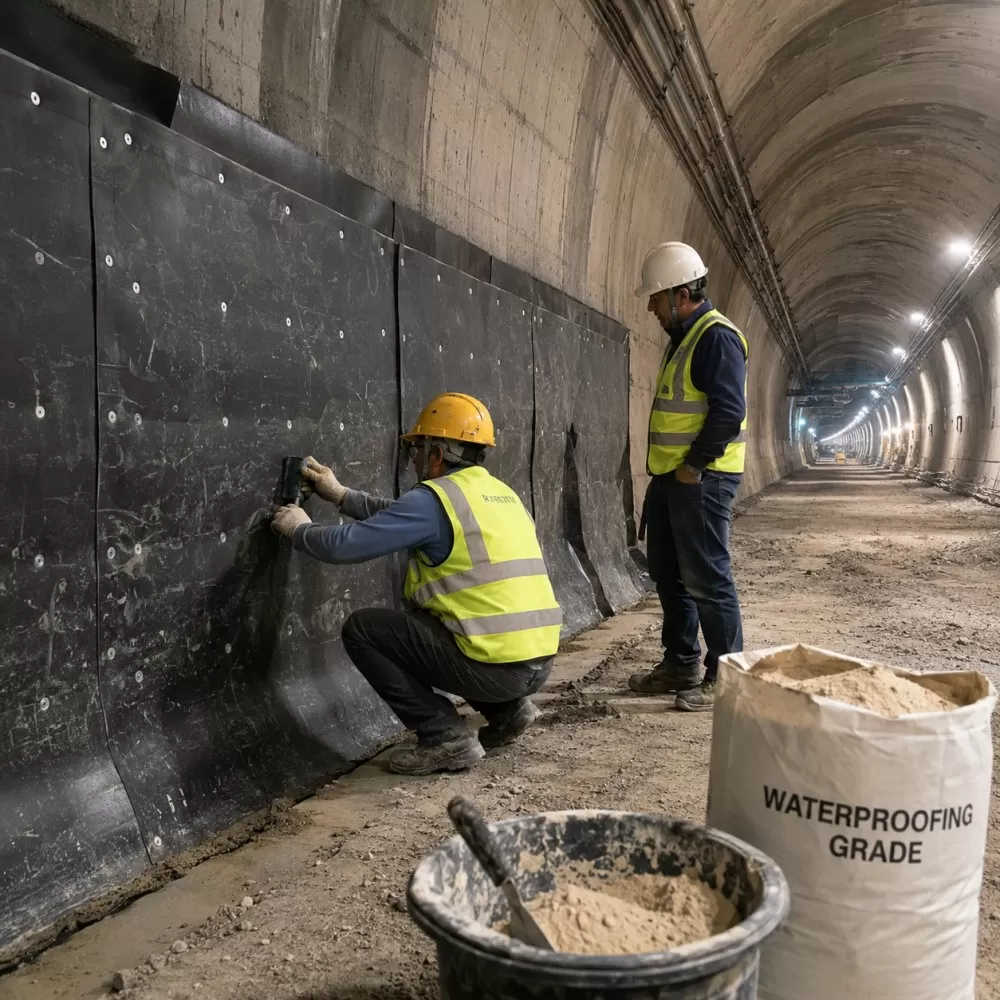
Mineralogical Mechanics of Sodium Montmorillonite
The operational efficacy of clay-based containment relies on the expansive crystallographic structure of sodium montmorillonite, the primary mineral component of high-grade bentonite. Montmorillonite belongs to the 2:1 smectite clay family, characterized by an octahedral alumina sheet sandwiched between two inward-pointing silica tetrahedral sheets. The isomorphic substitution within these crystalline lattices—typically magnesium substituting for aluminum in the octahedral layer—imparts a net negative surface charge across the planar surfaces.
When hydrated, exchangeable sodium cations (Na+) residing within the interlayer spaces attract polarized water molecules. The dipolar water forces the individual silicate platelets apart through a process termed crystalline and osmotic swelling. High-purity sodium bentonite displays a free swell index exceeding 24 mL/2g according to ASTM D5890 standards. This extreme volumetric expansion allows individual clay particles to swell up to fifteen to twenty times their dry dimension, filling macro-pores, structural voids, and granular interstices within surrounding soil matrixes.
Calcium-dominated bentonite reserves lack this severe swelling capacity. The divalent calcium ions (Ca2+) bind the lamellar sheets more tightly together, preventing the extensive hydration layers seen in monovalent sodium environments. For heavy civil projects and municipal liquid containment, specifying high-swelling sodium mineral profiles such as those supplied by Jinshi ensures that the installed barrier exhibits minimal coefficient of permeability, typically dropping below 1 x 10^-7 to 1 x 10^-9 cm/s under standard hydraulic gradients.
Hydraulic Conductivity Dynamics of a Bentonite Clay Pond Sealer
Engineered fluid containment is governed mechanically by Darcy’s Law, which defines the rate of fluid flow through a porous medium:
Q = -k · A · (dh / dl)
Where Q represents volumetric flow rate, k represents the hydraulic conductivity (permeability coefficient), A is the cross-sectional containment area, and dh/dl accounts for the hydraulic gradient. In coarse sands, gravels, or fractured parent bedrock, the native k value is excessively high, ranging from 10^-1 to 10^-3 cm/s. Deploying a bentonite clay pond sealer physically compresses the effective cross-sectional pore space, shifting the soil profile into a virtually impervious geotechnical boundary.
Hydraulic performance hinges upon the thickness of the consolidated clay zone and its bulk density. When sodium montmorillonite matrices swell under structural overburden, they form a cohesive colloidal gel. This gel withstands sustained hydrostatic pressure without displaying internal erosion or piping phenomena. Under constant fluid head, the water molecules must navigate an exponentially tortuous path through densely packed, negatively charged crystalline platelets, effectively arresting seepage across the impoundment floor.
Geotechnical Soil Evaluation and Application Rates
Accurate deployment requires quantifying the structural attributes of the parent subgrade prior to site mobilization. A particle size distribution test (sieve analysis along with hydrometer sedimentation via ASTM D422) establishes the native soil classification within the Unified Soil Classification System (USCS).
Coarse Gravels and Fractured Stone: Possess void ratios too expansive for independent clay filling; mandate an engineered structural cushion of silty sand before clay application.
Clean Sands (SP, SW): Exhibit swift percolation rates; demand substantial clay amendments ranging between 4.0 to 6.0 pounds per square foot (19.5 to 29.3 kg/m²).
Silty Sands and Sandy Loams (SM, ML): Offer moderate native cohesion; necessitate moderate amendment rates of approximately 3.0 to 4.0 pounds per square foot (14.6 to 19.5 kg/m²).
Native Clays and Silty Clays (CL, CH): May require spot applications or baseline rates of 1.5 to 2.5 pounds per square foot (7.3 to 12.2 kg/m²) to bridge structural fissures and desiccation fractures.
Engineers calculate the baseline quantity of bentonite clay pond sealer needed per square meter using laboratory permeability tests performed inside flexible-wall permeameters (ASTM D5084). Increasing compaction density decreases the mass of bentonite required to meet target seepage thresholds.
Industrial Installation Methodologies
Site conditions, project scale, basin geometry, and the presence or absence of standing water dictate which engineering delivery system should be deployed across the containment zone.
1. The Mixed Blanket Technique (Rototill and Compact)
The mixed blanket approach remains the most mechanically durable configuration for new impoundment construction. Native soils are graded to civil plan specifications, with all organic matter, debris, and rocks exceeding 20 mm completely stripped from the work area. The native floor is scarified to an approximate depth of 100 mm to 150 mm.
Granular sodium bentonite is applied evenly across the dry subgrade using a calibrated agricultural spreader or industrial drop-box spreader. Rototilling equipment blends the bentonite thoroughly with the scarified native soil, generating an isotropic clay-aggregate mixture. Once homogeneous blending is achieved, moisture conditioning brings the soil mix toward its Optimum Moisture Content (OMC), typically verified using the Standard Proctor Compaction Test (ASTM D698).
Compaction machinery, preferentially smooth-drum vibratory rollers or heavy sheepsfoot compactors for cohesive soils, compacts the layer to a minimum of 90% to 95% Modified Proctor density. The finished compacted blanket forms a monolithic composite barrier resistant to shearing and hydraulic breakthrough.
2. The Pure Blanket Layer Method
In highly permeable, non-cohesive sandy terrains, mixing may result in aggregate segregation or uneven bentonite distribution. The pure blanket design constructs an unadulterated layer of continuous high-swell sodium bentonite directly over the excavated subgrade.
The grade is flattened and dynamic-compacted to prevent post-installation settling. Granular or powdered bentonite is laid over the floor at a continuous depth, typically varying from 6 mm to 15 mm depending on water depth parameters. This layer must immediately be protected by an overburden buffer consisting of clean, non-cohesive silty sands or rounded gravels (150 mm to 300 mm deep) applied via low-ground-pressure earth-moving equipment. The cover soil acts as a confining surcharge, generating the necessary downward pressure to force hydrated bentonite sideways into continuous structural sealing instead of unrestricted vertical gel dispersion.
3. The Standing Water (Broadcast) Method
Draining a failing reservoir is not always feasible due to biological considerations or extreme site logistics. The broadcast technique involves distributing granular bentonite directly across the surface of the standing water body. Sized granular particles sink to the floor, where they undergo initial hydration and settle into low-lying leakage pathways where water draw occurs.
Granular particle sizing remains critical for this deployment. Fine powder creates suspended colloidal plumes that remain afloat indefinitely, causing operational inefficiency. Granular grades sized between 8 to 20 mesh clear the water column rapidly, settling directly onto the targeted subgrade. While functional for micro-fracture remediation, broadcasting cannot match the guaranteed hydraulic performance of a compacted dry installation due to uneven material distribution over submerged topographic deviations.
Operational Factors: Water Chemistry and Environmental Resilience
Subterranean fluid dynamics do not operate in a vacuum; environmental factors deeply influence long-term containment integrity. The chemical composition of the impounded water body directly dictates smectite swelling parameters. High concentrations of polyvalent cations, specifically calcium (Ca2+), magnesium (Mg2+), and aluminum (Al3+), lead to cation exchange reactions where the native sodium ions within the montmorillonite crystal lattices are displaced. This exchange thins the diffuse double layer surrounding each clay particle, precipitating flocculation and significantly increasing bulk hydraulic conductivity.
Total Dissolved Solids (TDS), extreme alkaline conditions, or hypersaline runoff require tailored product specifications. Jinshi sodium bentonite selections subjected to strict quality criteria minimize ion-displacement sensitivity across diverse chemical environments, preserving nominal seepage rates despite ambient mineral variations.
Physical dynamics also dictate performance along operational shorelines. Periodic drawdown cycles expose shallow shelf areas to solar radiation, causing surface desiccation and shrinkage fissures. Sodium bentonite features distinctive self-healing properties: once liquid levels rise and re-saturate the exposed perimeter, the dry montmorillonite platelets re-hydrate, reconstituting their expansive gel network and closing desiccation paths naturally. Wave erosion, livestock traffic, and burrowing fauna present ongoing physical challenges to exposed clay liners, making the placement of riprap or a 300 mm protective soil surcharge mandatory above high-water operational zones.
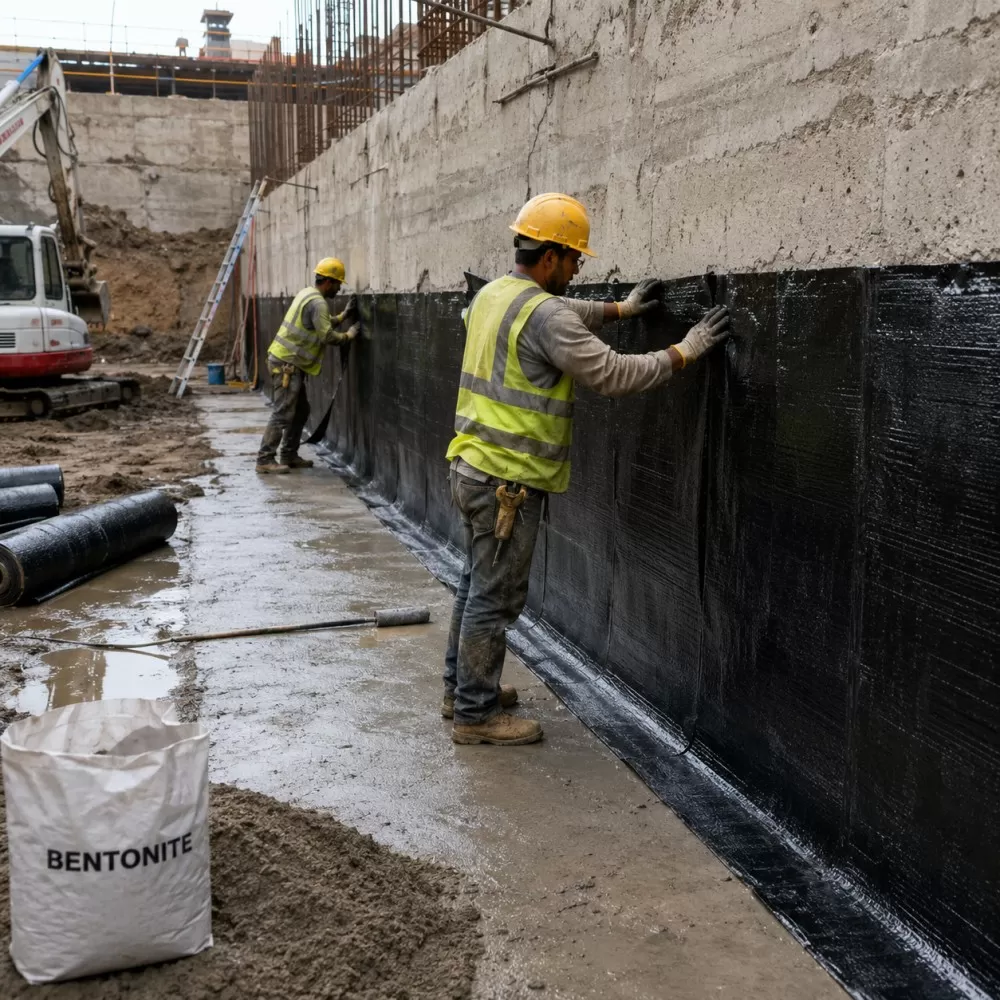
Comparative Analysis: Natural Bentonite vs. Synthetic Liners
High-Density Polyethylene (HDPE) and Geosynthetic Clay Liners (GCLs) represent alternative containment selections in modern civil engineering. While continuous welded HDPE sheet liners provide low starting permeability coefficients, their performance remains vulnerable to puncture shear, brittle seam degradation, UV deterioration, and high installation costs demanding certified field technicians. A punctured synthetic membrane allows targeted fluid migration through localized tears without any auto-repair mechanism.
A natural soil-blended bentonite liner forms a three-dimensional impervious zone rather than a thin two-dimensional plastic boundary. The mass of soil-clay aggregate resists puncture from angular subgrade stone, machinery tracks, or settling stress. Should a localized displacement occur, surrounding sodium bentonite particles absorb water, swell laterally, and autogenously seal the disruption, delivering long-term structural security for agricultural, commercial, and municipal impoundments.
Frequently Asked Questions
What differentiates an industrial-grade bentonite clay pond sealer from ordinary generic clay?
Industrial containment relies predominantly on sodium montmorillonite, which maintains an expansive crystal structure capable of swelling twenty times its original dry size. Standard construction clays, such as kaolinite or illite, are non-expansive and display coarse lattice dimensions. They fail to generate the impermeable colloidal gels required to drop hydraulic conductivity to the mandatory 10^-7 cm/s threshold.
How deep must the soil cover be over an installed clay layer?
A pure bentonite blanket requires a minimum of 150 mm to 300 mm (6 to 12 inches) of clean soil overburden. This structural surcharge serves two distinct engineering functions: it establishes confining pressure to optimize lateral gel expansion rather than unconsolidated upward displacement, and it shields the functional smectite barrier from puncture, wave erosion, and rapid freeze-thaw cycles.
Can sodium bentonite be used in brackish or hard water environments?
Deploying a bentonite clay pond sealer in high-calcium waters requires water testing before installation. Severe water hardness or high electrical conductivity compresses the electric double layer of the clay platelets through cation exchange, limiting the swell volume. In these structural environments, polymer-modified bentonites or elevated application rates are specified to compensate for chemical ionic interference.
What is the recommended equipment for mixed-layer compaction?
Compaction is ideally carried out using heavy smooth-drum vibratory rollers or sheepsfoot rollers, depending on parent soil composition. Sheepsfoot rollers work exceptionally well when blending bentonite into cohesive silty-clay matrixes because their protruding lugs knead the lifts together. Final passes with a smooth vibratory roller establish an even, consolidated sealing face.
Does cold weather and freezing ground damage an installed bentonite barrier?
Bentonite systems are naturally resilient against freeze-thaw degradation. When frozen, the moisture within the smectite matrix crystallizes, but upon thawing, the sodium bentonite naturally re-hydrates and re-swells without compromising its baseline hydraulic conductivity. This self-healing attribute offers a distinct advantage over rigid materials like concrete or unplasticized membranes that crack during frost-heave events.
Technical Inquiries & Bulk Procurement
For custom engineering consultations, hydraulic conductivity testing, or bulk vessel shipping specifications regarding high-yield Jinshi clay formulations, direct your project details to our technical team: alice@jinshimaterials.com.