
Industrial Sodium Bentonite Powder Uses: Drilling, Sealing & Foundries
2026-09-08
Sodium bentonite is an aluminum phyllosilicate clay consisting predominantly
of montmorillonite. Characterized by a 2:1 expandable layer structure (two
tetrahedral silica sheets enclosing an octahedral alumina sheet), it is
distinguished from calcium bentonite by the prevalence of monovalent sodium
(
The Crystalline Mechanism Driving Sodium Bentonite Performance
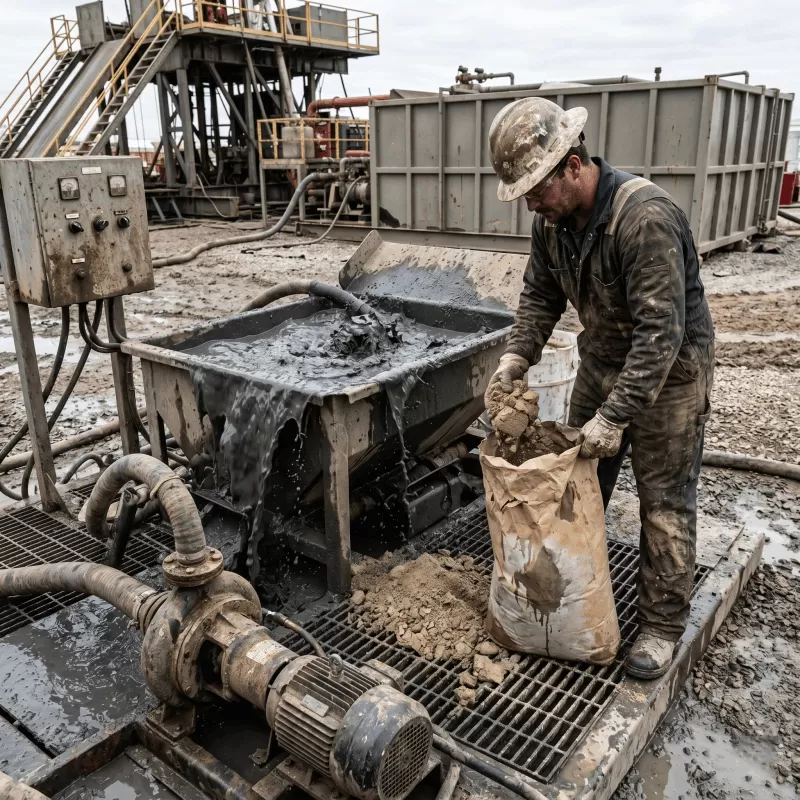
The industrial versatility of sodium bentonite stems directly from its layer charge and hydration mechanics. In the presence of water, polar water molecules are drawn into the interlayer spaces, separating the individual silicate platelets. Because sodium ions possess a lower ionic potential and a larger hydration radius compared to divalent calcium ions, the diffuse double layer expands significantly. This mechanism enables three physical behaviors:
Hydraulic Conductivity Reduction: Fully hydrated sodium bentonite forms a continuous, low-porosity gel that exhibits hydraulic conductivities down to
k ≤ 1 × 10⁻⁹ cm/s , serving as an effective hydraulic barrier.
Thixotropy and Rheological Control: When agitated, the platelet card-house structure breaks down, reducing fluid viscosity; under static conditions, it re-establishes, forming a rigid gel that suspends high-density solids.
High Specific Surface Area and CEC: With specific surface areas reaching 800 m²/g and a Cation Exchange Capacity (CEC) between 70 and 100 meq/100g, it exhibits exceptional cation adsorption, binding capability, and thermal stability.
Core Industrial Sodium Bentonite Powder Uses
1. Geotechnical Sealing and Environmental Containment
One of the most widespread sodium bentonite powder uses is serving as an impermeable barrier against aqueous transport in civil and environmental works.
Landfill Liners and Caps: Powdered and granular sodium bentonite is compounded into geosynthetic clay liners (GCLs) or mixed directly with local soil to form compacted clay liners (CCLs), meeting stringent EPA mandates for leachate retention.
Agricultural and Industrial Pond Sealing: Unlike calcium bentonite, which cracks during dry cycles, natural sodium bentonite maintains structural flexibility. For permeable, sandy substrates, application rates typically run from 3 to 5 lbs per square foot, incorporated into the upper 4–6 inches of subgrade and compacted to achieve maximum density.
Slurry Trench Cutoff Walls: Sodium bentonite powder is hydrated in fresh water to create a 4% to 7% slurry, functioning as hydrostatic support to prevent trench collapse during excavation while forming an impermeable subterranean cutoff wall.
2. Oil, Gas, and Geothermal Drilling Fluids
In deep borehole excavation, sodium bentonite powder acts as the primary viscometer and filtration control agent, calibrated to meet American Petroleum Institute (API) Specification 13A standards.
Borehole Stabilization: The colloidal platelets deposit onto the permeable formation wall, creating a thin, low-permeability "filter cake" that restricts the loss of the liquid phase into adjacent formations and maintains borehole integrity.
Cuttings Suspension and Hydraulic Transport: Due to its distinct yield point and plastic viscosity, bentonite-based drilling muds convey dense rock drill cuttings to the surface under laminar flow and hold them in suspension during pump shutdowns to prevent bit seizing.
Tool Cooling and Lubrication: The slurry reduces mechanical friction between the drill string and the wellbore, dissipating downhole heat.
3. Green Sand Casting in Foundries
In ferrous and non-ferrous metal casting, high-grade sodium bentonite is the preferred binder for silica sand molds.
Green and Dry Compression Strength: Sodium bentonite provides high green compression strength (strength when moist) and high dry/hot strength. This permits automated green sand molding lines to cycle quickly without mold collapse during pouring.
Thermal Durability: The crystal lattice of sodium bentonite retains its swelling and binding capacity through higher thermal thresholds than calcium variants, allowing greater reuse and reconditioning rates within sand reclamation circuits.
Dimensional Precision: By withstanding the hydrostatic pressure of molten metal at temperatures exceeding 1,400°C, it limits mold-wall movement and minimizes casting dimensional defects such as veining, scabbing, and washouts.
4. Iron Ore Pelletization
In metallurgical processing, low-silica sodium bentonite powder is applied as a binder (typically 0.5% to 0.8% by weight) during the tumbling of fine iron ore concentrates.
Pellet Integrity: It imparts the green, dry, and fired strength required for unfired ("green") pellets to withstand transport without degradation before entering the induration furnace.
Moisture Absorption Control: The high water-absorption capacity of the clay accommodates variations in the moisture content of the incoming concentrate cake.
5. Wastewater Remediation and Dewatering
The high CEC and lamellar structure of sodium bentonite are used in industrial effluent treatment:
Heavy Metal and Organics Adsorption: It binds positively charged heavy metal ions (such as
Pb2+, Cd2+, Ni2+ ), emulsified oils, and residual dyes from industrial streams.
Sludge Condition and Flocculation: Combined with primary coagulants and polyacrylamides, it acts as a ballasting agent to accelerate sedimentation and improve the mechanical dewatering efficiency of industrial sludge cakes.
Critical Technical Parameters for Specifying Sodium Bentonite
Procurement teams must match mineral specifications with operational environments to prevent project failure. Below are baseline specifications for standard industrial grades:
| Property | Drilling Fluid (API 13A) | Pond / Civil Sealing | Foundry Sand Binder |
|---|---|---|---|
| Montmorillonite Content | ≥ 85% | ≥ 75% | ≥ 80% |
| Free Swell Index (ASTM D5890) | ≥ 24 mL / 2g | ≥ 16–20 mL / 2g | ≥ 18 mL / 2g |
| Mesh Size (Sieve Analysis) | 95% passing 200 mesh | 70-90% passing 200 mesh | 80-90% passing 200 mesh |
| Liquid Limit (LL) | ≥ 500% | ≥ 400% | ≥ 450% |
| Filtrate Loss (API) | ≤ 12.5–15.0 mL | N/A | N/A |
Field Variables Affecting Performance
Even premium sodium bentonite can experience operational degradation if environmental chemistry is neglected:
Electrolyte Interference (Salinity): Contact with high-ionic-strength fluids, such as seawater or brine, compresses the electrical double layer around the montmorillonite platelets. This suppresses osmotic swelling, destabilizes suspensions, and increases hydraulic conductivity. For saline conditions, salt-tolerant polymer-treated or organophilic bentonites are required.
Compaction and Curing Dynamics: In geotechnical cutoff or pond projects, applying sodium bentonite without mechanical compaction leads to channels forming under hydraulic head pressure. Achieving 90% to 95% of Standard Proctor Maximum Dry Density is standard practice to secure the impermeable layer.
Natural Sodium vs. Sodium-Activated Bentonite: Natural sodium bentonite (typically sourced from regions like Wyoming, USA, or selected deposits in China) provides superior thermal longevity and persistent swelling compared to "activated" or "peptonized" calcium bentonite that has been treated with soda ash (
Na2CO3 ). Activated clays often revert to lower swelling states via reverse cation exchange when exposed to calcium-rich groundwater.
Sourcing High-Purity Bentonite with Jinshi
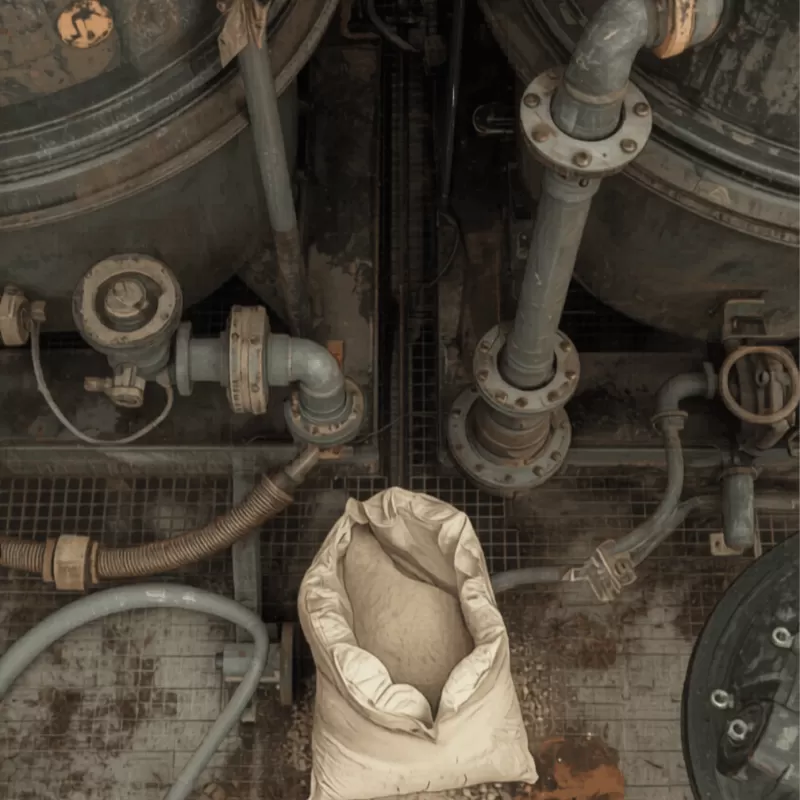
Consistent field results depend directly on stable mineral deposits and consistent milling. Jinshi manufactures and exports high-grade sodium bentonite powders adapted to API 13A, foundry, and geotechnical standards. By maintaining strict control over montmorillonite content, particle size distribution, and swell metrics, Jinshi supplies bulk industrial operations with reliable materials that perform consistently under demanding downhole and containment conditions.
Frequently Asked Questions (FAQ)
What is the primary difference between sodium and calcium bentonite powder?
Sodium bentonite contains exchangeable sodium cations, providing high water absorption, expansive swelling (12–15 times volume), and durable gel formations. Calcium bentonite features divalent calcium cations, resulting in significantly lower swelling and plasticity. Consequently, sodium bentonite is used for industrial sealing, drilling fluids, and foundry binding, whereas calcium bentonite is preferred for bleaching, pharmaceuticals, and soil remediation where high swelling is undesirable.
Can sodium bentonite powder uses include sealing ponds that already have water?
Yes, through the "sprinkle method," but it is significantly less reliable than dry-bed incorporation. Granular or pelletized sodium bentonite is cast over the water surface, settling by gravity into leaks. However, for a guaranteed long-term seal, the blanket method—draining the pond, blending sodium bentonite powder with the subsoil at 3–5 lbs/sq ft, and mechanically compacting—is the established engineering method.
What mesh size of sodium bentonite is best for drilling versus pond sealing?
Drilling mud systems generally require fine 200-mesh sodium bentonite powder to maximize surface contact and hydration speed in fresh water. Pond and containment sealing frequently employs a broader blend, including 40–80 mesh or granular aggregates (8–20 mesh), to prevent material blow-away during application and provide layered, sustained expansion across uneven subgrades.
How does cation exchange capacity (CEC) impact sodium bentonite performance?
A higher CEC (typically above 75 meq/100g) indicates a higher concentration of active montmorillonite platelets capable of hydration and bonding. Clays with high CEC exhibit greater swelling indices, better thermal durability in metal casting, and superior capture of heavy metal cations in wastewater remediation.
Does sodium bentonite degrade or decompose over time?
Sodium bentonite is an inorganic mineral that does not biodegrade, rot, or wash away when installed under correct confinement. Its hydraulic containment performance remains intact indefinitely, provided it is protected from harsh chemical shifts (such as high-concentration acid streams or multivalent saline brines) that cause cation displacement.
Optimize Your Mineral Supply Chain with Jinshi
Whether you require bulk shipments of API-compliant drilling bentonite, high-durability green sand binders, or geotechnical barrier clays, Jinshi provides fully characterized, lot-certified sodium bentonite powder engineered to exact operational parameters. Contact our engineering team today to review technical data sheets, request laboratory samples, or receive a formal quote tailored to your project location.