
Why is Crushed Sodium Bentonite the Standard for Geosynthetic Barriers and Cat Litter?
2026-07-08
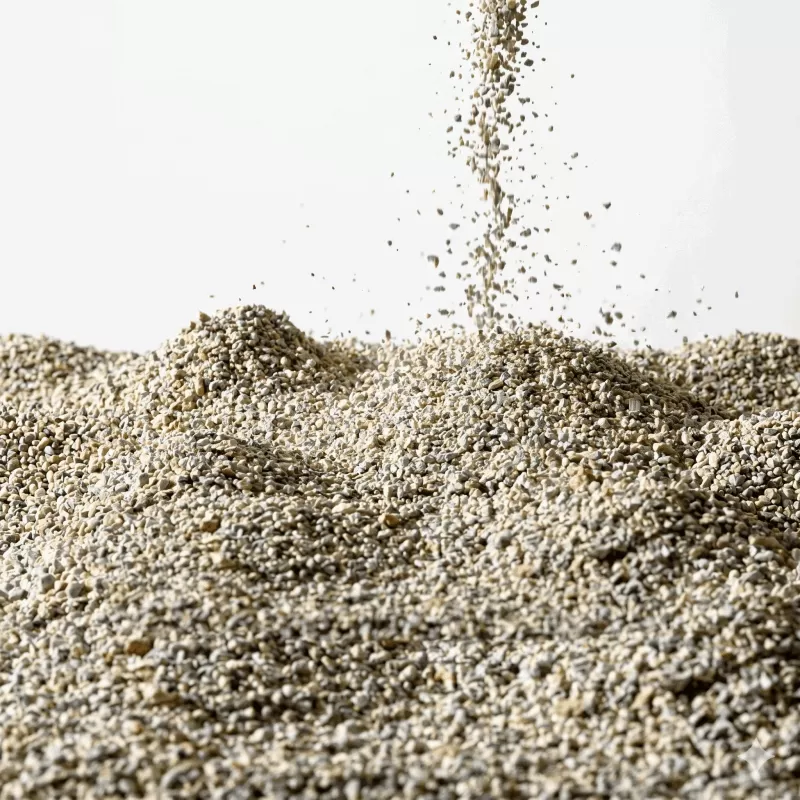
Sodium bentonite is an aluminum silicate clay consisting primarily of montmorillonite. It is widely recognized for its high swelling capacity, strong cation exchange capabilities, and low hydraulic conductivity. While bentonite is available in various forms, from fine powders to raw lumps, crushed sodium bentonite offers a balanced particle size distribution that is ideal for multiple industrial applications. This form provides controlled hydration rates, easier handling, and minimized dust compared to fine powders, making it a preferred material in environmental containment, civil engineering, and consumer products such as pet care items.
Industrial operations require raw materials that perform reliably under varied environmental conditions. As a supplier of industrial clay minerals, Jinshi produces processed clay solutions that meet rigorous technical specifications. Understanding the mineralogical structure and physical behavior of crushed sodium bentonite allows procurement officers and project engineers to make informed decisions regarding material selection, application methods, and quality standards.
Mineralogical Structure and Hydration Mechanism
The performance of crushed sodium bentonite is rooted in its microscopic structure. Montmorillonite, the primary constituent, is a 2:1 clay mineral. This means each sheet consists of an octahedral alumina layer sandwiched between two tetrahedral silica layers. In sodium bentonite, sodium ions (Na+) are the predominant exchangeable cations located in the interlayer spaces between these sheets.
The presence of sodium ions is highly significant. Because sodium has a relatively small ionic charge and a large hydration radius, it allows water molecules to penetrate the interlayer spaces easily. This process, known as crystalline swelling, can expand the clay lattice significantly. When exposed to water, high-quality sodium bentonite can absorb several times its dry weight in water, swelling to many times its original dry volume.
This swelling process continues into osmotic swelling, where the clay particles disperse into colloidal sheets, creating a highly viscous gel. This gel structure acts as an effective hydraulic barrier. The swelling fills voids within the surrounding soil or engineering matrix, resulting in a low-permeability seal that restricts the movement of liquids and gases. For industrial applications, managing the particle size through crushing ensures that hydration occurs uniformly, avoiding the localized clump formation often associated with fine bentonite powders.
Primary Applications of Crushed Sodium Bentonite
The versatile physical properties of crushed sodium bentonite make it suitable for a wide range of demanding sectors. By adjusting the particle size and moisture content during processing, the material can be adapted for specific industrial needs.
1. Geosynthetic Clay Liners (GCLs) and Environmental Barriers
In environmental containment, such as landfill liners, canal linings, and secondary containment structures for hazardous materials, crushed sodium bentonite is a primary sealing component. Geosynthetic Clay Liners consist of a layer of bentonite supported by geotextiles or geomembranes.
Hydraulic Conductivity: When hydrated, the bentonite layer forms a low-permeability barrier with hydraulic conductivity values typically lower than 1 x 10^-11 m/s, preventing leachate from contaminating groundwater.
Self-Sealing Capability: If the liner experiences minor punctures or shifts during installation, the swelling properties of the adjacent crushed clay allow it to expand and seal the void naturally.
Controlled Hydration: Using a crushed grade instead of a fine powder ensures that the bentonite does not hydrate prematurely from ambient humidity during transport and installation, preserving its sealing capacity for when it is deployed.
2. Cat Litter Formulation
The consumer pet product sector, particularly clumping cat litter manufacturing, relies heavily on high-quality clay materials. Crushed sodium bentonite serves as the primary ingredient in premium clumping formulations due to its natural absorption profile.
Rapid Clumping: Upon contact with liquid, the crushed particles absorb moisture quickly, expanding and binding together to form solid, easily removable clumps.
Dust Reduction: Compared to fine powder, a carefully screened crushed grade contains fewer fine particles, resulting in a low-dust product that is safer and more appealing for residential use.
Odor Containment: The high surface area of the clay platelets assists in trapping ammonia compounds, naturally reducing odors without relying heavily on artificial fragrances.
3. Foundry Sand Binder
In metal casting, foundry sand must maintain its shape under high temperatures and pressures. Crushed sodium bentonite is used as a binding agent in green sand molds. It provides high dry and hot strength, ensuring the mold does not collapse during the metal pouring process, which helps reduce casting defects.
4. Civil Engineering and Slurry Walls
For deep excavations, diaphragm walls, and tunneling projects, bentonite slurries are used to stabilize trench walls. The crushed material is mixed with water to create a thixotropic slurry. This slurry exerts hydrostatic pressure against the trench walls, preventing collapse while remaining fluid enough to be displaced during concrete pouring.
Handling Industrial Challenges and Solutions
While crushed sodium bentonite is highly functional, industrial users often encounter specific logistical and operational challenges during bulk handling and processing. Identifying these issues is necessary for maintaining efficiency.
Managing Particle Size Distribution
Inconsistent particle size can lead to uneven hydration. If the material contains too many large fragments, hydration will be slow and incomplete, leading to voids in barrier applications. Conversely, excessive fine particles create dust hazards and can cause premature clumping in processing machinery. Jinshi addresses this by utilizing precise mechanical crushing and multi-stage screening processes to ensure the particle size distribution remains within strict tolerances specified by the client.
Moisture Control during Storage and Transport
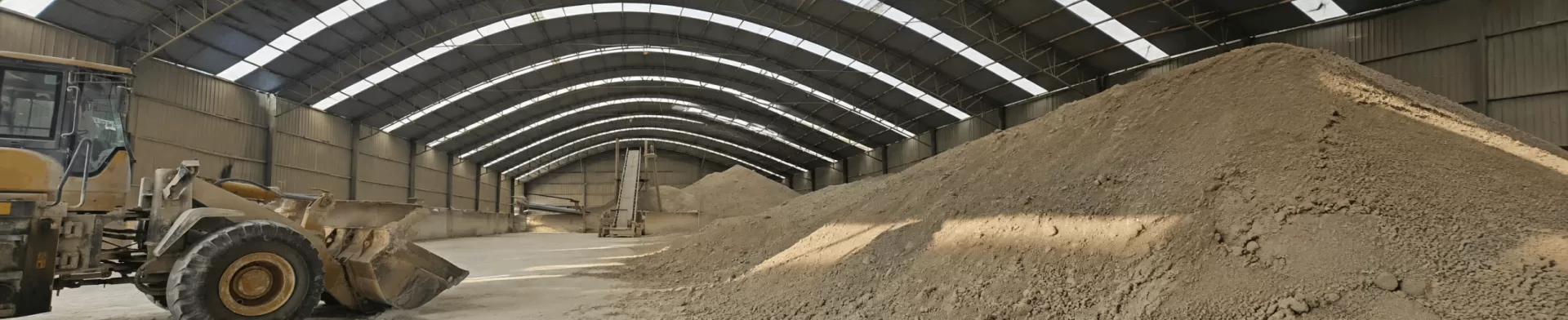
Sodium bentonite is highly hygroscopic. If exposed to atmospheric moisture or rain during transit, bulk shipments can begin to hydrate, leading to caking and lump formation. This can make unloading silo systems difficult. To mitigate this, proper storage in dry, well-ventilated environments is necessary. Jinshi provides packaged solutions, including moisture-resistant bulk bags (jumbo bags), to protect the material from environmental humidity during long-distance shipping.
Chemical Interference in Saline Environments
The swelling capacity of sodium bentonite can be reduced in the presence of highly saline water or acidic leachates. High concentrations of divalent cations, such as calcium (Ca2+) or magnesium (Mg2+), can displace the sodium ions through cation exchange, converting the clay into a lower-swelling calcium bentonite. In projects where saline groundwater is present, pre-hydration with fresh water or the use of specially treated bentonite formulations is recommended to preserve the integrity of the hydraulic seal.
Quality Control Standards at Jinshi
To ensure consistent performance in civil engineering and manufacturing applications, crushed sodium bentonite must undergo rigorous quality control testing. Jinshi maintains a structured testing protocol from extraction to final packaging.
Key testing metrics include:
Free Swell Index: Measures the volume of gel formed by 2 grams of dry clay in water, indicating the expansion capacity.
Fluid Loss: Evaluates the sealing capability of a clay slurry under pressure, confirming its low-permeability characteristics.
Moisture Content: Monitored closely during the drying phase to ensure the raw clay retains enough natural moisture to prevent structural degradation of the platelets while remaining dry enough to prevent clumping during storage.
Particle Size Analysis: Conducted via sieve testing to verify compliance with the target mesh specifications.
By maintaining stable mineral sources and employing modern processing equipment, Jinshi ensures that each batch of crushed clay meets the specific standards required for municipal landfill liners, civil engineering projects, and industrial manufacturing.
Industrial Procurement and Inquiry
Selecting the appropriate grade of crushed sodium bentonite depends heavily on the specific requirements of your project, whether you require a highly specific particle size for geosynthetic clay liners or a low-dust profile for consumer packaging. Factors such as logistics, packaging specifications, and swelling requirements must be evaluated during the procurement phase.
The technical team at Jinshi is available to assist you with material selection, technical specifications, and bulk logistics management. To receive a detailed product specification sheet, request samples, or obtain a quote tailored to your industrial requirements, please submit your inquiry with your specific project details, and our technical representatives will contact you shortly.
Frequently Asked Questions
Q1: What is the difference between crushed sodium bentonite and calcium bentonite?
A1: Sodium bentonite contains sodium as the predominant exchangeable cation, which allows for high swelling, gel formation, and low permeability. Calcium bentonite contains calcium as the primary cation, resulting in significantly lower swelling capacity but excellent adsorption properties, often used in bleaching clays or clarifying oils.
Q2: Why is the crushed form preferred over fine bentonite powder in certain applications?
A2: The crushed form offers improved handling characteristics, reduced dust generation during transfer, and a more controlled hydration rate. Fine powders can hydrate too quickly on the surface, forming a sticky skin that prevents water from reaching the dry clay inside, whereas crushed particles hydrate more uniformly.
Q3: How does moisture level affect the storage life of crushed sodium bentonite?
A3: If stored in a dry, covered facility within moisture-resistant packaging, the material has an almost indefinite shelf life. However, if exposed to humidity or direct water, it will absorb moisture, causing the particles to stick together, which reduces its usability in bulk dry feeding systems.
Q4: Can crushed sodium bentonite be used in saltwater environments?
A4: High salinity can inhibit the osmotic swelling of sodium bentonite, reducing its effectiveness as a barrier. For projects involving saltwater, it is common practice to pre-hydrate the bentonite with fresh water before exposure to salt water, or to use polymer-modified bentonite grades designed for saline conditions.
Q5: What packaging options does Jinshi provide for bulk shipments?
A5: Jinshi provides multiple packaging solutions, including standard multi-wall paper bags for smaller quantities and high-strength, moisture-resistant jumbo bags (bulk bags) ranging from 1.0 to 1.5 metric tons, optimized for safe transport and efficient industrial handling.