
5 Engineering Standards for Utilizing Granular Sodium Bentonite Clay for Pond Sealing
2026-07-06
Subsurface fluid containment is a primary concern in geotechnical engineering, agricultural planning, and environmental management. Seepage from reservoirs, municipal lagoons, and agricultural storage basins represents a loss of valuable water assets and poses structural hazards to adjacent foundations. Traditional containment solutions, such as synthetic geomembranes, can be prone to puncture, degradation from ultraviolet exposure, and high installation costs. Consequently, civil engineers and land developers frequently turn to natural, self-healing mineral sealants. Among these options, granular sodium bentonite clay for pond sealing has established itself as a highly reliable, cost-effective, and permanent barrier material when applied using correct engineering principles.
The success of a clay-based barrier depends on the mineralogical characteristics of the raw material and the precision of the installation methodology. This document examines the physical properties of sodium bentonite, the hydraulics of clay hydration, structural design calculations, and the environmental factors that dictate successful pond rehabilitation. Jinshi provides high-grade granular bentonite manufactured to meet rigid geotechnical specifications, ensuring long-term containment performance across diverse soil environments.
Mineralogical Composition and Hydration Dynamics
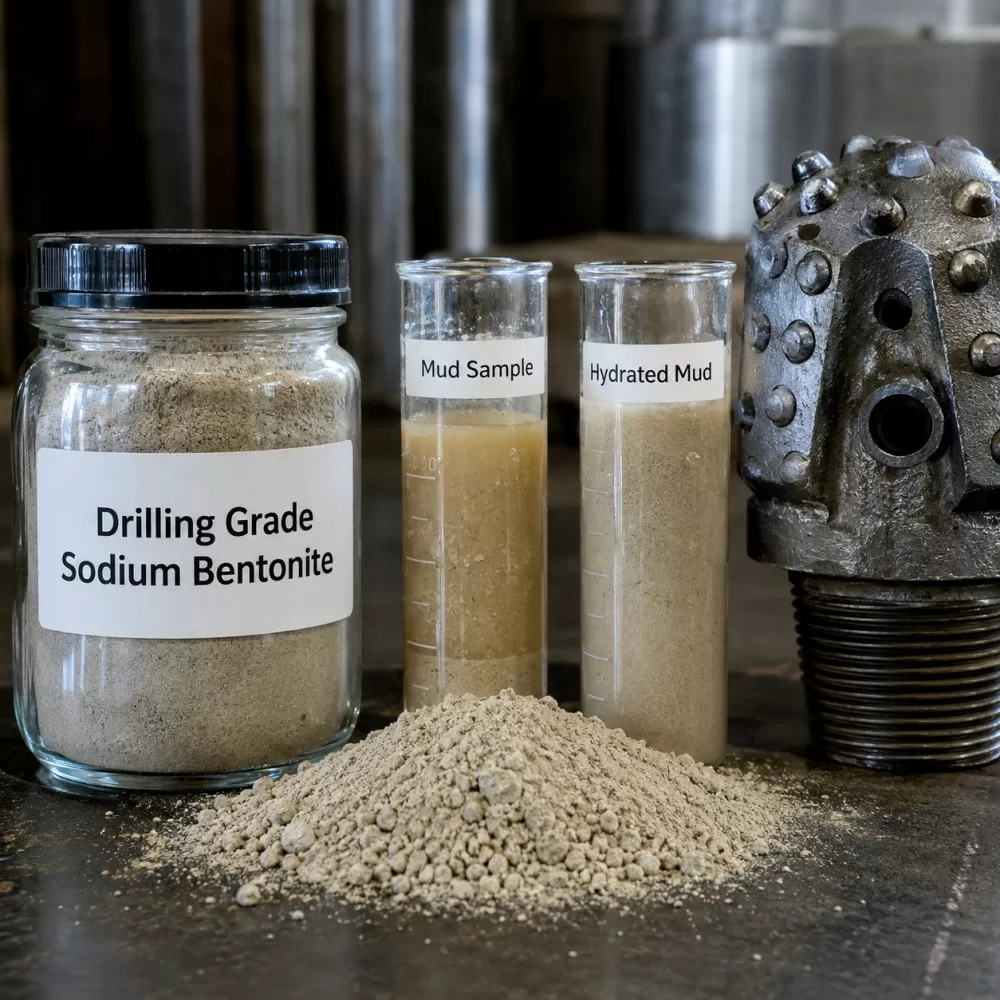
To understand why granular sodium bentonite clay for pond sealing is so effective, one must analyze its mineral structure. Sodium bentonite is a highly colloidal clay formed from the weathering of volcanic ash in marine environments. The primary active component of this clay is sodium montmorillonite, a three-layer clay mineral consisting of an octahedral alumina sheet sandwiched between two tetrahedral silica sheets.
The Swelling Mechanism of Sodium Montmorillonite
The interlayer spaces within the montmorillonite structure are occupied by exchangeable sodium ions ($Na^+$). These sodium ions have a high affinity for water molecules. When the clay is exposed to moisture, water is drawn into the interlayer spaces, causing the silicate platelets to separate. This process, known as crystalline swelling, is followed by osmotic swelling as more water enters the system, expanding the clay to 15 to 20 times its original dry volume.
As the clay hydrates within the confined space of a soil matrix, it swells against the surrounding soil particles, filling voids, fractures, and macro-pores. The resulting gelatinous mass forms an impermeable layer that prevents fluid migration. Unlike calcium bentonite, which has a much lower swelling capacity due to the divalent nature of calcium ions, sodium bentonite offers the high plasticity and expansive force necessary to create a dependable hydraulic seal.
Hydraulic Conductivity and Darcy's Law
The efficiency of a pond sealant is evaluated by its hydraulic conductivity, also known as the permeability coefficient ($K$). Geotechnical standards typically require a permeability coefficient of less than $1 \times 10^{-7}$ centimeters per second ($cm/s$) for containment structures. The flow of water through a bentonite-soil liner is governed by Darcy's Law:
Q = K · i · A
Where $Q$ represents the flow rate, $K$ is the hydraulic conductivity, $i$ is the hydraulic gradient, and $A$ is the cross-sectional area of flow. By integrating granular sodium bentonite clay for pond sealing into the native soil, engineers can lower the hydraulic conductivity ($K$) of highly permeable sandy or gravelly soils from $1 \times 10^{-3}$ $cm/s$ to well below the $1 \times 10^{-8}$ $cm/s$ threshold, effectively halting subsurface seepage.
Application Methodologies for Pond Containment
The selection of an application method depends on the pond's physical status, the permeability of the existing subgrade soil, and the availability of earthmoving equipment. Three primary methods are utilized in civil and agricultural applications.
The Soil Admixture Method
This method is widely regarded as the most cost-effective and structurally stable approach for new pond construction or dry rehabilitation projects. It involves blending granular sodium bentonite clay for pond sealing directly with the native sandy or silty soil to create a stabilized, low-permeability liner.
The installation procedure follows a sequential mechanical process:
Subgrade Preparation: The basin is cleared of all vegetation, organic debris, and stones larger than 50 millimeters. The subgrade is then graded to a uniform slope.
Bentonite Distribution: The granular bentonite is spread evenly across the surface at a predetermined application rate, typically ranging from 10 to 30 kilograms per square meter, depending on soil analysis.
Blending: A rototiller or agricultural disc plow mixes the bentonite into the top 100 to 150 millimeters of soil, ensuring a homogeneous blend.
Moisture Adjustment: The soil-bentonite mixture is moistened to its optimum moisture content, which is determined via a Standard Proctor Compaction Test.
Compaction: A vibratory smooth-drum roller or sheepsfoot roller compacts the blended layer to at least 90% to 95% of its maximum dry density.
The Pure Blanket Method
In situations where the native soil contains too much gravel or coarse sand to form a stable mixture, the pure blanket method is applied. This method involves placing a continuous, uniform layer of pure granular sodium bentonite clay for pond sealing directly over the prepared subgrade, which is then covered with a protective layer of native soil.
Because the bentonite layer is unblended, it forms an extremely low-permeability barrier. However, this pure clay layer is highly vulnerable to erosion from wave action or mechanical damage. To prevent this, engineers require a minimum protective cover of 300 millimeters of compacted soil or riprap placed over the hydrated bentonite blanket. This overburden pressure also provides the confining stress necessary for the bentonite to achieve its maximum sealing density.
The Direct-Cast or Under-Water Repair Method
When a pond cannot be drained, or when localized leaks develop in an active reservoir, granular sodium bentonite clay for pond sealing can be applied directly through the water column. This is where the granular form of the clay is superior to powdered alternatives.
Powdered clay tends to clump on the surface or drift with wind and water currents, failing to reach the target area. Granular particles, which typically range from 1 to 5 millimeters in size, are denser and sink rapidly to the bottom of the pond. Once they settle on the reservoir bed, they hydrate slowly, swelling in place to seal cracks, voids, and spring holes. While this method is highly effective for localized repairs, it should not replace blanket or admixture methods for entire pond installations due to the difficulty of ensuring completely uniform coverage underwater.
Geotechnical Challenges and Engineering Solutions
A successful installation requires careful consideration of the chemical and physical environment. Soil chemistry, water quality, and mechanical forces all impact the performance of bentonite liners.
Water Quality and Cation Exchange
The high swelling capacity of sodium bentonite relies on the presence of single-charge sodium ions ($Na^+$) in the clay matrix. If the pond water contains high concentrations of divalent cations, such as calcium ($Ca^{2+}$) or magnesium ($Mg^{2+}$), or has high salinity, a process called cation exchange can occur. The divalent calcium ions displace the monovalent sodium ions, reducing the interlayer spacing of the montmorillonite platelets.
This ion exchange significantly decreases the clay's swelling capacity and increases its hydraulic conductivity, potentially leading to containment failure. In regions with hard water or brackish runoff, geotechnical engineers must test the water chemistry before design approval. If high cation levels are detected, pre-hydrating the bentonite liner with fresh municipal water prior to filling the pond with hard water can establish the seal before chemical degradation occurs.
Desiccation Cracking and Wet-Dry Cycles
Ponds that experience seasonal fluctuations in water levels are subject to wet-dry cycling. When clay dries out, it shrinks, forming desiccation cracks. While sodium bentonite has self-healing properties that allow cracks to swell shut upon re-wetting, repeated extreme drying can compromise the integrity of the soil-bentonite matrix over time.
To mitigate this vulnerability, the protective soil cover placed over the bentonite layer must be deep enough to retain moisture during dry spells. Incorporating a well-graded soil cap over the liner helps prevent the clay layer from losing moisture to the atmosphere, protecting it from cracking during extended dry seasons.
Industrial and Agricultural Applications
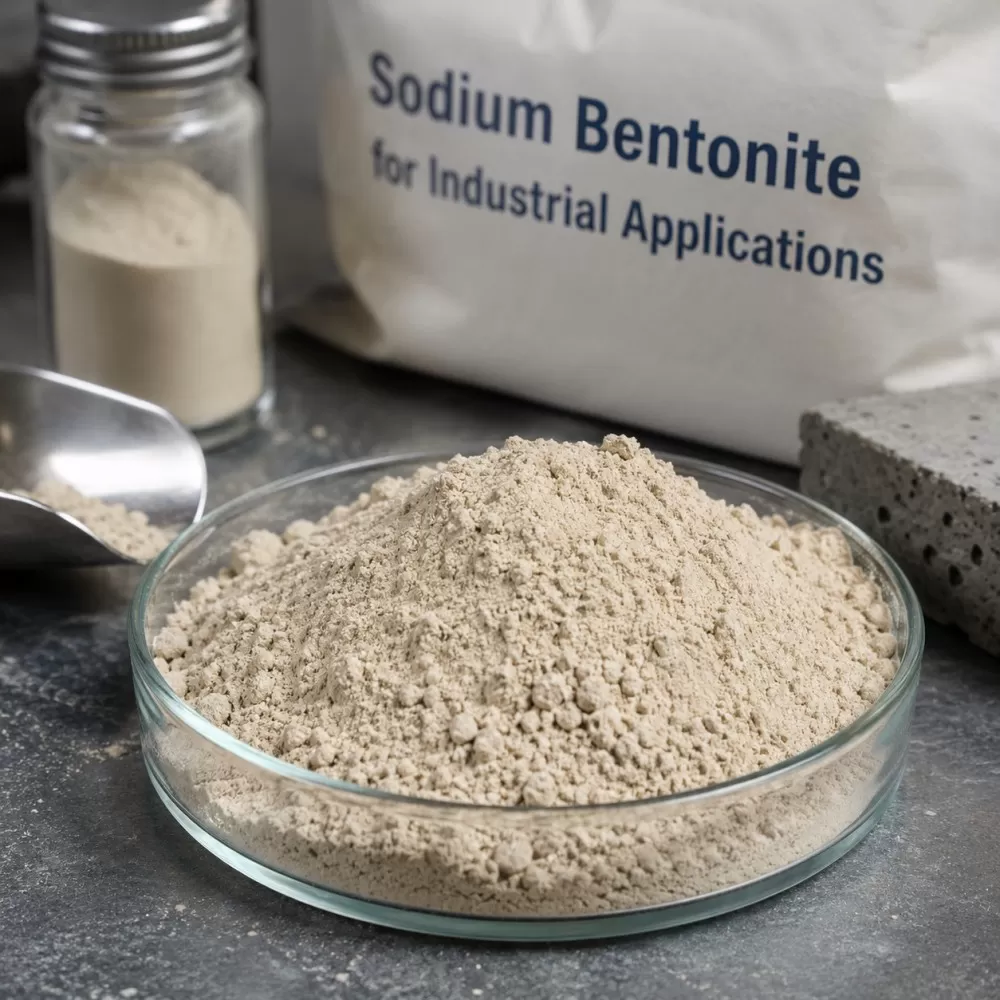
The versatility of granular sodium bentonite clay for pond sealing makes it a preferred option across several sectors:
Agricultural Reservoirs: Farmers use bentonite to seal irrigation ponds and livestock watering basins, ensuring that collected rainwater does not seep into the deep subsoil.
Municipal Wastewater Lagoons: Environmental regulations demand reliable barriers to prevent municipal effluent from leaching into local aquifers. Bentonite-soil liners provide a natural, chemical-resistant seal for these facilities.
Aquaculture Facilities: Fish hatcheries and commercial shrimp ponds require non-toxic liners that do not leach synthetic chemicals into the water. Bentonite provides a safe environment for aquatic life while maintaining water levels.
Stormwater Retention Basins: Commercial developments utilize bentonite to seal urban runoff basins, ensuring controlled discharge and groundwater protection.
Material Quality and Standards: The Jinshi Standard
Not all bentonite clays offer the same level of performance. Low-grade clays containing high percentages of quartz, feldspar, or calcium do not provide the swelling capacity required for hydraulic sealing. When specifying granular sodium bentonite clay for pond sealing, engineers rely on standardized testing protocols to verify material quality.
Jinshi enforces strict quality control standards throughout the mining and processing stages. Our granular bentonite is tested in accordance with ASTM international standards:
| Standard Test Method | Parameter Measured | Target Engineering Value |
|---|---|---|
| ASTM D5890 | Swell Index (per 2 grams of clay) | ≥ 24 mL |
| ASTM D5891 | Fluid Loss (Filtrate Volume) | ≤ 18 mL |
| ASTM D5084 | Hydraulic Conductivity (Permeability) | ≤ 1 x 10⁻⁸ cm/s |
| Sieve Analysis | Granule Size Distribution | 1 mm to 5 mm (Uniformly Graded) |
By maintaining a high montmorillonite content and precise particle size distribution, Jinshi ensures that our granular clay hydrates uniformly without clumping, delivering consistent sealing properties across the entire project area.
Frequently Asked Questions
Q1: How much granular sodium bentonite clay for pond sealing is typically required per square meter?
A1: The application rate depends on the composition of the native soil. Sandy soils generally require 15 to 25 kilograms of bentonite per square meter to form a reliable seal. Silty sand may only require 10 to 15 kilograms, while coarse sand and gravel can require 30 kilograms or more per square meter, or require the pure blanket method.
Q2: Can granular bentonite be applied to a pond that is already full of water?
A2: Yes, granular bentonite can be applied through standing water to address localized leaks. Because the granules are heavy and dense, they sink quickly to the bottom, settling directly over the leakage point before fully hydrating and swelling to plug the void. However, for a complete, long-term seal of an entire pond basin, dry application and compaction are recommended.
Q3: Is sodium bentonite safe for use in fish ponds and livestock watering basins?
A3: Yes, sodium bentonite is a completely natural, chemically inert clay mineral. It does not leach synthetic polymers, plasticizers, or harmful chemicals into the water. It is safe for aquatic plants, fish, livestock, and surrounding vegetation, making it an environmentally friendly option for agricultural and recreational applications.
Q4: How long does a bentonite pond seal last once installed?
A4: A properly installed sodium bentonite seal is permanent. Because bentonite is a natural mineral rather than a synthetic material, it does not rot, tear, oxidize, or degrade over time. As long as the protective soil cover remains intact and the clay is kept hydrated or protected from extreme desiccation, the seal will remain effective indefinitely.
Q5: What is the difference between calcium bentonite and sodium bentonite for pond sealing?
A5: Sodium bentonite has single-charge sodium ions in its interlayer structure, allowing it to absorb large volumes of water and expand up to 15-20 times its dry volume, creating a highly impermeable barrier. Calcium bentonite has double-charge calcium ions, which limit its expansion to only 2-3 times its dry volume. Consequently, calcium bentonite does not provide the swelling capacity required to seal porous soils under hydraulic pressure.
Submit an Inquiry for Your Containment Project
Engineering a durable, low-permeability pond liner requires high-quality mineral resources and correct geotechnical application. Jinshi manufactures premium-grade granular sodium bentonite clay for pond sealing designed to meet the strict demands of civil, agricultural, and industrial infrastructure projects. Our technical support team is available to assist you in determining the correct application rates, soil blending ratios, and testing protocols for your specific soil conditions.
For material specifications, bulk pricing inquiries, or technical support for your containment project, please submit an inquiry to our civil engineering sales division today.