
5 Industrial Applications of High-Yield Sodium Bentonite Clay
2026-07-03
Industrial operations rely heavily on natural minerals that exhibit predictable, stable physical properties under demanding conditions. Among these minerals, sodium bentonite stands out as one of the most versatile materials utilized across civil engineering, environmental containment, well drilling, and metal casting. Known scientifically for its high montmorillonite content and exceptional swelling capacity, this clay serves as a vital component in structural barriers, drilling fluids, and binding agents.
When searching for sodium bentonite clay for sale, procurement officers and engineering specialists must look beyond basic pricing to examine the underlying mineralogical quality. The market contains a wide variety of clay grades, ranging from raw, unprocessed ores to highly refined, polymer-treated variations. Selecting the correct grade is necessary to ensure project success, maintain regulatory compliance, and prevent costly operational failures. Jinshi provides high-grade natural and activated bentonite processed to meet specific international standards, ensuring reliability in heavy industrial applications.
Understanding the Mineralogy of Sodium Bentonite
Sodium bentonite is an aluminum phyllosilicate clay consisting primarily of montmorillonite. The defining characteristic of this mineral is its three-layer crystalline structure, where an octahedral alumina sheet is sandwiched between two tetrahedral silica sheets. In sodium bentonite, the interlayer spaces are occupied predominantly by exchangeable sodium cations (Na+), as opposed to calcium cations (Ca2+) found in calcium bentonite.
This ionic configuration is highly significant. Because sodium ions have a smaller hydration energy and a larger hydration radius compared to calcium ions, they allow water molecules to penetrate deep into the crystalline layers. This process causes the clay lattice to expand. When hydrated, high-quality sodium bentonite can swell up to 15 to 20 times its dry volume, transforming into a dense, low-permeability gel. This swelling capacity is the primary driver behind its use as an impermeable sealant and viscosifier.
The mineral geological origin determines its chemical stability. Natural sodium bentonite deposits, which are less common than calcium bentonite deposits, offer superior thermal stability, higher shear strength, and better resistance to chemical degradation. For industries operating in harsh chemical environments or high-temperature zones, sourcing natural sodium bentonite is often preferred over chemically treated calcium-to-sodium activated clays, as the latter can lose their sodium ions over time through ion exchange processes in the field.
Evaluating Sodium Bentonite Clay for Sale: Quality Metrics for Industrial Buyers
To secure a reliable supply chain, procurement teams must evaluate specific physical and chemical metrics. Relying solely on the generic label of bentonite is insufficient for projects that require precise viscosity control or hydraulic conductivity. The following parameters serve as the industry standard for evaluating the quality of sodium bentonite clay for sale on the global market:
Montmorillonite Content: High-grade industrial bentonite should contain at least 70% to 90% montmorillonite. Lower percentages indicate the presence of accessory minerals like quartz, feldspar, or gypsum, which act as inert fillers and reduce the swelling performance.
Swelling Index: Measured in milliliters per 2 grams of clay (ml/2g) according to ASTM D5890 standards. Premium industrial grades typically exhibit a swell index of 20 ml/2g or higher, indicating strong hydration capacity.
Cation Exchange Capacity (CEC): This measures the clay's ability to exchange ions, typically expressed in milliequivalents per 100 grams (meq/100g). A high CEC (above 70 meq/100g) correlates with superior binding and swelling properties.
Moisture Content: Raw bentonite contains significant moisture. For processed powder or granular forms, the moisture level must be maintained within a tight range, usually between 8% and 12%, to prevent premature clumping while preserving the mineral's natural structure.
Particle Size Distribution: Depending on the application, bentonite is processed into granular forms (for pond sealing and cat litter raw materials) or fine powders (such as 200 mesh or 325 mesh for drilling muds and foundry binders). Consistency in particle size ensures uniform mixing and hydration rates.
By establishing these parameters prior to purchase, industrial buyers can benchmark different suppliers. Jinshi maintains strict quality control over these specific metrics, ensuring that every batch of raw material shipped matches the technical data sheets required by civil engineers and plant managers.
Primary Industrial Applications and Performance Requirements
The unique rheological and sealing characteristics of sodium bentonite make it a valuable asset in several distinct sectors. Each application requires a specific grade and processing method to achieve optimal performance.
1. Geotechnical Sealing and Environmental Containment
In civil engineering and environmental protection, preventing the migration of water or hazardous fluids is a primary challenge. Sodium bentonite is widely used to construct low-permeability barriers. When hydrated under confinement, the clay exerts swelling pressure against the surrounding soil, filling voids, cracks, and pore spaces to create a highly effective hydraulic seal.
This material is the core component in Geosynthetic Clay Liners (GCLs) used in municipal landfills, mining heap leach pads, and industrial wastewater ponds. The hydraulic conductivity of a properly compacted sodium bentonite layer can reach as low as 1 x 10^-9 cm/s. This extremely low permeability prevents contaminants from leaching into local groundwater systems, helping operations comply with environmental protection standards.
2. Drilling Fluids and Civil Slurry Walls
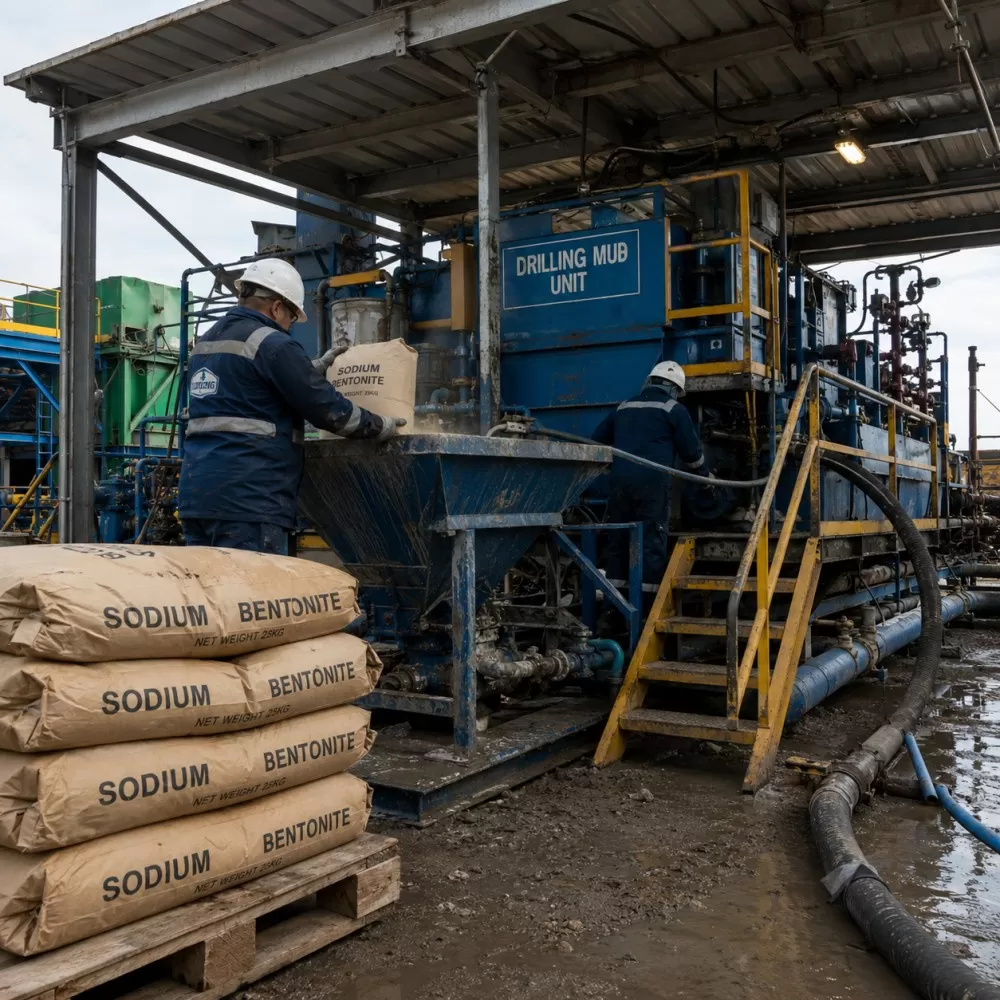
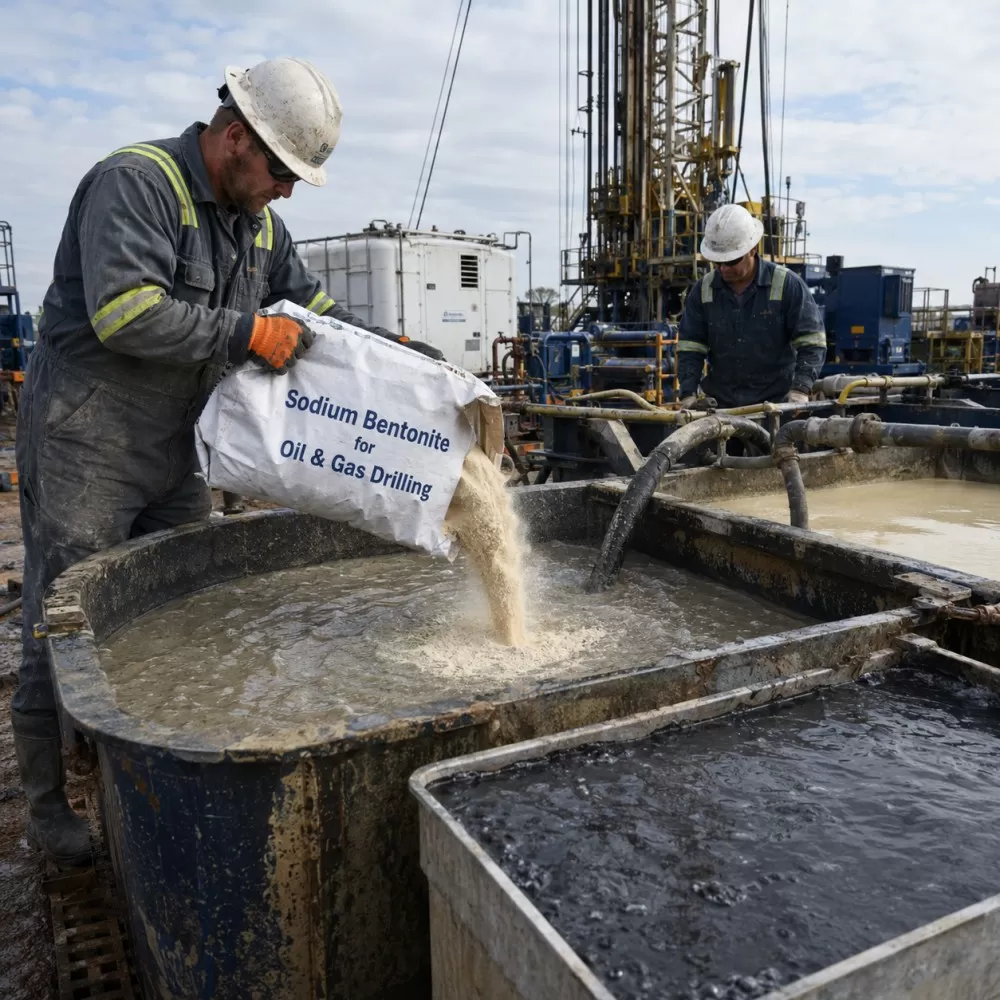
The oil, gas, and water well drilling industries require reliable drilling muds to cool the drill bit, transport cuttings to the surface, and exert hydrostatic pressure to prevent borehole collapse. Sodium bentonite serves as a primary viscosifier in water-based drilling fluids. When mixed with water, it exhibits thixotropic properties, meaning it behaves as a fluid under shear stress (during pumping) but reverts to a gel-like state when static, preventing drill cuttings from settling to the bottom of the wellbore.
For these applications, bentonite must comply with American Petroleum Institute (API) Specification 13A standards. Key requirements include specific viscometer readings at 600 rpm, yield point to plastic viscosity ratios, and fluid loss control. In urban civil engineering, the same slurry properties are utilized to excavate deep diaphragm walls and slurry trenches, stabilizing open excavations prior to concrete pouring.
3. Foundry Sand Binder
In metal casting foundries, sodium bentonite is mixed with silica sand and water to create green sand molds for steel and iron castings. The clay acts as a binder, holding the sand grains together under the extreme heat and pressure of molten metal. High dry strength and thermal durability are necessary to prevent mold erosion, surface defects, and casting failures.
Sodium bentonite is preferred over calcium bentonite in heavy iron foundries because of its higher thermal stability. It retains its binding properties at higher temperatures, allowing foundries to reuse the molding sand through multiple casting cycles, which lowers raw material costs and reduces industrial waste.
4. Clumping Cat Litter Raw Material
The consumer pet care industry relies heavily on sodium bentonite for manufacturing premium clumping cat litter. The clay's rapid liquid absorption and high swelling capacity allow it to form solid, easily scoopable clumps upon contact with moisture. This natural clumping mechanism locks in liquid and traps volatile organic compounds responsible for odors. Because it is non-toxic and natural, it remains the preferred base ingredient for major pet brands globally.
Procurement Challenges and Mitigation Strategies
Sourcing bulk minerals on the international market presents several operational challenges that can affect project timelines and product performance if not managed properly. Understanding these risks allows buyers to implement effective quality control and logistics strategies.
One major challenge is batch-to-batch inconsistency. Since bentonite is a mined natural mineral, geological variations within a single quarry can result in differing montmorillonite content. If a supplier does not perform rigorous blending and testing, one shipment may perform adequately while the next fails to meet swelling or viscosity specifications. To mitigate this risk, buyers should partner with suppliers like Jinshi that utilize standardized testing protocols for every batch and provide certified laboratory analysis reports prior to dispatch.
Logistics and packaging represent another common issue. Sodium bentonite is highly sensitive to ambient humidity and moisture. If exposed to water during maritime transit or warehouse storage, the clay can hydrate prematurely, leading to hard lumps and unusable material. Secure packaging is therefore necessary. Bulk shipments should utilize heavy-duty, UV-stabilized, moisture-proof jumbo bags (usually 1 to 1.2 metric tons) equipped with polyethylene inner liners. For smaller applications, multi-wall paper bags with plastic barrier plies are recommended to shield the powder from moisture ingress.
Finally, shipping costs can represent a significant portion of the total delivered price due to the high weight-to-volume ratio of mineral products. Working with an experienced exporter who can optimize container loading configurations and secure competitive ocean freight rates is an important factor in managing overall procurement costs.
Why Partner with Jinshi for Your Bentonite Supply?
As an established name in industrial minerals, Jinshi coordinates the extraction, processing, and distribution of high-performance bentonite clay. By managing the supply chain from raw material processing to final delivery, we ensure that our customers receive consistent, high-purity minerals tailored to their operational requirements.
Our processing facilities utilize advanced milling and sorting systems to achieve precise particle size distributions, from granular formulations to ultra-fine powders. Whether your project demands API-compliant drilling muds, high-durability green sand binders, or low-permeability environmental liners, we calibrate our production lines to meet your technical criteria. By selecting Jinshi, you gain a partner dedicated to transparent quality control, reliable logistics, and consistent physical mineral properties.
Frequently Asked Questions
Q1: What is the average swelling capacity of the sodium bentonite clay for sale from Jinshi?
A1: Our premium sodium bentonite grades exhibit a swelling index of 20 ml/2g to 24 ml/2g or higher when tested under standard ASTM D5890 guidelines, making them suitable for high-performance sealing and rheology control.
Q2: Can sodium bentonite be used in environments with high salinity?
A2: Standard sodium bentonite experiences reduced swelling performance in highly saline environments because salt ions suppress the hydration double-layer of the clay particles. For applications involving brackish water or seawater, specially formulated or polymer-treated bentonite grades are recommended to maintain swelling and sealing integrity.
Q3: What packaging options are available for bulk industrial orders?
A3: We offer several packaging configurations to suit different handling systems, including 25kg multi-wall paper bags, 1-ton to 1.2-ton moisture-proof jumbo bags with internal plastic liners, and custom bulk packaging based on maritime shipping requirements.
Q4: How does Jinshi verify the quality and consistency of its bentonite shipments?
A4: Every batch of our clay undergoes testing in our facility laboratories. We evaluate core parameters including montmorillonite content, moisture levels, grit content, particle size, and swelling index. We provide a Certificate of Analysis (COA) with every shipment to ensure compliance with our customers' technical specifications.
Q5: What is the typical lead time for international bulk shipments?
A5: Lead times vary depending on the destination port, order volume, and specific processing requirements. Generally, standard grades can be prepared for shipment within 14 to 21 days from order confirmation, with transit times subject to international shipping routes.
Inquire About Our Bentonite Solutions
Selecting the right mineral specifications is necessary to ensure the structural integrity and efficiency of your projects. Our technical team is available to assist you in selecting the correct grade, analyzing technical specifications, or coordinating bulk logistics for your operations. To request product samples, receive a detailed quote, or discuss your application requirements, please submit your detailed inquiry to our sales department today.