
Why Do Global Brands Prioritize Montmorillonite Content in Natural Clay Cat Litter?
2026-06-12
The global pet care sector has experienced a steady shift toward raw material transparency and performance-driven product formulation. Within the cat hygiene category, natural clay cat litter remains the industrial standard for moisture absorption and odor control. For B2B buyers, private label brands, and bulk distributors, selecting a reliable mineral source involves understanding the mineralogical structures, processing methodologies, and supply chain factors that govern product performance.
Mineral extraction and processing require rigorous quality control to ensure that raw bentonite meets commercial standards. Companies like Jinshi focus on sourcing high-grade deposits and processing them to meet the specific demands of international markets. This analysis examines the science behind clay minerals, industrial processing challenges, and the procurement criteria necessary for commercial distribution.
The Mineralogical Foundation of Bentonite Clay
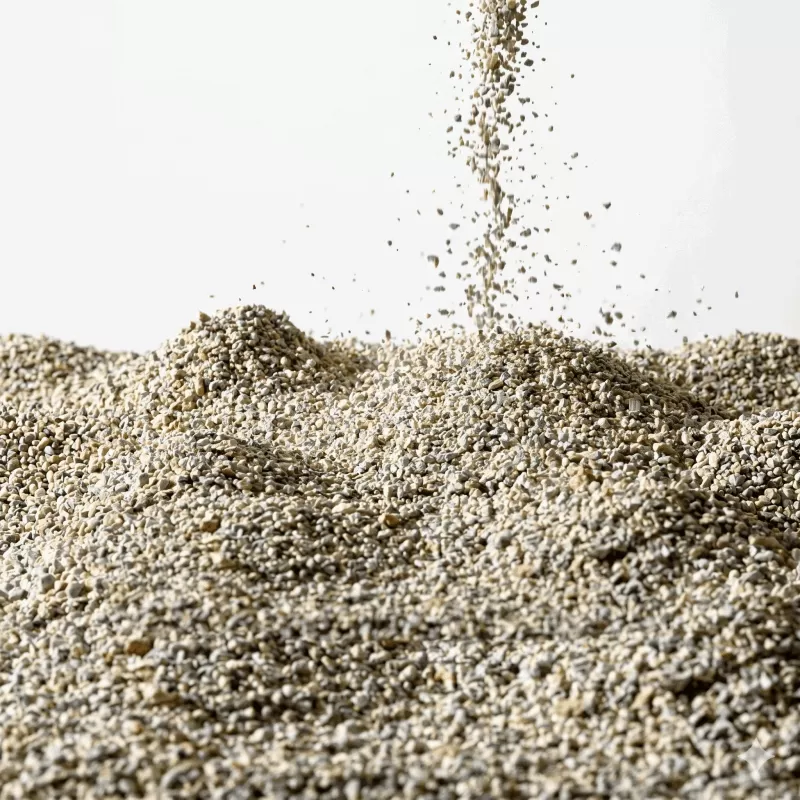
The performance of natural clay cat litter depends almost entirely on the mineralogical composition of the raw clay deposit. Bentonite, a clay derived from volcanic ash weathering, is the primary raw material used in these products. The primary active component in bentonite is montmorillonite, a three-layer aluminosilicate mineral consisting of an octahedral alumina sheet sandwiched between two tetrahedral silica sheets.
This crystalline structure possesses a net negative charge, which is naturally balanced by exchangeable cations on the surface of the clay layers, typically sodium or calcium. The type of dominant cation determines the physical properties of the clay when exposed to moisture:
Sodium Bentonite: This variant exhibits high swelling capacity, absorbing several times its dry weight in water. When exposed to liquid, the sodium ions facilitate hydration, causing the silicate sheets to expand and form a cohesive, durable clump. This natural swelling property makes it highly suitable for clumping formulations.
Calcium Bentonite: This variant has a lower swelling capacity but possesses excellent natural absorption properties. It is frequently utilized in non-clumping formulations or modified via sodium activation processes to improve its swelling and clumping performance.
For industrial buyers, verifying the montmorillonite content of raw clay via X-ray diffraction (XRD) testing is a necessary step in quality assurance. High-purity deposits yield products with superior liquid absorption speed and clumping strength, reducing the overall volume of waste generated by the end-user.
Industrial Processing: From Raw Ore to Finished Granules
Sourcing high-quality raw clay is only the first step. Translating raw bentonite into a stable commercial product requires a series of controlled mechanical and thermal processing steps. Jinshi manages these operations to ensure consistent bulk density and granule integrity.
Moisture Reduction and Drying
Raw bentonite is harvested with a high moisture content, often ranging between 30% and 40%. Reducing this moisture level without compromising the mineral’s crystalline structure is a delicate balance. Industrial rotary dryers are utilized to lower the moisture content to a stable range, typically between 6% and 10%.
If the drying temperature is too high, the clay can undergo thermal degradation, irreversibly collapsing the interlayer spaces of the montmorillonite. This reduces the material's future hydration capacity. Therefore, precise temperature monitoring and residence time control within the drying kiln are vital to maintaining the absorption properties of the natural clay cat litter.
Granulation and Screening
Once dried, the clay is crushed and milled into specific granule sizes. The particle size distribution must be strictly controlled to balance clumping efficiency, tracking prevention, and consumer preference:
Fine Granules (0.5 mm - 1.5 mm): These provide rapid liquid absorption and tight, flat clumps, but are more prone to tracking outside the litter box and can increase dust levels if not properly processed.
Coarse Granules (1.5 mm - 3.5 mm): These offer lower tracking and improved air circulation within the litter bed, but may result in larger, less cohesive clumps that consume more product per use.
Modern processing facilities utilize multi-deck vibrating screens to separate particles, returning oversized pieces to the mill and directing ultra-fine dust back to the compaction stage.
Mitigating Dust: The Primary Industrial Challenge
Dust generation is a major point of concern for both pet owners and domestic retailers. Airborne clay dust can cause respiratory discomfort and aesthetic issues in domestic environments. In the manufacturing facility, managing dust requires a multi-stage dedusting system.
During the screening process, high-velocity air separators and baghouse dust collectors capture fine particulates before the product is packaged. Some advanced manufacturing processes apply organic dust-binding agents or surface-active agents to the granules. These food-grade additives bind micro-dust particles to larger granules without reducing the clay's overall hydration speed. Ensuring a dust-free formulation is highly dependent on these post-granulation screening stages.
Evaluating Odor Control Mechanisms
The primary function of natural clay cat litter in a domestic setting is the mitigation of offensive odors, specifically ammonia (NH3) generated by the enzymatic breakdown of urea in feline urine. Bentonite clay controls odor through physical adsorption and chemical ion exchange.
The negatively charged clay sheets attract and bind positively charged ammonium ions (NH4+), locking them within the mineral matrix. Additionally, the porous structure of the clay granules physically traps volatile organic compounds (VOCs). To improve this natural capability, manufacturers often introduce additives such as activated carbon, sodium bicarbonate, or natural zeolites into the clay mixture. These porous materials work in tandem with the clay, extending the product’s odor control lifecycle without relying on heavy synthetic fragrances that may deter sensitive animals.
Supply Chain and Packaging Considerations for B2B Buyers
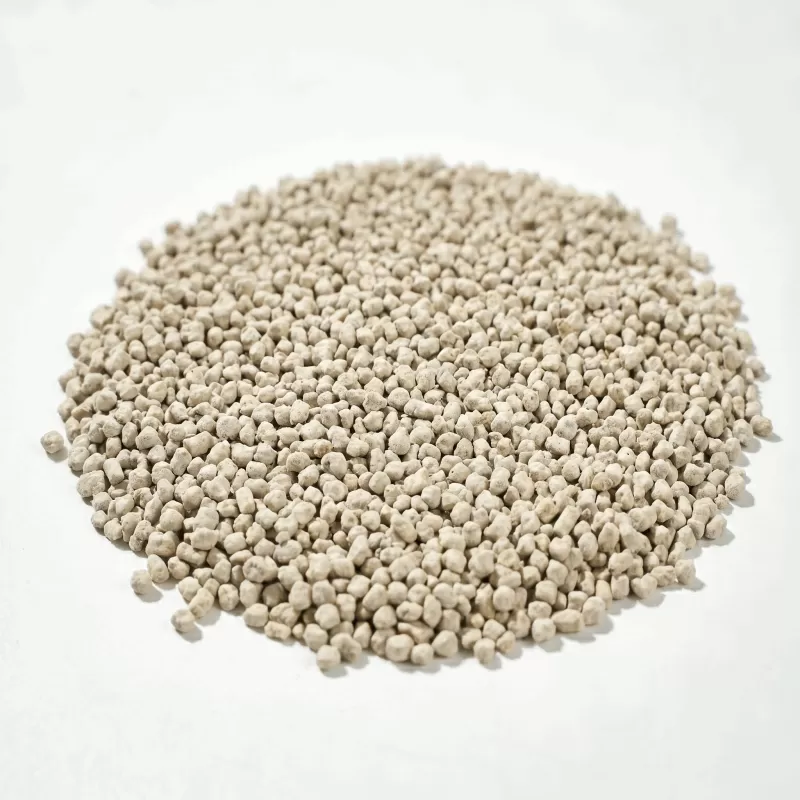
For international distributors and private labels sourcing natural clay cat litter, product stability during long-distance transit is an important logistical consideration. High-density clay products are heavy, meaning transport costs can significantly impact overall margins.
Bulk density must be carefully measured. Standard sodium bentonite litters typically have a bulk density of 800 g/L to 1000 g/L. This high density provides stable packaging but requires strong, moisture-resistant packaging materials to prevent tearing or moisture absorption during maritime shipping. Multi-wall paper bags, woven polypropylene bags, and heavy-duty polyethylene packaging are commonly used to shield the dry clay from ambient humidity during transit and storage.
Furthermore, sourcing from established manufacturers like Jinshi ensures that batch-to-batch consistency is maintained. Variations in raw clay purity can lead to inconsistent clumping, causing issues for consumer-facing brands that rely on predictable product behavior.
Frequently Asked Questions (FAQs)
Q1: What is the primary difference between sodium bentonite and calcium bentonite in cat litter production?
A1: Sodium bentonite possess high natural swelling and clumping capabilities, forming firm clumps when exposed to liquids. Calcium bentonite has lower swelling capacity and is generally used for non-clumping formulations unless it undergoes a sodium activation chemical treatment to improve its clumping characteristics.
Q2: How does dust-free technology work in the processing of natural clay cat litter?
A2: Dust mitigation involves multi-stage mechanical screening, air-cyclone separation, and dust vacuum extraction during the manufacturing process. Some formulations also apply safe, organic dust-binding agents to ensure that micro-particulates remain attached to the larger clay granules.
Q3: What quality control metrics should B2B buyers request from a clay manufacturer?
A3: Buyers should request specifications on water absorption capacity (expressed as a percentage of dry weight), clumping strength and speed, granule size distribution, moisture content (typically target 6-10%), bulk density, and dust percentage.
Q4: Can fragrances and functional additives be customized for private label shipments?
A4: Yes. Bulk manufacturers can integrate active ingredients such as activated carbon, colored indicator silica granules, deodorizing agents, or specific botanical scents based on the target market's preferences and regulatory requirements.
Q5: How does humidity during sea freight affect the shelf life of bulk-packed clay litter?
A5: High ambient humidity during shipping can cause unprotected clay to absorb moisture from the air, reducing its clumping efficiency once unpacked. Utilizing hermetically sealed moisture-barrier bags or heavy-duty packaging material is necessary to maintain the material's dryness during transit.
Inquire About Customized Natural Clay Cat Litter Solutions
Navigating the complexities of mineral sourcing, granule customization, and bulk logistics requires an experienced manufacturing partner. Jinshi provides high-grade bentonite solutions tailored to the strict specifications of international brands. Whether you require specific granule distributions, dust-free performance, or customized private-label packaging, our production facilities are equipped to deliver consistent, high-purity products.
Please contact our commercial division to request technical datasheets, raw material analysis reports, or bulk pricing quotations for your specific market requirements.