
4 Industrial Applications of Calcium Bentonite in Filtration and Binding
2026-06-12
Industrial processing operations require raw materials that offer both physical stability and predictable chemical performance. Among the various industrial clays available, calcium bentonite is widely valued for its exceptional adsorption capabilities, low swelling capacity, and structural stability. This natural clay mineral is utilized in several sectors, including edible oil refining, metal casting, environmental filtration, and agricultural production. Unlike other clay minerals that expand dramatically upon contact with water, this mineral maintains its physical integrity while acting as a highly efficient medium for binding, purification, and clarification.
For procurement officers and process engineers, acquiring a consistent mineral source is key to maintaining operational efficiency. Variations in raw clay deposits can lead to unpredictable processing outcomes, which in turn can impact downstream quality. Jinshi, an established provider of industrial minerals, focuses on processing and supplying consistent clay grades tailored to specific industrial requirements, ensuring that manufacturing facilities can run continuous operations without unexpected material variations.
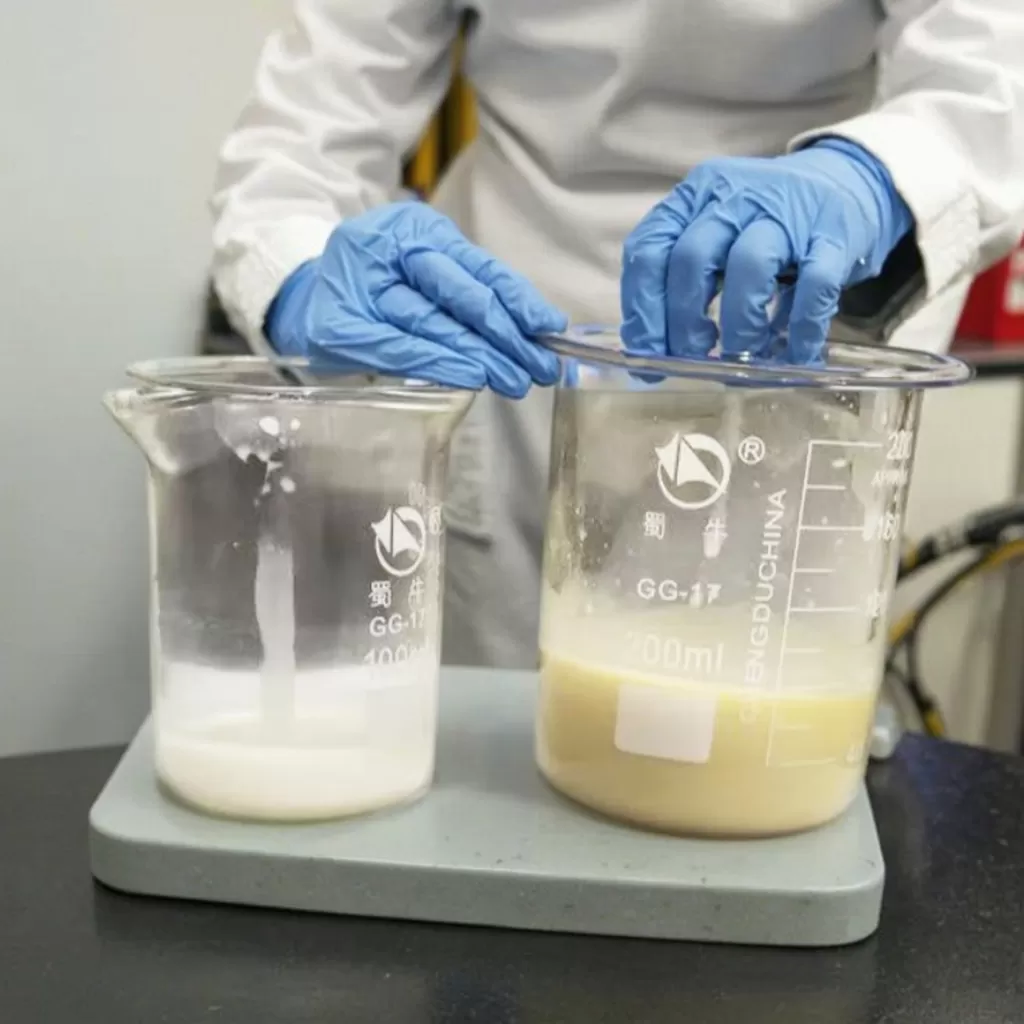
Chemical Composition and Low-Swelling Characteristics of Calcium Bentonite
The operational value of calcium bentonite is determined by its specific mineral structure. Belonging to the smectite group, it is a 2:1 phyllosilicate mineral. Its crystalline structure consists of an octahedral alumina sheet sandwiched between two tetrahedral silica sheets. During the geological formation of this clay—primarily through the alteration of volcanic ash in marine or freshwater environments—isomorphic substitution occurs within the crystal lattice, leaving a net negative charge on the clay layers. In this specific variety of clay, exchangeable divalent calcium ions occupy the interlayer spaces to balance this negative charge.
The divalent nature of the calcium ion is the primary reason for the clay's low-swelling behavior. Because calcium ions carry a double positive charge ($Ca^{2+}$), they exert a strong electrostatic pull that binds the silicate sheets closely together. This tight interlayer bonding restricts the penetration of water molecules. When exposed to moisture, the clay does not exhibit the high volume expansion seen in sodium-bearing clays. Instead, it undergoes limited hydration, preserving its dense, granular structure. This characteristic is highly beneficial in applications where liquid absorption or filtration must occur without causing structural blockages or significant volume expansion.
The interlayer calcium ions also play a major role in the clay’s cation exchange capacity (CEC), which typically ranges from 60 to 90 meq/100g. Although these ions are held tightly, they can still be exchanged for other cations under appropriate chemical conditions. This exchangeability allows industrial processors to modify the clay’s surface properties, adapting it for specialized filtration and binding tasks.
Key Industrial Applications and Functional Mechanisms
The physical and chemical characteristics of this clay allow it to be utilized across diverse industrial sectors. By selecting specific particle sizes and moisture levels, processors can adapt the mineral to serve different functions.
1. Bleaching Earth and Edible Oil Clarification
A primary application of calcium bentonite is its transformation into activated bleaching earth, which is used to clarify edible oils, animal fats, and mineral lubricants. In its natural state, the clay has a moderate adsorption capacity. To improve this performance, the raw clay is subjected to an acid activation process. This treatment involves exposing the clay to inorganic acids, such as sulfuric or hydrochloric acid, at elevated temperatures.
The acid removes a portion of the divalent calcium ions and octahedral metal ions (such as aluminum, iron, and magnesium) from the crystal lattice. This process increases the specific surface area and opens up a porous network within the clay structure. When the activated clay is mixed with crude edible oils, it acts as a selective adsorbent, binding pigments like chlorophyll, carotenoids, and other impurities. The clay is then filtered out, leaving behind clear, stable oil that is ready for subsequent deodorization and packaging.
2. Metal Casting and Foundry Sand Binding
The metal casting sector utilizes green sand molding to produce intricate iron and steel components. Within these sand mixtures, the clay serves as a binding agent that holds the silica sand grains together. While sodium-based clays are often chosen for high-durability applications, the calcium variety is selected when clean mold release and moderate dry strength are needed.
The low-swelling nature of the clay prevents the mold from expanding excessively when exposed to the high heat of molten metal, reducing the occurrence of casting defects such as scabs or buckles. The lower dry strength of the calcium variety also simplifies the shakeout process. Once the cast metal has solidified, the mold can be broken apart easily, saving time and reducing the physical wear on automated shakeout equipment.
3. Environmental Filtration and Wastewater Treatment
Industrial wastewater streams often contain heavy metals, organic dyes, and emulsified oils that must be removed before the water can be safely discharged. The high surface area and cation exchange properties of the clay make it an effective filtration medium for these applications. The divalent calcium ions on the clay’s surface can be exchanged for heavy metal cations, such as lead, copper, and zinc, locking these pollutants into the mineral structure.
The clay can also be modified with quaternary ammonium compounds to produce organoclays. These modified clays are hydrophobic and exhibit a strong affinity for organic pollutants, making them useful for treating water contaminated with hydrocarbons, phenols, and chlorinated solvents.
4. Animal Feed Additives and Agricultural Formulations
In agricultural production, the clay is used as an additive in animal feed formulations. It functions as a binder during pelletizing, helping feed mills produce durable pellets that resist breaking during transport. The clay also serves as an effective toxin binder. When consumed by livestock, it can selectively bind certain mycotoxins present in feed, preventing their absorption in the animal's digestive system.
Sourcing Challenges and Processing Solutions in B2B Procurement
A primary challenge for procurement managers sourcing industrial clay is managing the natural variability of the mineral deposits. Because clay is a mined product, its mineralogical purity, moisture content, and particle size distribution can vary significantly from one deposit to another. For manufacturing plants that rely on precise chemical balances—such as oil refineries using bleaching earth—even minor variations in clay quality can lead to incomplete filtration or reduced yields.
Another common procurement challenge is the presence of abrasive impurities, primarily crystalline silica (quartz). High grit content in the clay can cause accelerated wear on industrial mixing equipment, pumps, and transport pipelines. This increases maintenance costs and can lead to unscheduled production shutdowns.
To address these processing challenges, Jinshi utilizes a systematic approach to mineral sourcing and processing. By selecting high-purity deposits and utilizing precise milling and air-classification systems, Jinshi keeps grit content to a minimum. Continuous laboratory testing is conducted throughout the production process to monitor key specifications, including moisture content, particle size, and adsorption efficiency, providing industrial buyers with a consistent and reliable material supply.
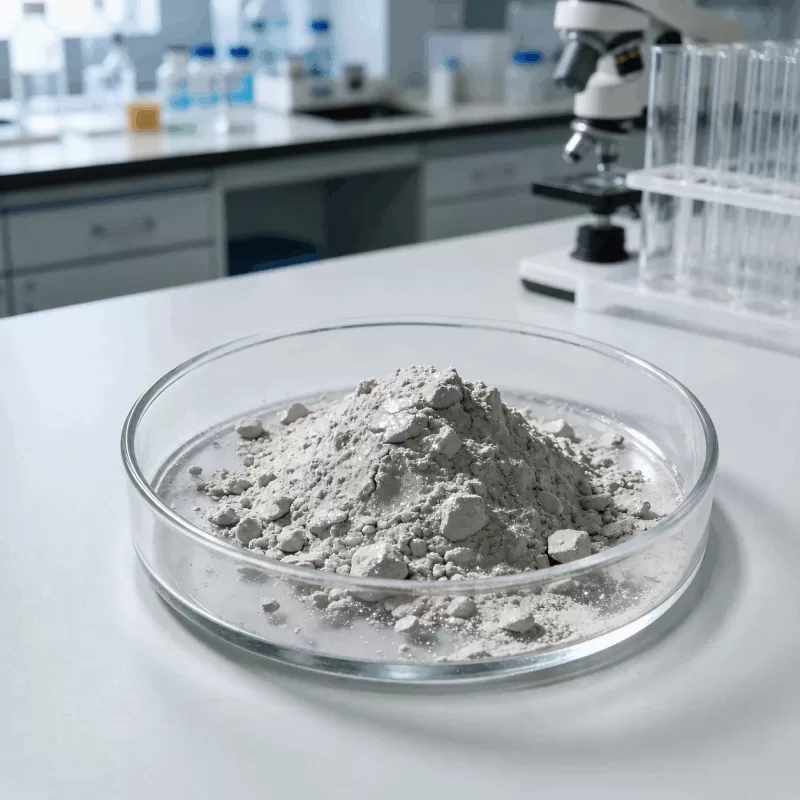
Evaluation Metrics and Laboratory Standards for Procurement Teams
When establishing procurement specifications for calcium bentonite, quality control teams should evaluate specific analytical parameters to ensure the material is suited to their application. The table below lists the primary metrics used to assess the quality of the clay:
| Application | Standard Parameter | Target Specification | Operational Significance |
|---|---|---|---|
| Oil Bleaching | Methylene Blue Adsorption | ≥ 220 mg/g (for raw clay) | Indicates the active montmorillonite content and potential adsorption capacity. |
| Foundry Casting | Green Compression Strength | ≥ 7.0 N/cm² | Ensures the mold cavity maintains its shape during the initial metal pour. |
| Wastewater Treatment | Cation Exchange Capacity | 70 to 90 meq/100g | Determines the clay's ability to exchange calcium ions for heavy metal contaminants. |
| Animal Feed Additives | Moisture Content | 8% to 12% | Prevents mold growth in stored feed and ensures stable binding during pelletization. |
| All Applications | Sieve Residue (on 200 mesh) | ≤ 1.5% (for fine grades) | Reduces wear and tear on industrial pumps, mixing paddles, and extrusion dies. |
By establishing these specific requirements, procurement departments can ensure consistent performance across production runs. Jinshi supports these standards by providing complete testing documentation for each shipment, allowing buyers to verify that the material meets their specific standards before it is introduced into their production processes.
Frequently Asked Questions
Q1: How does calcium bentonite differ from sodium bentonite in terms of physical behavior?
A1: The main difference lies in their swelling capacity and hydration behavior. Sodium bentonite contains monovalent sodium ions that allow it to absorb large volumes of water and expand significantly. Calcium bentonite contains divalent calcium ions that hold the clay layers tightly together, resulting in low swelling when exposed to water, which makes it ideal for applications requiring structural stability and low-expansion filtration.
Q2: Why is acid activation necessary for edible oil filtration?
A2: Acid activation replaces some of the calcium and metal ions in the clay lattice with hydrogen ions, which opens up the pore structure and increases the overall surface area. This process creates a highly active surface that is capable of binding pigments, gums, and other impurities from crude oils far more effectively than natural, untreated clay.
Q3: How should this clay be stored to prevent quality degradation?
A3: The clay should be stored in a dry, well-ventilated warehouse, away from direct moisture and humidity. Because it is an inorganic mineral, it does not decay over time, but exposure to moisture can cause clumping, which can interfere with pneumatic transport and mixing systems.
Q4: Can this clay be used to treat heavy metal contamination in industrial effluents?
A4: Yes, the clay is highly effective for heavy metal removal. Through the process of cation exchange, the divalent calcium ions in the clay can be replaced by heavy metal ions like lead, copper, and nickel in solution, binding these contaminants within the stable mineral lattice for safe separation.
Q5: What packaging sizes are available for industrial B2B shipments?
A5: To accommodate different industrial handling systems, the clay is typically packaged in either 25 kg multi-wall paper bags for manual handling or 1,000 kg to 1,200 kg bulk bags (supersacks) for automated unloading systems. Bulk deliveries via pneumatic tankers are also available for facilities with storage silos.
Sourcing and Procurement Inquiries
Securing a stable, high-performance mineral supply is essential for maintaining production efficiency and ensuring product quality. Because different manufacturing processes have unique requirements, selecting a supplier capable of providing consistent, tailored clay grades is a practical business step. Jinshi works closely with procurement and process engineering teams to align chemical and physical specifications with their specific operational needs.
If your manufacturing facility requires high-quality calcium bentonite for filtration, binding, or custom industrial applications, our team is ready to assist. Please contact Jinshi to submit an inquiry, request technical datasheets, or arrange for sample testing for your production lines.