
Sodium Activated Bentonite vs. Natural Sodium Bentonite: Which is Best for Your Application?
2026-07-31
Selecting the wrong clay material can ruin a project quickly. Drilling fluids can fail to carry cuttings. Foundry molds might collapse under hot metal. Waterproof membranes can leak under pressure. In industrial procurement, buyers often struggle to choose between natural sodium bentonite and sodium activated bentonite.
Both materials belong to the smectite clay family. They both rely on montmorillonite as their main active mineral. However, their geological origins, processing methods, thermal limits, and price tags differ significantly. Making an incorrect selection inflates costs or causes severe performance issues on the job site.
This guide breaks down the core technical differences between these two clays. At Jinshi, we help procurement managers, engineers, and plant operators match the right mineral specs to their operational needs. Read on to learn which clay delivers the best balance of performance and budget for your specific industry.
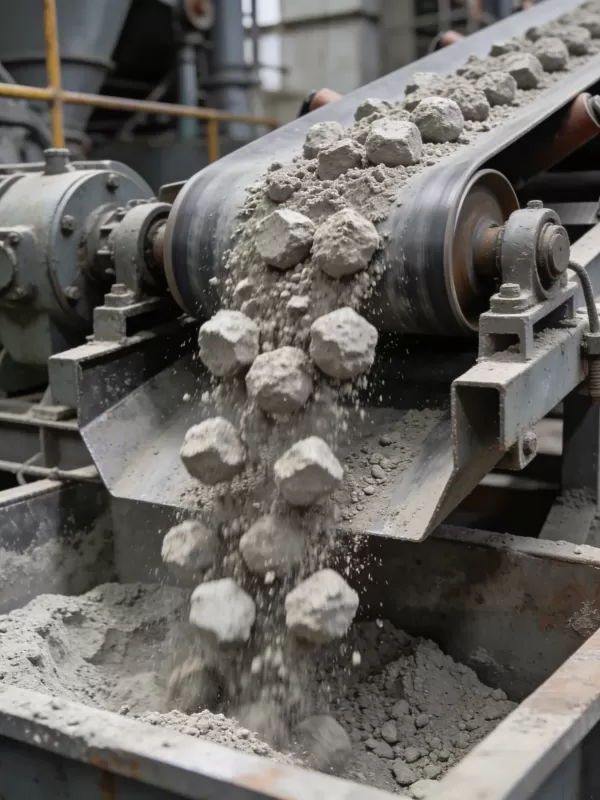
1. Technical Deep-Dive: Understanding Both Clays
To choose the right product, you must understand how these clays are formed and processed. The primary difference lies in the natural state of the interlayer cations within the montmorillonite crystal lattice.
Natural Sodium Bentonite: The Rare Mineral
Natural sodium bentonite formed millions of years ago from weathered volcanic ash in specific arid environments. These rare deposits contain naturally high concentrations of exchangeable sodium ions (Na+) located between the silicate layers.
Because the sodium ions are naturally integrated into the mineral matrix, this clay swells organically when exposed to water. Key traits of natural sodium bentonite include:
High Thermal Stability: Maintains its crystal structure and swelling ability even under high temperatures.
Durable Sealing: Forms a dense, self-healing hydraulic barrier that lasts for decades.
Natural Swelling Capacity: Swells up to 15 to 18 times its dry volume without chemical modification.
Geographic Scarcity: Mined in limited locations globally, which drives up raw material and freight costs.
Sodium Activated Bentonite: Engineered Efficiency
Sodium activated bentonite starts as natural calcium bentonite. Calcium bentonite is widely available across the globe, but calcium ions (Ca2+) limit swelling and gel formation. To improve these properties, processors transform calcium clay using chemical engineering.
The bentonite sodium activation process involves adding soda ash (sodium carbonate) to wet calcium bentonite. Mechanical mixing, extrusion, and controlled curing drive an ion exchange reaction. Sodium ions replace calcium ions inside the crystal lattice:
Ca-Bentonite + Na2CO3 → Na-Bentonite + CaCO3
This engineered sodium activated bentonite delivers performance characteristics tailored for specific industrial uses:
Rapid Hydration: Hydrates quickly to yield high slurry viscosity in short mixing cycles.
Tailored Rheology: Yield points and plastic viscosity can be customized during processing.
Cost-Effectiveness: Abundant raw material lowers production costs compared to rare natural sodium deposits.
Moderate Thermal Resistance: Performs exceptionally well at ambient or moderate temperatures, though extreme heat can reverse the ion exchange over time.
2. Comparison Matrix: Technical Performance
The following table outlines the key differences between natural sodium bentonite and sodium activated bentonite to help you compare performance metrics easily.
| Metric / Feature | Natural Sodium Bentonite | Sodium Activated Bentonite |
|---|---|---|
| Montmorillonite Content | Typically 75% – 90% | Typically 65% – 85% (Depends on raw ore) |
| Primary Cation | Natural Sodium (Na+) | Exchanged Sodium (Na+) from Soda Ash |
| Free Swelling Index | 24 – 30 ml/2g | 18 – 28 ml/2g (Engineered range) |
| Viscosity & Yield (API) | High natural viscosity; stable over time | Extremely high yield; fast-acting viscosity |
| Thermal Stability | Excellent (Resists heat up to 600°C+) | Moderate (Deteriorates above 400°C–500°C) |
| Supply Stability | Limited by geological reserves | Highly stable due to broad raw material availability |
| Relative Cost | Higher (Driven by supply and transport) | Lower to Moderate (Highly cost-effective) |
3. Application-Specific Selection Guide
Every industry places unique demands on industrial minerals. Below is a breakdown of how sodium activated bentonite compares to natural sodium bentonite across major commercial sectors.
Foundry & Metal Casting
Foundries rely on bentonite as a green sand binder for metal molds. The clay must hold sand grains together under intense heat and pressure when molten metal enters the mold cavity.
Natural sodium bentonite is the preferred choice for heavy steel castings and high-stress iron foundries. Its superior thermal durability prevents mold expansion defects, scabbing, and sand burn-in. The natural sodium bonds withstand repeated thermal cycles in sand reclamation systems.
Sodium activated bentonite serves as a cost-effective binder for iron and non-ferrous foundries operating at lower temperatures. It delivers high wet tensile strength and excellent initial green compression strength. Mid-sized foundries often blend activated clay to reduce raw material costs while maintaining solid surface finishes.
Civil Engineering, HDD & Drilling Mud
Horizontal Directional Drilling (HDD), micro-tunneling, and water well drilling require mud that carries cuttings, stabilizes boreholes, and reduces torque.
In this sector, sodium activated bentonite is often the top performer. It hydrates rapidly, building filter cake and viscosity in fresh water quickly. Drilling contractors achieve high barrel yields per ton, keeping fluid budgets manageable without sacrificing hole stability.
Natural sodium bentonite is preferred for long-duration deep oil and gas wells, or environments with high ground temperatures and salinities, where long-term fluid stability is required.
Environmental Barriers & GCLs
Geosynthetic Clay Liners (GCLs) and pond sealants require low hydraulic conductivity to prevent fluid migration into surrounding soil.
Natural sodium bentonite offers long-term chemical resistance and durability. It resists leachate attack better over extended timelines, making it ideal for hazardous waste landfills.
Sodium activated bentonite works well for standard agricultural ponds, freshwater lagoons, and non-hazardous municipal containment liners. It swells rapidly to seal voids efficiently when installed properly under confinement.
Cat Litter & Pet Products
Pet product manufacturers prioritize fast clumping, high liquid absorption, strong odor control, and dust-free granules.
Sodium activated bentonite is ideal for high-performance clumping cat litter. The activated clay absorbs urine rapidly, forming tight, hard clumps that do not break during scooping. Combining this clay with Jinshi granular clay processing yields low-dust granules that improve product quality for retail brands.
Oil Refining & Processing Synergies
Industrial processing plants often require multiple clay products. For example, oil refineries use acid-activated Bleaching Earth to clarify edible oils and lubricants, alongside bentonite muds for site civil works.
Jinshi supplies both specialized Bleaching Earth and sodium modified clays, allowing buyers to consolidate their mineral sourcing under a single strict quality control framework.
4. Cost-Benefit Analysis: Balancing Performance and Budget
Focusing solely on the purchase price per ton can be misleading. Buyers must evaluate the total cost of ownership, which includes freight, dosage rates, and processing risks.
The Danger of Incomplete Activation
Not all modified clays perform identically. Poorly processed sodium activated bentonite suffers from incomplete ion exchange. Unreacted soda ash left in the clay causes inconsistent rheology, phase separation in drilling fluids, and weak bond strength in foundry sand.
Working with a reliable manufacturer ensures proper processing. Jinshi uses precise chemical dosing, controlled aging, and high-shear processing to ensure complete ion substitution. Every batch delivers reliable swelling and bonding performance.
Evaluating Freight and Sourcing Economics
Because bentonite is a heavy bulk commodity, shipping costs often equal or exceed the material price. Sourcing natural sodium bentonite from distant deposits significantly increases total delivered costs.
Using high-grade sodium activated bentonite from regional processing hubs reduces transport expenses. This allows project managers to meet API or foundry performance standards while cutting overall project costs.
5. Why Sourcing from Jinshi Gives You an Advantage
Navigating mineral specifications requires technical expertise and reliable manufacturing capacity. Jinshi provides complete clay solutions tailored to your operational requirements.
Broad Product Portfolio: We manufacture and supply Sodium Activated Bentonite, Natural Sodium Bentonite, Calcium Bentonite, Bleaching Earth, Granular Clay, and Cat Litter.
Custom Formulations: Our technical team adjusts mesh size, swelling index, yield point, and fluid loss parameters to meet API 13A, OCMA, or custom foundry standards.
Rigorous Quality Control: Advanced testing equipment monitors montmorillonite purity, moisture, wet tensile strength, and rheology for every shipment.
Streamlined Sourcing: Sourcing multiple clay products through Jinshi simplifies logistics, cuts administrative costs, and guarantees consistent batch-to-batch quality.
6. Conclusion: Choosing the Right Clay
Choosing between natural and activated clay comes down to your operating conditions and performance requirements:
Select Natural Sodium Bentonite when dealing with high heat, aggressive chemical leachates, or long-term structural requirements.
Select Sodium Activated Bentonite when you need fast hydration, high yield, rapid clumping, and maximum cost efficiency for drilling, civil work, or pet products.
Unsure which mesh size or formulation fits your equipment? The mineral experts at Jinshi are here to help you select the ideal clay grade and optimize your process.
Ready to improve performance and lower material costs? Contact the Jinshi technical sales team today to request Technical Data Sheets (TDS), Safety Data Sheets (MSDS), or a free sample batch tailored to your application!
Frequently Asked Questions (FAQ)
Q1: What is the main chemical difference between calcium bentonite
and sodium activated bentonite?
A1: Calcium
bentonite naturally contains exchangeable calcium ions (Ca2+), which limit its
swelling capacity. Sodium activated bentonite undergoes an ion exchange process
using sodium carbonate (soda ash). This replaces calcium ions with sodium ions
(Na+), significantly increasing the clay's swelling index and slurry
viscosity.
Q2: Can sodium activated bentonite meet API 13A drilling mud
standards?
A2: Yes. High-quality sodium activated
bentonite processed with precise chemical controls can meet or exceed API 13A
specifications for drilling fluids. It delivers the required viscometric
parameters, yield point, and filtrate loss control for civil engineering and
directional drilling.
Q3: Why does natural sodium bentonite perform better in
high-temperature metal casting?
A3: Natural sodium
bentonite features naturally bound sodium ions deep within its crystal
structure. Under extreme heat (above 500°C), activated bentonite can lose its
chemically added sodium bonds, reducing its durability. Natural sodium clay
retains its crystalline stability and green bonding strength under repeated
high-heat exposures.
Q4: How can I tell if sodium activated bentonite has been properly
processed?
A4: Properly activated clay shows
consistent swelling, smooth gelation, and no visible separation when mixed with
water. Poorly processed clay often has excess unreacted soda ash, resulting in
variable pH levels, fluctuating viscosity, and poor wet tensile strength. Jinshi
conducts thorough lab testing on every batch to ensure complete ion
exchange.
Q5: Does Jinshi supply samples for laboratory testing and industrial
trials?
A5: Yes. Jinshi provides free sample
batches alongside full Technical Data Sheets (TDS) and Safety Data Sheets
(MSDS). Our technical team collaborates directly with your engineers to ensure
our bentonite formulations match your exact equipment and process
requirements.