
Key Specifications of Sodium Activated Bentonite: Swelling Index, Viscosity, and Yield
2026-08-03
Industrial procurement managers and technical engineers face a common challenge when purchasing raw minerals. Selecting the right grade of clay directly impacts both performance and overall operational costs. Market options vary wildly in quality, making technical evaluation essential.
Sodium activated bentonite remains one of the most versatile mineral products used in modern engineering. From horizontal directional drilling (HDD) to environmental waterproofing, its performance depends on specific chemical and physical metrics. Understanding these parameters helps technical teams make informed purchasing decisions.
Jinshi supplies high-grade sodium activated bentonite and specialized clay products to industrial partners worldwide. By standardizing physical specifications, Jinshi helps buyers simplify procurement while ensuring consistent batch-to-batch quality across demanding jobsites.
What Is Sodium Activated Bentonite?
Bentonite is an absorbent aluminum phyllosilicate clay consisting mostly of montmorillonite. Natural bentonite deposits generally fall into two categories: sodium bentonite and calcium bentonite. Natural sodium bentonite expands significantly when wet, while calcium bentonite shows much lower swell capacity.
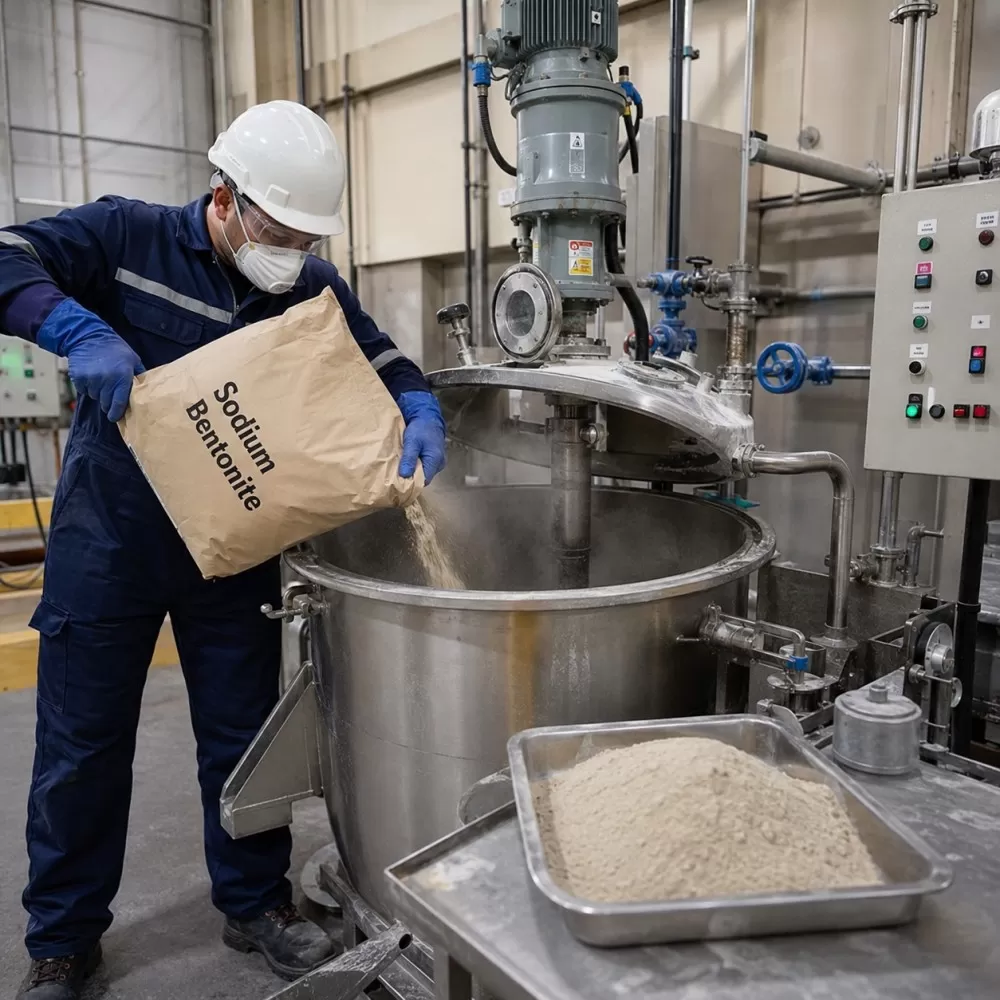
Because natural sodium bentonite deposits are limited globally, manufacturers process calcium bentonite through a modification procedure known as sodium activation. Workers introduce sodium carbonate (soda ash) into moist calcium bentonite. This triggers an ion exchange process where sodium ions replace calcium ions on the montmorillonite crystal lattice.
This modification transforms lower-swelling calcium clay into high-performing sodium activated bentonite. The process increases hydration capacity, structural stability, and rheological properties. Consequently, activated material matches or exceeds the performance of natural sodium clay in industrial applications.
1. Swelling Index (Swell Capacity)
The swelling index measures how much volume a dry clay sample occupies after absorbing water. Laboratory technicians evaluate this property using standard test methods such as ASTM D5890. They drop two grams of dried, finely ground clay into a graduated cylinder filled with distilled water and measure the total volume after 24 hours.
High swelling capacity stems directly from the active montmorillonite content and successful ion exchange during processing. When water molecules enter between the triple-layer clay sheets, sodium ions hydrate, pushing the layers apart and creating a gel structure.
Industrial Application Value
Swelling capacity determines how effectively the clay blocks liquids and fills voids. High swell values prove critical in several key sectors:
Geosynthetic Clay Liners (GCL): Liners require rapid swelling to form low-permeability barriers against liquids in landfills and canals.
Civil Engineering Seals: Diaphragm walls, slurry shields, and foundation sealants require immediate expansion to stop groundwater infiltration.
Environmental Containment: High swell index values prevent hazardous leachate from migrating into surrounding soil networks.
Jinshi sodium activated bentonite delivers consistent swelling index values, ensuring dependable hydraulic performance in sealing and environmental containment applications.
2. Viscosity and Rheological Properties
Viscosity refers to a fluid's resistance to gradual deformation by shear or tensile stress. In liquid systems, sodium activated bentonite acts as a primary rheological additive. When mixed with water, the hydrated clay particles form a thixotropic network. The fluid stays liquid under agitation but gels when movement stops.
Field technicians measure viscosity using tools like the Marsh Funnel (measuring fluid flow time in seconds) or rotational viscometers to evaluate plastic viscosity and yield point under API 13A standards.
Industrial Application Value
Rheological control matters immensely in drilling, trenchless construction, and civil engineering:
Cuttings Transportation: In horizontal directional drilling (HDD) and water well operations, drilling mud must carry rock cuttings out of the borehole.
Borehole Stabilization: High viscosity forms a thin, dense filter cake along the borehole wall, preventing cave-ins and fluid loss into porous rock formations.
Tool Cooling and Lubrication: Proper rheology reduces friction on cutting tools while keeping solids suspended during equipment shutdowns.
Through precise chemical processing, Jinshi formulates high-viscosity products that maintain stable suspension properties even under tough shear conditions.
3. Bentonite Yield (Slurry Production Volume)
Bentonite yield represents the volume of slurry at a specific target viscosity that one metric ton of clay produces. Field operators express this metric either in barrels per ton (bbl/ton) or cubic meters per ton (m³/t). Standard API-grade drilling clays generally demand yields meeting or exceeding 90 to 100 barrels per ton.
Yield directly links back to montmorillonite purity and particle dispersion efficiency. Finer processing and complete sodium substitution allow the clay particles to hydrate completely, generating greater fluid volume with less dry powder.
Economic Impact on Procurement
For procurement officers, yield is a vital metric for calculating cost efficiency. Higher yield offers clear economic advantages:
Reduced Consumption: Fewer tons of raw material generate the required volume of working fluid.
Lower Freight Costs: Shipping less total mass reduces global transport and site storage expenses.
Simpler Site Mixing: Higher yield products hydrate faster, speeding up mixing cycles and saving labor.
Choosing high-yield Jinshi sodium activated bentonite helps contractors cut material usage while lowering overall project operational costs.
Application Requirement Matrix
Different industrial processes require distinct balances of swelling index, viscosity, and yield. The comparison table below highlights standard benchmark requirements across major sectors:
| Application Sector | Primary Required Feature | Swelling Index (mL/2g) | Marsh Funnel Viscosity (s) | Target Yield (m³/t) |
|---|---|---|---|---|
| HDD & Trenchless Drilling | High Viscosity & Cuttings Transport | > 24 | 45 - 65 | 14 - 18 |
| Oil & Gas Drilling Mud | Fluid Loss Control & Shear Thinning | > 20 | 38 - 50 | 12 - 16 |
| GCL & Environmental Seals | Maximum Swell & Low Permeability | > 30 | N/A (Dry/Pipelined) | N/A |
| Foundry Sand Binder | Thermal Stability & Wet Compression Strength | > 18 | N/A | N/A |
Why Partner with Jinshi for Industrial Clay Sourcing?
Procuring raw minerals globally involves managing risks around quality variance, delayed shipments, and unclear specifications. Jinshi addresses these challenges directly through structured production and transparent reporting.
Focused Product Lines
Jinshi concentrates expertise on functional clay minerals, including sodium activated bentonite, calcium bentonite, activated clay, and specialized absorbent products. Buyers receive precise product grades tailored to specific industrial processes rather than unrefined, multi-purpose mixtures.
Quality Consistency and Verification
Every shipment from Jinshi undergoes rigorous quality testing from raw ore selection through final milling. Batches ship with comprehensive Technical Data Sheets (TDS) and Certificates of Analysis (COA). Customers receive predictable swelling, viscosity, and yield performance on every pallet.
Global B2B Supply Capability
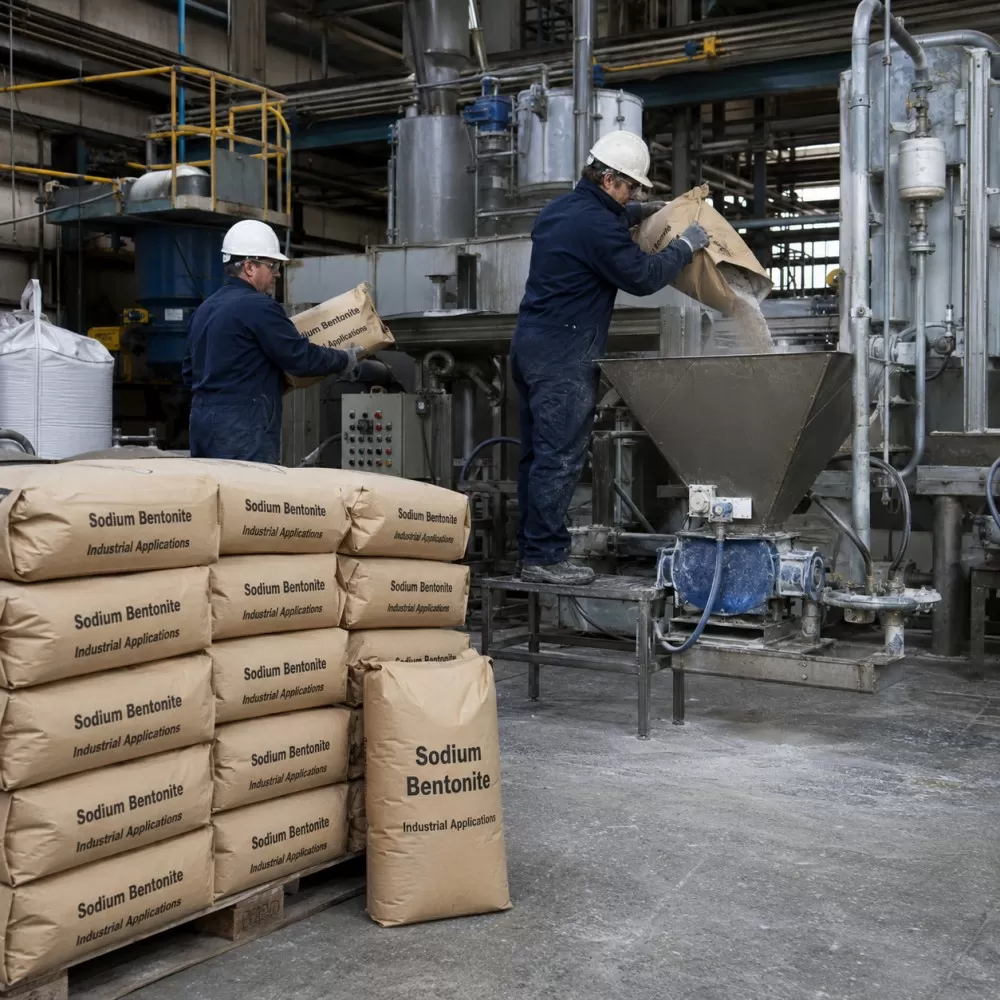
Jinshi supports flexible packaging options, ranging from standard 25kg bags to heavy-duty jumbo bags (bulk bags). With streamlined export logistics, Jinshi delivers reliable bulk mineral supply directly to ports and project sites worldwide.
Frequently Asked Questions (FAQ)
Q1: What is the main difference between natural sodium bentonite and sodium activated bentonite?
A1: Natural sodium bentonite contains sodium ions naturally within its montmorillonite structure as mined. Sodium activated bentonite starts as calcium bentonite and undergoes a chemical treatment with soda ash to replace calcium ions with sodium ions. This process boosts swelling capacity, yield, and viscosity to match natural sodium clay levels.
Q2: How does temperature affect the performance of sodium activated bentonite in drilling fluid?
A2: High temperatures can break down hydration layers around montmorillonite platelets, leading to fluid loss and lower viscosity. Quality activation processes help stabilize thermal resistance, allowing fluids to perform predictably in deeper boreholes.
Q3: Why is yield more critical than unit price per ton when buying bentonite?
A3: A cheaper, low-yield bentonite requires more raw tons to prepare the same volume of drilling mud. High-yield products reduce total tonnage purchased, lowering freight, handling, and storage costs, which drives down overall project expenditure.
Q4: Which test methods confirm swelling index and viscosity values?
A4: Technicians test the swelling index using the ASTM D5890 standard method. They evaluate viscosity using a Marsh Funnel (ASTM D6910) for field muds or a rotational viscometer following API Specification 13A protocols.
Q5: Can Jinshi supply custom mesh sizes and viscosity levels for specialized projects?
A5: Yes. Jinshi adjusts milling fineness, activation ratios, and additive formulations to meet target specifications provided by client engineering teams.
Optimize Your Mineral Procurement with Jinshi
Selecting the right sodium activated bentonite requires matching key technical specifications to your specific operational conditions. Prioritizing swelling index, viscosity, and yield ensures strong field performance and reliable cost control.
Jinshi provides high-performance, quality-tested sodium activated bentonite for drilling, construction, and manufacturing applications globally. Contact the technical sales team at Jinshi today to request product Technical Data Sheets (TDS), pricing quotes, or free evaluation samples.