
Industrial Specifications and Structural Mechanics of Natural Sodium Bentonite
2026-07-29
The industrial utility of clay minerals relies on structural composition, hydration capacity, and cation exchange behavior. Among the smectite group, natural sodium bentonite stands out due to its active crystalline architecture and performance in aqueous environments. Unlike calcium-based clays that require chemical conversion via soda-ash activation, naturally occurring sodium smectite contains sodium ions within its inter-layer spaces. This natural state allows immediate swellability, thixotropic gelling, and thermal resistance across diverse industrial processing environments.
For B2B procurement managers, process engineers, and manufacturing specialists, selecting high-purity raw materials dictates operational output, batch consistency, and end-product integrity. Understanding the underlying mineralogy, processing requirements, and material behavior across core industries allows commercial enterprises to stabilize supply chains and improve production performance.
Geological Origin and Microstructural Dynamics
The fundamental active component of natural sodium bentonite is montmorillonite, a 2:1 layered silicate mineral. The crystal lattice consists of an alumina octahedral sheet sandwiched between two silica tetrahedral sheets. The structural origin of the material's industrial performance stems from naturally occurring ionic substitutions within these sheets.
During formation, trivalent aluminum ions ($Al^{3+}$) within the octahedral layer are substituted by divalent magnesium ions ($Mg^{2+}$). This substitution creates a permanent negative charge on the surface of the clay platelets. In natural sodium bentonite, this charge deficiency is balanced naturally by hydrated sodium ions ($Na^+$) located inside the interlayer space.
Interlayer Hydration: When exposed to water, sodium ions attract polar water molecules into the crystal structure. The small ionic radius and hydration enthalpy of sodium allow multiple layers of water to enter the dynamic space between platelets, expanding the basal spacing from roughly 1.0 nanometer to full planar dissociation.
Volumetric Expansion: High-grade deposits exhibit free swell values reaching 24 to 30 mL per 2 grams of material. This hydration expansion creates a high-yield dynamic gel capable of suspending solids and structuring fluid systems.
Cation Exchange Capacity (CEC): High-purity natural deposits demonstrate CEC values between 70 to 100 meq/100g, driven by the structural charge distribution. High CEC ratings correlate directly with improved thermal stability and binding performance.
This mineral structural mechanism differentiates naturally occurring sodium smectites from artificially treated clays. Soda-ash activated clays often suffer from thermal degradation and ion leaching over repeated thermal or physical stress cycles. Natural reserves retain structural integrity, making them suitable for demanding operational environments.
Processing Methodology and Quality Control Protocol
Extracting maximum value from raw deposits requires strict processing methods that preserve the natural lattice structure while delivering specific particle size distributions. Processing raw clay involves several precise stages:
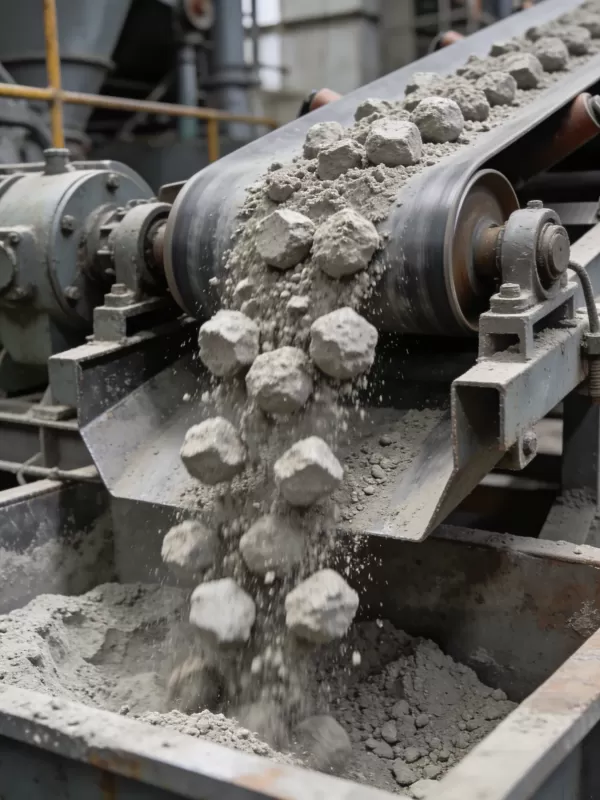
The raw mineral is excavated from designated geological strata and transported to stockpiles for blending. Raw moisture content typically ranges from 25% to 35%. Controlled processing is necessary to prevent premature thermal breakdown of the montmorillonite layers.
Air-drying and low-temperature rotary drying reduce moisture content to an operational target between 8% and 12%. Exceeding temperature limits during drying risks removing structurally bound lattice water, which permanently destroys the material's swelling capability and hydration kinetics. Manufacturers like Jinshi implement calibrated thermal drying schedules to ensure the structural integrity of the smectite layers remains intact.
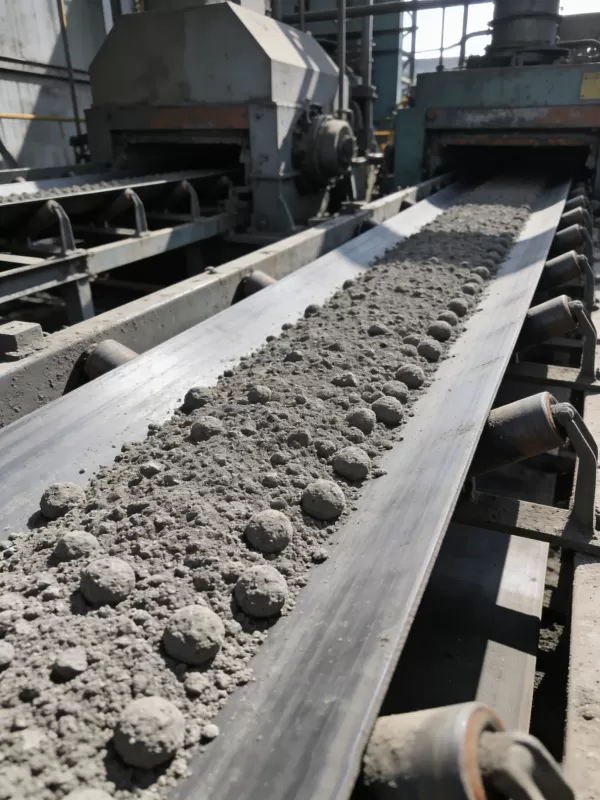
Following moisture stabilization, the dried clay undergoes mechanical milling and air classification. Grinding systems reduce the mineral to precise particle sizes, depending on the targeted commercial deployment:
Granular Grades: Sized between 1.0 mm and 4.0 mm for low-dust applications requiring controlled liquid absorption rates.
Powdered Grades: Milled to 200 mesh (75 microns) or 325 mesh (45 microns) with passing rates above 90% for rapid dispersion, high fluid viscosity, and wet binding.
Core Industrial Applications and Mechanical Functionality
The practical value of natural sodium bentonite spans multiple global sectors, operating as a functional additive, physical binder, rheology modifier, and fluid barrier.
Foundry Sand Binding Systems
In metal casting foundries, sand molds must withstand high temperatures, liquid metal static pressure, and physical mechanical stress. Natural sodium smectite serves as the dynamic binding matrix in green sand molding formulations.
When mixed with silica sand and water, the active montmorillonite platelets hydrate, forming an adhesive film around the quartz sand grains. This film delivers high green compression strength (GCS), allowing sand molds to retain complex geometric shapes prior to pouring. Upon exposure to molten iron or steel, the binder maintains hot wet tensile strength, preventing thermal expansion defects such as scabs, buckles, and erosion cuts. The presence of natural sodium ions ensures that the mold retains binding capacity across repeated recycling cycles.
Civil Engineering and Infrastructure Sealing
Low hydraulic conductivity makes natural sodium bentonite an relied-upon mineral barrier for environmental containment, diaphragm wall construction, tunneling, and civil engineering infrastructure.
When hydrated within a confined space, the mineral expands to form an impermeable hydraulic barrier. The coefficient of permeability (hydraulic conductivity) regularly drops below $1 \times 10^{-9}$ cm/sec. This characteristic underpins the mechanics of Geosynthetic Clay Liners (GCLs), where a uniform layer of fine granular bentonite is needle-punched between geotextiles to seal landfills, tailings ponds, and industrial retention basins.
In slurry trenching and microtunneling, powdered clay forms a thixotropic fluid suspension. The slurry stabilizes open excavations by exerting hydrostatic pressure against trench walls while forming a thin filter cake that prevents fluid loss into surrounding permeable soil formations.
Pet Products and Absorbent Media
The global pet product industry relies on high-swell clay minerals to manufacture premium performance cat litters. Processing facilities operated by Jinshi leverage the high swelling yield and spatial structure of natural sodium bentonite to manufacture fast-clumping, dust-free litter granules.
When liquid targets the granular bed, localized natural sodium bentonite granules absorb the fluid rapidly, expanding instantly to encapsulate liquid waste within a cohesive clump. The mechanical strength of these clumps prevents fragmentation during removal, keeping the remaining litter clean. Furthermore, the high internal surface area of montmorillonite ($700-800 \text{ m}^2/\text{g}$) traps volatile amine and sulfur compounds, neutralizing organic odors naturally without relying on heavy synthetic chemical masking agents.
Drilling Fluids and Rheology Control
In oil, gas, and water-well drilling operations, natural sodium bentonite serves as a foundational component of water-based drilling muds, meeting API Specification 13A parameters.
The hydrated clay forms a thixotropic gel structure when fluid agitation ceases. This dynamic behavior keeps heavy rock cuttings suspended within the borehole during drill pipe connections, preventing tool bit blockage. When fluid circulation resumes under pump pressure, the gel thins out, reducing pump head friction. Additionally, fine clay particles deposit along the borehole wall, forming a low-permeability filter cake that prevents mud filtrate invasion into adjacent hydrocarbon formations.
Industrial Technical Comparison
To highlight operational differences between raw material variations, the table below provides an overview of performance indicators across industrial parameters:
| Property Parameter | Natural Sodium Bentonite | Soda-Ash Activated Sodium Bentonite | Natural Calcium Bentonite |
|---|---|---|---|
| Free Swell Index (mL/2g) | 24 - 30+ | 16 - 22 | 4 - 8 |
| Thermal Stability Limit | High (> 500°C) | Moderate (< 350°C) | Low (< 200°C) |
| Durability / Reusability | Excellent (Multi-cycle) | Degrades over cycles | Poor swell stability |
| Filter Cake Permeability | Very Low (< $10^{-9}$ cm/s) | Moderate | High (Permeable) |
| Primary Cation Present | $\text{Na}^+$ (Naturally bound) | $\text{Na}^+$ (Substituted) | $\text{Ca}^{2+}$ |
B2B Procurement Guidelines and Material Evaluation
Evaluating commercial consignments of natural sodium bentonite requires strict verification against established laboratory standards to ensure consistent field performance. Purchasing teams must look beyond raw cost-per-ton metrics to evaluate long-term process performance and operational efficiency.
Testing methodologies should adhere to standard ASTM, API, or AFS protocols depending on the target industrial application:
Swell Index Test (ASTM D5890): Verifies the basic volumetric hydration capacity of the raw mineral in deionized water. High-grade consignments must record a minimum yield of 24 mL/2g.
Fluid Loss and Viscosity (API Spec 13A): Determines the yield strength (barrel per ton) and fluid loss volume under pressure. API grade materials must keep fluid loss under 15.0 cm³.
Methylene Blue Value (MBV): Measures the total active montmorillonite content within the bulk material. Higher MBV directly correlates with active clay content and structural consistency.
Grit Content (Mesh Residue): Evaluates non-clay mineral impurities (such as quartz, feldspar, or gypsum). Excess grit accelerates equipment wear, pumps, and mixing systems, reducing operating life.
Establishing supply security involves partnering with integrated suppliers capable of managing quarry extraction, mechanical processing, and international delivery logistics. Facilities equipped by enterprise manufacturers like Jinshi deliver batch-to-batch consistency by executing automated spectroscopic analysis and physical quality control testing throughout processing operations. This control reduces variance in hydration rates, rheological performance, and structural integrity across heavy industrial applications.
Frequently Asked Questions
Q1: How does natural sodium bentonite differ from calcium bentonite upgraded with sodium carbonate?
A1: Natural sodium bentonite contains naturally exchangeable sodium ions locked within its interlayer structure during formation. Soda-ash activated calcium bentonite relies on surface-level chemical ion exchange. Under high thermal load, mechanical shearing, or exposure to saline water, activated clays release their swapped ions, leading to rapid loss of swelling capacity and performance degradation. Natural sodium clays maintain structural stability under harsher conditions.
Q2: What fine particle size distribution is optimal for high-temperature foundry applications?
A2: Metal casting applications generally require a fine powder where 85% to 90% passes through a 200-mesh (75-micron) screen. This fine particle size distribution allows rapid hydration and uniform distribution across sand grains during the wet mixing phase, building sand strength with minimal water additions.
Q3: What factors influence the hydraulic sealing performance of bentonite liners?
A3: Sealing performance depends on swelling yield, uniform clay distribution, confining pressure, and leachate fluid chemistry. High concentrations of divalent or trivalent cations (such as calcium or magnesium) in surrounding groundwater can displace sodium ions, reducing the swell index. Using stable natural sodium bentonite lowers this exchange susceptibility.
Q4: How does particle size affect clumping speed in cat litter formulations?
A4: Particle sizing directly affects capillary action and liquid migration speed. Finer granules (0.5 mm - 1.5 mm) absorb liquid faster on the surface, forming small, tight, shallow clumps. Coarser granules (1.5 mm - 3.5 mm) allow deeper fluid penetration, creating larger clumps. Blending specific particle sizes balances absorption speed, clump density, and dust containment.
Q5: What storage conditions are required to maintain long-term bulk stability?
A5: Bagged or bulk non-hydrated bentonite remains chemically stable indefinitely if protected from moisture. Material should be stored in dry, covered facilities on raised pallets. Exposure to high ambient humidity will not degrade the crystalline lattice, but direct water contact triggers premature swelling, rendering the product unusable for processing lines.
Secure High-Purity Industrial Clay Solutions
Managing industrial processes requires consistent, high-yield mineral raw materials tailored to exact technical specifications. Standardizing your supply chain with refined natural sodium bentonite minimizes processing variations, optimizes production output, and lowers equipment maintenance costs.
The engineering team at Jinshi works directly with industrial procurement partners to customize material grades, screen sizes, and packaging options tailored to your manufacturing requirements. Contact our technical sales division to submit a direct inquiry, request batch samples, or analyze customized specifications for your operations.