
Subsurface Hydraulics and Field Performance of Granular Sodium Bentonite
2026-07-24
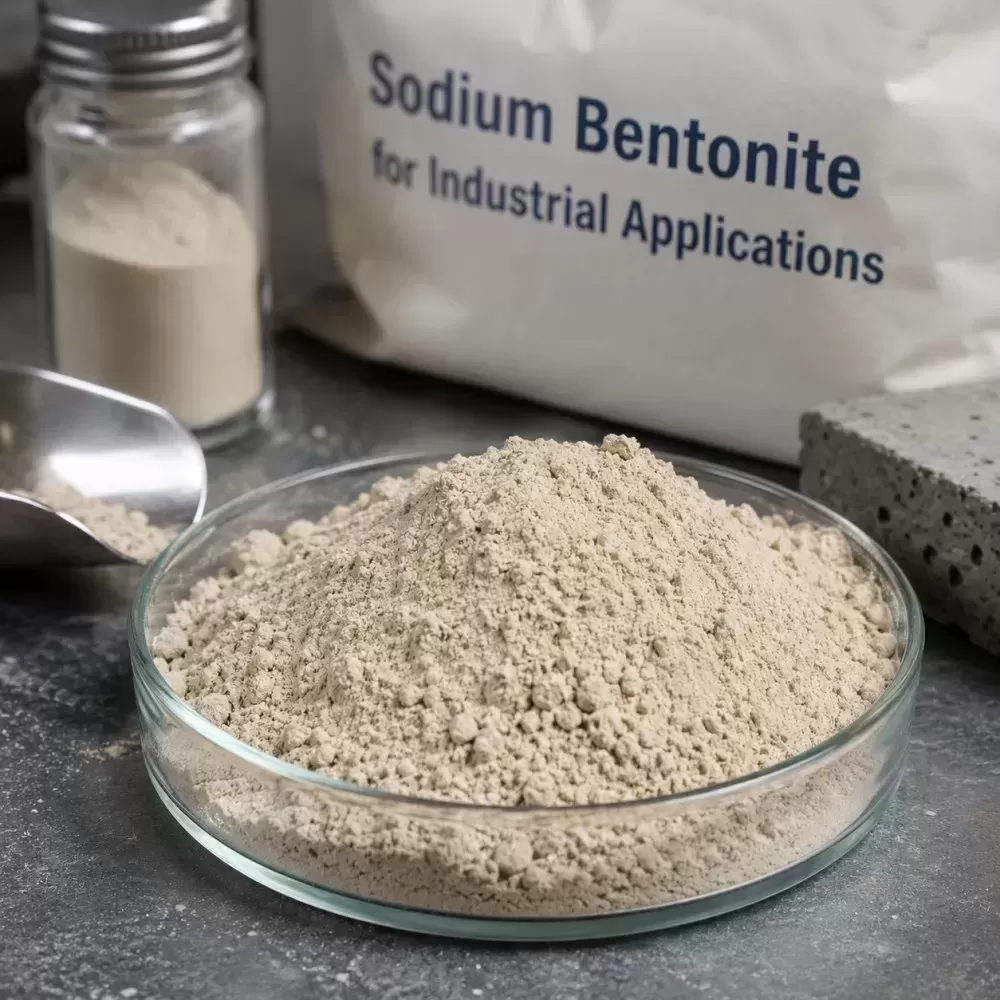
Subsurface engineering relies heavily on natural clay minerals to control fluid movement, construct impermeable barriers, and stabilize geological formations. Among these clays, sodium montmorillonite stands out due to its expandability and low hydraulic conductivity when hydrated. Converting raw clay into granular sodium bentonite provides a structured material that handles easily while maintaining uniform settling traits in fluid-filled environments.
Selecting the correct material form is vital for projects such as abandoned well closures, borehole annular sealing, containment lagoon lining, and civil landfill construction. Understanding the physical mechanics, placement methods, and fluid chemistry limits ensures long-term barrier performance across various soil conditions.
Mineral Structure and Swelling Dynamics
Sodium bentonite belongs to the smectite clay group, characterized by a 2:1 layered crystal structure consisting of an aluminum octahedral sheet sandwiched between two silicon tetrahedral sheets. Sodium cations occupy the interlayer spaces between these sheets. Because sodium possesses a relatively small ionic charge relative to its hydrated radius, it readily allows water molecules to enter the interlayer region.
When exposed to moisture, the mineral undergoes crystalline expansion followed by osmotic swelling. This process allows pure sodium montmorillonite to absorb several times its dry weight in water, expanding to roughly twelve times its original dry volume. The resulting mass forms a high-density, low-permeability gel capable of filling void spaces and restricting fluid movement.
In compacted or confined soil environments, the swelling pressure exerted by hydrated montmorillonite forces the clay particles into tight interstitial voids. The hydraulic conductivity of a properly hydrated layer routinely reaches values as low as 1 x 10⁻⁸ cm/s to 1 x 10⁻⁹ cm/s. This low permeability forms an effective barrier against water migration under substantial hydrostatic head pressures.
Particle Dynamics: Advantages of Granular Processing
Raw bentonite is processed into various forms, including fine powders, structured granules, and dense compressed pellets. Powdered material hydrates almost instantaneously upon contact with water, making it suitable for quick slurry preparation in active drilling fluids. However, rapid hydration creates severe operational challenges when dry material must be placed directly through a water column.
Placing fine bentonite powder into a deep borehole causes premature hydration at shallow depths. This leads to a phenomenon known as bridging, where swollen clay agglomerates block the borehole shaft before reaching the target zone. Bridging leaves large unsealed voids beneath the blockage, compromising the vertical isolation of the well.
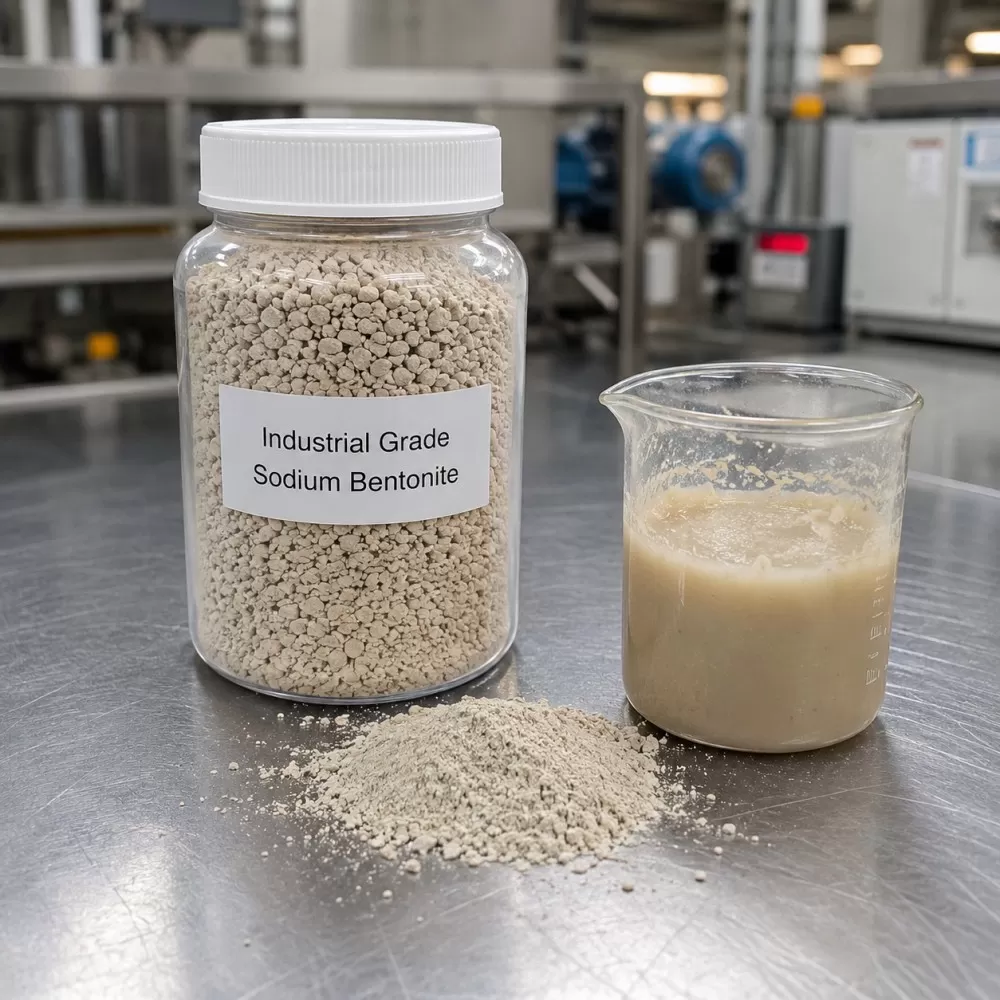
Processing clay into granular sodium bentonite creates a uniform grain size distribution, typically screened between 8-mesh and 20-mesh ranges. Industrial processors such as Jinshi mill and screen the raw clay to produce granules with specific sinking characteristics. These coarse particles offer distinct operational advantages:
Controlled Fall Velocity: Granular particles sink steadily through static water columns at rates between 0.5 and 1.0 feet per second, allowing material to reach deep target zones before hydration restricts movement.
Reduced Dusting: Screened granules produce minimal airborne dust during field handling, improving site conditions for field crews during bulk distribution.
Uniform Hydration Delay: The lower initial surface-area-to-volume ratio of a granule slows early water absorption, delaying maximum expansion until the material reaches the bottom of the installation depth.
High Bulk Density: Dry granular material packs efficiently into spaces, providing a consistent mass of raw clay per unit volume of filled void.
Subsurface Applications and Construction Protocols
Annular Sealing and Well Decommissioning
In water well construction and environmental monitoring boreholes, creating an isolated vertical seal within the annular space between the casing and the borehole wall prevents surface contaminants from descending into freshwater aquifers. Granular material is poured directly into the annular gap from the surface when depths are moderate and water columns are static.
For deep decommissioning projects, material is metered into the well casing at controlled pour rates. Field crews monitor the placement using a weighted sounding tape to verify that the accumulation rate matches theoretical volume calculations. This step confirms that bridging has not occurred higher up in the shaft. Once in position, the material absorbs formation water and expands against the surrounding rock or soil matrix, creating a continuous seal.
Earthen Pond and Water Containment Lining
Unlined agricultural ponds, municipal retention basins, and fire-suppression reservoirs often suffer from high seepage losses when constructed in coarse-grained or sandy soils. Integrating clay into the native soil matrix alters the hydraulic properties of the basin base without requiring synthetic membrane liners.
Two primary installation methods are utilized based on site conditions:
Soil-Blending Method: The subgrade soil is cleared of rocks and vegetation, scarified to a depth of 4 to 6 inches, and spread with granular material. A rototiller or disk harrow thoroughly blends the clay with native soil. The blended layer is then compacted using a padfoot roller at optimal moisture content to achieve maximum dry density.
Pure Blanket Method: In highly permeable soils where blending is insufficient, a continuous layer of pure clay material is spread over the subgrade and covered with a 6-to-12-inch protective layer of native soil to prevent physical erosion and drying.
Jinshi supplies screened clay products tailored for soil-blending applications, ensuring consistent distribution across large surface areas during agricultural and civil sealing operations.
Water Chemistry and Environmental Limits
The swelling capacity and long-term performance of sodium montmorillonite depend heavily on the chemical composition of the saturating fluid. The presence of dissolved minerals, specific ions, and extreme pH levels alter the diffuse double layer surrounding the clay platelets, affecting expansion behavior.
Cation Exchange and Hard Water Effects
Calcium and magnesium ions present in hard groundwater compete with sodium ions on the clay's exchange sites. When exposed to water containing high concentrations of divalent cations (Ca2+ or Mg2+), a natural cation exchange reaction occurs over time. The sodium ions attached to the montmorillonite lattice are replaced by calcium ions, transforming the material toward a calcium-type bentonite.
Calcium montmorillonite exhibits a lower swell volume—typically 2 to 4 times its dry volume—compared to the 12-fold expansion of the sodium variety. This reduction in swelling volume can increase hydraulic conductivity if the sealing layer was designed without accounting for mineral exchange. In hard water settings, engineers must adjust application rates or use modified clay formulations designed to resist ion exchange.
Salinity and TDS Thresholds
Elevated Total Dissolved Solids (TDS) and high sodium chloride concentrations suppress osmotic swelling. In brackish groundwater or marine environments, high ionic strength in the fluid compresses the electrical double layer of the clay particles, preventing full hydration. When saline fluids are expected, standard soil testing and fluid compatibility evaluations should be conducted prior to field application to verify that hydraulic conductivity targets remain achievable.
Field Dosage Calculations and Placement Guidelines
Achieving a reliable hydraulic barrier requires accurate volume calculations and uniform material placement. Under-application leaves thin spots susceptible to seepage, while over-application increases project costs without providing proportional technical benefits.
Pond Sealing Application Rates
Application rates for sealing earthen impoundments vary based on soil texture and plasticity index. General guidelines for raw soil treatment include:
Coarse Sand and Gravel Mixtures: 4.0 to 5.0 lbs per square foot (20 to 25 kg/m²)
Fine Sandy Loam and Silty Soils: 2.5 to 3.5 lbs per square foot (12 to 17 kg/m²)
Clay Loams and Clay-Rich Subgrades: 1.5 to 2.0 lbs per square foot (7 to 10 kg/m²)
Before full-scale placement, representative soil samples should be analyzed in a soils laboratory to determine the plastic limit, liquid limit, and baseline permeability.
Borehole Volume Calculations
To determine the mass of granular sodium bentonite required for sealing a vertical borehole, calculate the net annular volume using geometric equations:
V = π × (R₂² - R₁²) × H
Where R₂ represents the radius of the borehole, R₁ represents the outer radius of the internal casing, and H represents the height of the segment being sealed. Multiplying the resulting
volume by the bulk density of dry granular clay (typically 65 to 70 lbs/ft³)
yields the required material weight. Adding an additional 5% to 10% accounts for
borehole washouts and irregularities in the geological wall.
Quality Assessment and Sourcing Criteria
Material quality varies based on the mineral deposit source, mining practices, and thermal drying processes used during manufacturing. High-grade industrial products should comply with standard testing protocols established by organizations such as ASTM International and the American Petroleum Institute (API).
Key laboratory metrics to verify prior to procurement include:
Free Swell Index (ASTM D5890): Measures the volumetric expansion of 2 grams of dry clay in distilled water. High-quality sodium bentonite yields a free swell of 24 mL or higher.
Fluid Loss (ASTM D5891): Evaluates the filtration properties of a hydrated slurry. Lower fluid loss numbers indicate superior film-forming and barrier capabilities.
Montmorillonite Content: X-ray diffraction (XRD) testing should confirm a montmorillonite mineral purity of 85% or higher to ensure long-term stability.
Grit Content (Mesh Retention): Excess non-swelling minerals such as quartz sand or feldspar reduce the active sealing mass per ton. Non-clay grit retained on a 200-mesh sieve should remain below 2.5%.
Manufacturing operations at Jinshi maintain rigid quality control testing on all processed lots to ensure consistent grain distribution, low moisture variance, and high swell values across bulk deliveries.
Frequently Asked Questions
Q1: How does granular sodium bentonite prevent bridging during deep borehole installations?
A1: The uniform particle size distribution of granular material creates a predictable settling velocity through water columns. By removing fine dust and overly large lumps, particles fall individually at rates up to 1 foot per second rather than clumping together near the surface, allowing the material to reach the base of deep boreholes before hydration begins.
Q2: Can granular sodium bentonite be used in environments with salty or brackish groundwater?
A2: High salinity and elevated Total Dissolved Solids reduce the swell capacity of natural sodium bentonite by compressing its electrical double layer. While light brackish water may allow partial swelling, highly saline conditions require higher application densities or specialized polymer-treated bentonite grades designed to function in high-ionic fluids.
Q3: What is the difference between granular sodium bentonite and bentonite chips or pellets?
A3: Granular material consists of crushed, naturally screened clay particles sized between 8-mesh and 20-mesh, making it ideal for soil blending and standard annular gaps. Chips and compressed pellets are larger, high-density fragments designed for dropping through deep, wide water columns where maximum fall speed and delayed hydration are required.
Q4: How does dry-wet cycling affect a compacted bentonite barrier over time?
A4: Sodium montmorillonite possesses flexible self-healing properties. When dried, the clay contracts and forms micro-fissures. Upon re-wetting, the mineral expands again to fill those cracks, re-establishing its low-permeability barrier, provided the surrounding soil matrix remains intact and unwashed by high-velocity fluid flow.
Q5: Is it necessary to drain a farm pond before applying bentonite for leakage repair?
A5: Drainage is strongly recommended to allow proper soil scarification, clay blending, and mechanical compaction. While granular material can be sprinkled over standing water to target localized leaks, gravity placement through water rarely yields a uniform, compacted barrier compared to dry subgrade blending methods.
Sourcing High-Yield Granular Bentonite
Selecting appropriate sealing media requires matching mineral performance with specific site hydrology, soil composition, and installation equipment. High-yield sodium bentonite provides long-lasting fluid isolation for agricultural, mining, geothermal, and environmental engineering sectors.
For custom grain size specifications, laboratory testing data, or project-specific bulk volume quotes, contact the technical sales team at Jinshi to submit an inquiry for your upcoming project requirements.