
How Does Sodium Bentonite Function as a Low-Permeability Hydraulic Barrier?
2026-06-12
Industrial operations depend on materials that perform consistently under demanding environmental conditions. Among these materials, sodium bentonite stands out as a highly versatile mineral. Characterized by its high swelling capacity, thixotropic nature, and impressive binding properties, this natural volcanic clay is utilized in various sectors, including civil engineering, environmental containment, metal casting, and drilling operations. Achieving the desired performance in these applications requires a deep understanding of the mineralogical structure of the clay and the selection of reliable supply partners.
For procurement officers and industrial engineers, obtaining high-grade clay is a priority. Natural deposits vary significantly in quality, making processing standards a key differentiator. Jinshi, an experienced provider of industrial minerals, focuses on processing and supplying consistent clay grades tailored to specific industrial demands, helping businesses avoid operational disruptions caused by material inconsistency.
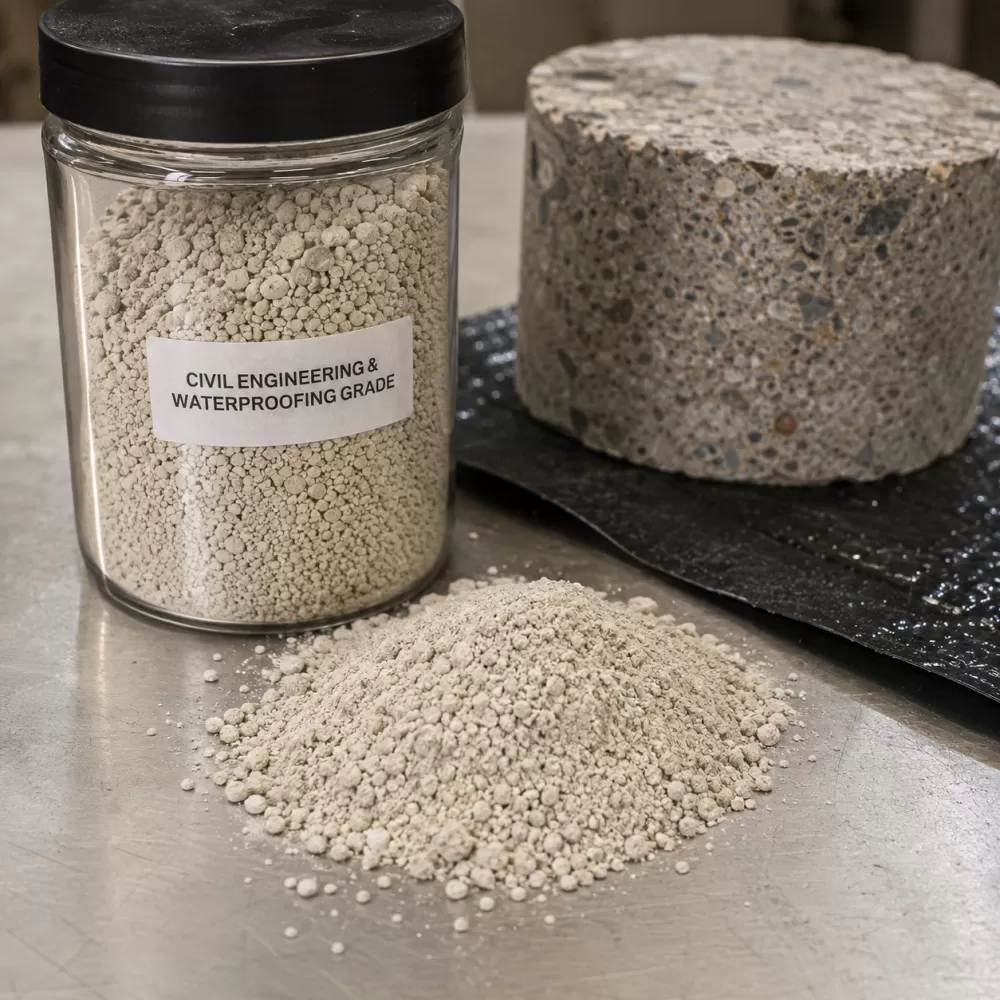
The Mineralogical Structure and Hydration Mechanism
The performance of sodium bentonite is rooted in its mineralogical composition, which is dominated by montmorillonite. This smectite-group mineral features a three-layer crystalline structure consisting of an octahedral alumina sheet sandwiched between two tetrahedral silica sheets. This 2:1 layer arrangement carries a net negative charge, resulting from the isomorphic substitution of lower-valence cations within the crystal lattice. In natural deposits of this clay, sodium ions occupy the interlayer spaces to balance this negative charge.
The presence of monovalent sodium ions is the primary cause of the clay's high swelling capacity. When exposed to water, these sodium ions hydrate, and their relatively weak electrostatic attraction allows water molecules to enter the interlayer space easily. This process results in crystalline swelling, followed by osmotic swelling as more water is drawn into the interlayer zones. The volume of the clay can expand up to fifteen times its dry state, forming a dense, cohesive gel that blocks the passage of fluids.
In contrast, calcium bentonite contains divalent calcium ions, which hold the silicate layers together more tightly. This restricts hydration and limits swelling. The high hydration energy of the sodium-saturated variety also contributes to its high cation exchange capacity (CEC), which typically ranges from 80 to 100 meq/100g. This property allows the clay to bind with various organic and inorganic compounds, enhancing its utility as a structural binder and clarifying agent.
Major Industrial Applications and Performance Metrics
The unique physical behavior of this clay dictates its industrial utility across multiple sectors. By adjusting parameters such as particle size distribution and hydration times, industries utilize the mineral for distinct purposes.
1. Drilling Fluids and Civil Engineering
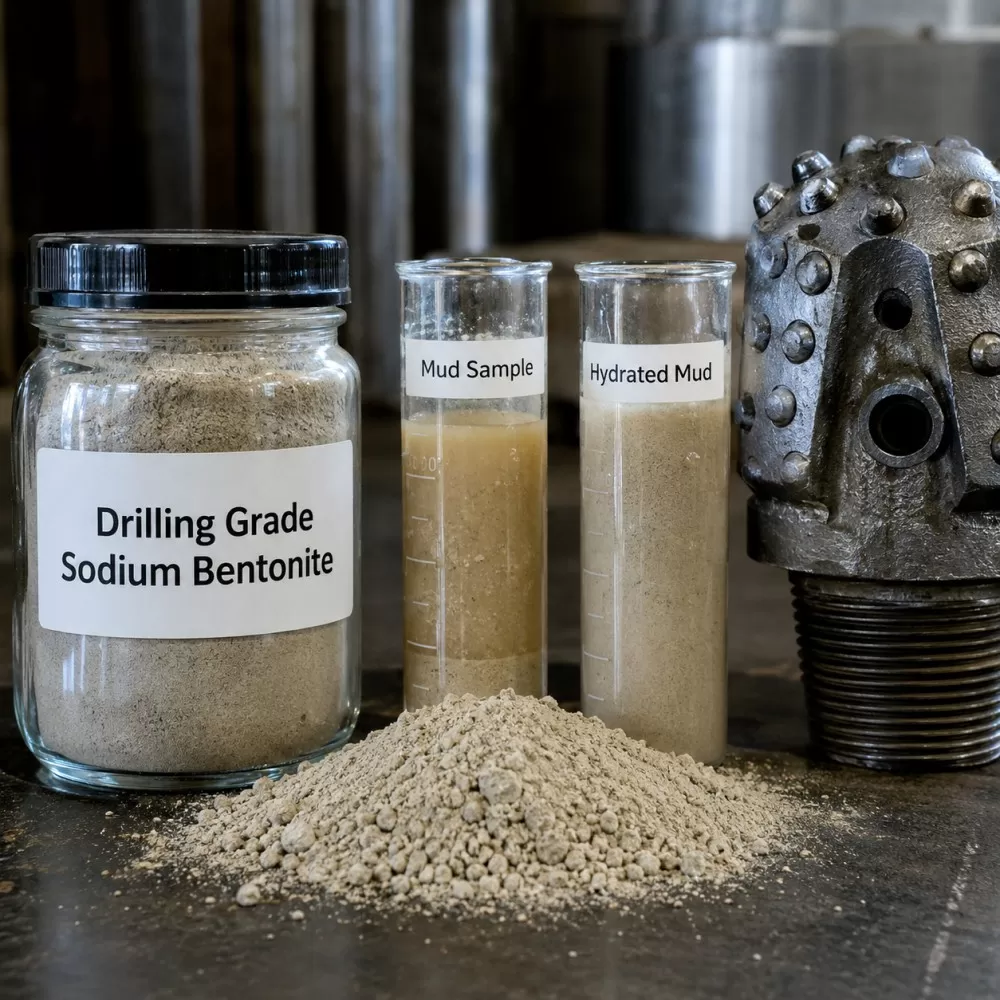
In rotary drilling operations, the clay is used as a primary component in water-based drilling muds. Its primary function is to maintain borehole stability and facilitate the removal of drill cuttings. When mixed with water, the clay particles form a colloidal suspension with pronounced thixotropic properties. Under shear stress—such as when the drill bit is rotating—the fluid behaves like a liquid, allowing easy circulation. When the shearing force stops, the mud transitions into a gel-like state, suspending heavy cuttings to prevent them from settling at the bottom of the wellbore.
Along with suspending cuttings, the clay forms a thin, low-permeability filter cake on the walls of the borehole. This cake prevents drilling fluid from escaping into surrounding permeable formations and stabilizes the wellbore walls against collapse. In civil engineering, similar slurry preparations are used in slurry trenching, diaphragm wall construction, and microtunneling.
2. Environmental Containment and Geotechnical Barriers
The low hydraulic conductivity of hydrated sodium bentonite makes it an effective material for sealing and containment. In environmental engineering, it is used to prevent the migration of contaminants into groundwater systems. Common applications include:
Geosynthetic Clay Liners (GCLs): These liners consist of a thin layer of the clay needle-punched between two layers of geotextile. They are used in landfill base liners and caps to contain hazardous leachate.
Pond and Canal Sealing: Applying the dry clay directly to the bed of a pond or canal creates a self-sealing barrier that prevents water loss through infiltration.
Soil-Bentonite Slurry Walls: These subsurface barriers are constructed to divert contaminated groundwater plumes away from drinking water wells.
3. Metal Casting and Foundry Sand Binder
The metal casting industry relies on green sand molding to produce iron, steel, and non-ferrous castings. In this process, the clay acts as a binder to hold silica sand grains together. The mixture must maintain its shape under the pressure and thermal shock of molten metal. The high green compression strength and dry strength provided by the clay ensure that the mold cavity remains intact during metal pouring. Its thermal stability prevents premature mold collapse, reducing casting defects such as scabs, washouts, and sand inclusions.
4. Iron Ore Pelletizing
In steel production, fine iron ore concentrates must be agglomerated into pellets before being fed into blast furnaces. The clay is added in small percentages (typically 0.5% to 1.0%) to the wet concentrate. It acts as an binder, holding the fine particles together during the rolling process. The resulting green pellets must have sufficient strength to withstand handling and transport before they are fired in a kiln. The clay ensures the structural integrity of both the wet green pellets and the dried pellets during the heating cycle.
Sourcing Challenges and Processing Solutions
Procuring natural minerals poses operational difficulties for industrial manufacturers due to the inherent variability of natural deposits. Clay extracted from different parts of a single mine can vary in swelling index, grit content, and moisture levels. If these variations are not managed during processing, they can lead to inconsistencies in the final product, affecting the quality of drilling muds, foundry molds, or containment barriers.
Another challenge is the use of chemically modified clays. Due to the scarcity of high-grade natural sodium bentonite, some suppliers chemically treat calcium bentonite with sodium carbonate (soda ash) to simulate the properties of the natural sodium variety. While this activated clay may initially show high swelling, its long-term stability is lower. Over time, particularly when exposed to groundwater containing dissolved minerals, the sodium ions can wash out, causing the clay to lose its swelling capacity. This degradation can lead to barrier failure in environmental applications.
To address these challenges, Jinshi employs rigorous mineralogical screening and processing protocols. By analyzing raw clay deposits before processing, Jinshi ensures that only high-quality natural minerals are utilized for applications where long-term performance is required. Advanced milling and drying processes help maintain consistent particle size distribution and moisture levels, minimizing variance between shipments.
Quality Metrics and Sourcing Standards for Procurement
When selecting clay for industrial use, quality assurance teams must look beyond general product descriptions and evaluate specific performance metrics. The table below outlines the key parameters that define high-quality grades for common applications:
| Application | Key Parameter | Standard Value / Target | Operational Significance |
|---|---|---|---|
| Drilling Mud | API 13A Section 9 Compliant | Yield Point/Plastic Viscosity Ratio ≤ 3 | Ensures efficient cutting suspension and pumpability. |
| Geotechnical Barriers | Swelling Index (ASTM D5890) | ≥ 16 ml / 2g | Indicates the clay's ability to seal voids and prevent fluid migration. |
| Foundry Casting | Green Compression Strength | ≥ 8.0 N/cm² | Prevents mold deformation during molten metal pouring. |
| Iron Ore Pelletizing | Moisture Absorption | ≥ 300% (after 24 hours) | Ensures even distribution of binder throughout the ore mix. |
| General Supply | Grit Content (200 mesh residue) | ≤ 2.5% | Reduces wear on mixing equipment, pumps, and spray nozzles. |
By establishing these specific requirements during the procurement process, companies can reduce the risk of material failure. Jinshi supports these quality standards by providing detailed certificate of analysis (COA) reports with every batch, ensuring transparency and alignment with international testing protocols.
Frequently Asked Questions
Q1: What is the main difference between natural sodium bentonite and sodium-activated bentonite?
A1: Natural sodium bentonite natively contains sodium as the dominant interlayer cation, offering high thermal stability and permanent swelling capacity. Sodium-activated bentonite is produced by treating calcium bentonite with soda ash. While it can mimic the swelling of the natural variety initially, the sodium ions can exchange out over time when exposed to electrolytes, reducing its performance in long-term applications.
Q2: How does water salinity affect the performance of this clay?
A2: High salinity or mineral-rich water introduces divalent cations like calcium and magnesium, which can replace the sodium ions in the clay structure through ion exchange. This process reduces the interlayer distance and decreases the swelling capacity. In highly saline environments, specialized saltwater-resistant clay formulations or pre-hydration in fresh water may be required.
Q3: Why is moisture control important during the packaging and storage of the dry powder?
A3: Industrial clay must maintain a stable moisture level, typically between 8% and 12%. If the clay is too dry, it can be difficult to hydrate evenly; if it absorbs environmental moisture during storage, it may clump, reducing its shelf life and complicating automated handling and mixing processes.
Q4: Can this clay be used as a binding agent in animal feed pellets?
A4: Yes, specific high-purity grades of this clay are used in the agricultural industry as pellet binders and flow agents in animal feed. Its high surface area and absorption properties also help bind certain mycotoxins within the digestive tract, though any such application requires compliance with local feed safety regulations.
Q5: What are the standard packaging configurations for large-scale B2B shipments?
A5: Industrial clay is commonly supplied in two main packaging formats: 25 kg multi-wall moisture-resistant paper bags for smaller operations, and 1,000 kg to 1,200 kg bulk bags (supersacks) for large-scale industrial use. Bulk pneumatic tankers are also used for domestic deliveries to storage silos.
Industrial Sourcing and Custom Formulations
Selecting the right grade of clay requires balancing performance requirements with cost considerations. Because no single clay deposit is suitable for every industrial application, choosing a supplier with the capability to refine and customize mineral characteristics is advantageous. Jinshi works with procurement teams to analyze their specific operational parameters and supply tailored clay solutions that meet required specifications.
If your operation requires consistent material performance for drilling, containment, casting, or custom industrial applications, our team is available to assist. Please contact Jinshi to submit an inquiry, request material safety data sheets, or discuss sample evaluations for your upcoming projects.