
Improving Industrial Process Efficiency with High-Yield Sodium Bentonite Clay
2026-06-18
Sodium bentonite clay is a highly valued industrial mineral recognized for its exceptional swelling capacity, high cation exchange capacity, and strong colloidal properties. This naturally occurring volcanic ash-derived clay consists primarily of montmorillonite, a smectite group mineral characterized by a three-layer crystalline structure. The presence of sodium ions within the interlayer spacing of the mineral lattice allows the clay to absorb water up to several times its dry weight, resulting in a dense, low-permeability gel. This unique hydration behavior makes the mineral indispensable across multiple sectors, including civil engineering, environmental sealing, oil and gas drilling, foundry casting, and consumer pet products.
For industrial buyers, sourcing consistent, high-purity minerals is key to maintaining operational efficiency and product quality. Raw clay variations can significantly impact the performance of final formulations, whether in drilling mud viscosity or the clumping strength of bentonite cat litter. Industrial suppliers like Jinshi focus on precise mineral characterization and processing standards to ensure that the material meets specific viscosity, swelling index, and particle size requirements dictated by global buyers.
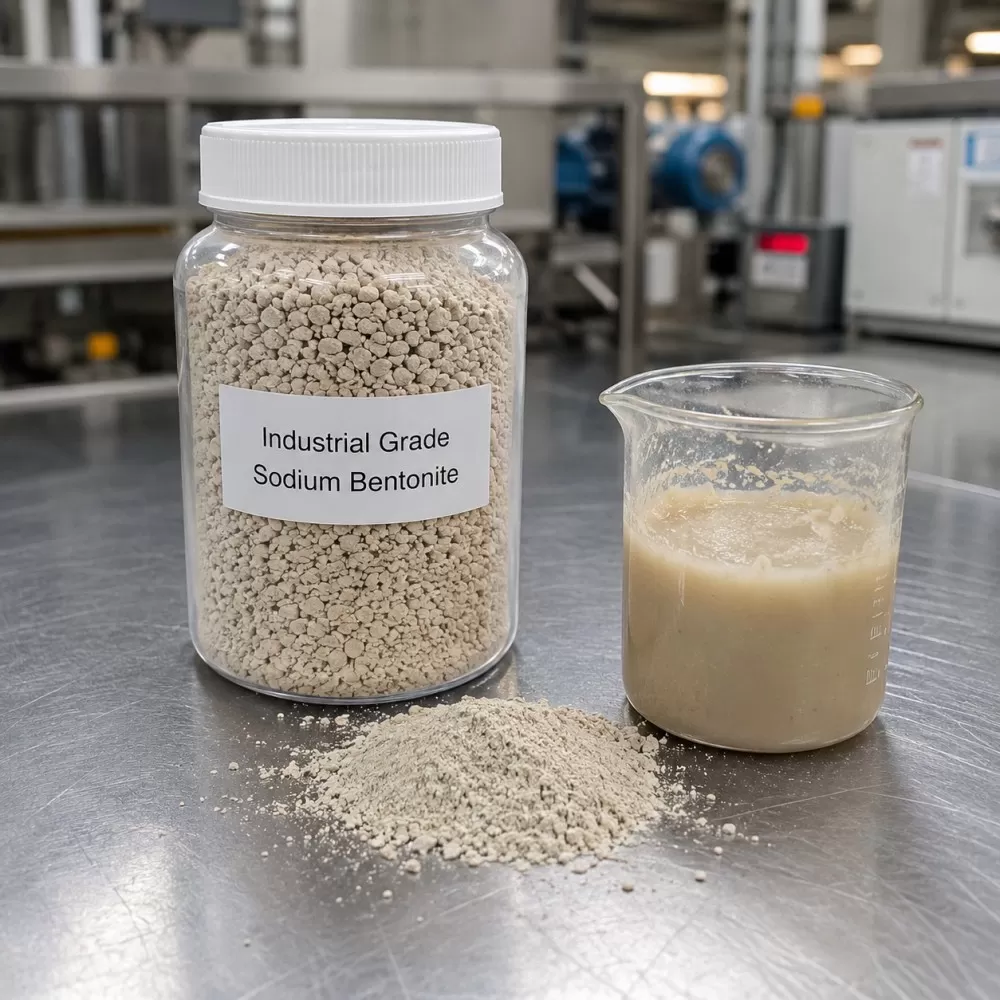
The Mineralogical Structure and Swelling Hydration Mechanism
The performance of sodium bentonite clay is determined by its mineralogical composition. Montmorillonite possesses a 2:1 sheet structure, where an octahedral alumina sheet is sandwiched between two tetrahedral silica sheets. Due to isomorphic substitution within the crystal lattice—specifically the replacement of aluminum ions with magnesium ions in the octahedral layer—the clay platelets carry a net negative surface charge. This charge is balanced by exchangeable cations located in the interlayer space. In this specific variety of bentonite, sodium ions predominate.
When exposed to water, the sodium ions attract water molecules into the interlayer space. Because sodium has a relatively small ionic charge and a large hydration radius, it allows multiple layers of water to enter, causing the clay lattice to expand. This process, known as crystalline and osmotic swelling, leads to the dispersion of individual clay platelets into a colloidal suspension. The resulting gel exhibits thixotropic properties, meaning it behaves as a liquid under mechanical shear but reverts to a highly viscous, solid-like state when at rest.
This physical transformation is quantified by the swelling index, typically measured in milliliters per two grams of dry clay. High-quality deposits processed by Jinshi consistently exhibit swelling volumes exceeding 24 ml/2g, indicating a high concentration of active sodium montmorillonite. This high swelling capacity directly correlates with low hydraulic conductivity, making the clay an effective barrier against water and fluid migration.
Applications in Civil Engineering and Geotechnical Sealing
In geotechnical engineering and environmental containment, sodium bentonite clay serves as a primary material for constructing low-permeability barriers. Its ability to swell and form an impermeable seal under compaction makes it suitable for several applications:
Geosynthetic Clay Liners (GCLs): These liners consist of a layer of sodium bentonite needles punched or bonded between geotextile layers. They are widely used as hydraulic barriers in landfill caps, basal liners, and secondary containment structures.
Pond and Reservoir Sealing: When applied to porous soils, the clay swells within the soil voids, effectively plugging pathways and preventing water seepage in agricultural reservoirs and industrial wastewater ponds.
Slurry Trenching and Diaphragm Walls: In deep excavation support, bentonite slurries stabilize the trench walls by exerting hydrostatic pressure against the soil formation, preventing collapse prior to concrete placement.
Tunneling and Microtunneling: The lubricating properties of the clay suspension reduce friction between the tunneling shield and the surrounding ground, while also assisting in soil removal.
The effectiveness of these engineering barriers depends on the clay's resistance to chemical contaminants. Exposure to highly saline water or acidic leachates can cause cation exchange, where calcium or magnesium ions displace the sodium ions. This exchange reduces the swelling capacity of the clay, potentially compromising the barrier. To mitigate this, specialized polymer-modified formulations are utilized to preserve swelling performance in challenging chemical environments.
Role in Drilling Fluids and Foundry Casting
The oil and gas industry relies heavily on sodium bentonite clay to formulate water-based drilling muds. According to API (American Petroleum Institute) Specification 13A, drilling-grade bentonite must meet strict requirements for suspension properties, filtrate loss, and moisture content. The clay serves multiple functions in a drilling fluid system:
Viscosity Building: It increases the viscosity of the drilling fluid to transport drill cuttings from the bottom of the wellbore to the surface.
Filtration Control: The dispersed clay platelets deposit on the borehole wall, forming a thin, low-permeability filter cake. This cake prevents the loss of liquid phase mud into permeable geological formations.
Borehole Stabilization: The hydrostatic pressure of the mud column, combined with the filter cake, prevents cave-ins and maintains structural integrity.
In the metal casting industry, the clay is used as a binder in green sand molding. Foundry sand mixtures containing silica sand, bentonite, and water are compacted around patterns to form molds for casting steel, iron, and non-ferrous metals. The clay provides high green compression strength to withstand the mold-making process, as well as high dry strength to resist the thermal and physical stresses exerted by molten metal during pouring. Jinshi supplies specialized foundry-grade bentonite designed to maintain thermal durability and mold permeability during repeated casting cycles.
High-Performance Sodium Bentonite Clay in Cat Litter Manufacturing
The pet care market represents one of the largest consumer applications for sodium bentonite clay, primarily in the production of clumping cat litter. The mineral's natural absorption and swelling properties make it an ideal base material for this application. When liquid contacts the litter, the clay rapidly absorbs the moisture, swelling to form a tight, cohesive clump that can be easily removed without breaking apart.
To meet the standards of global cat litter brands, raw bentonite must undergo precise processing. The main criteria for high-quality clumping litter include:
Clumping Speed and Strength: The litter must form a solid clump within seconds of liquid contact, preventing moisture from reaching the bottom of the litter tray.
Odor Retention: The porous structure of the clay naturally traps ammonia molecules, mitigating unpleasant odors associated with pet waste.
Dust Control: Excessive dust can cause respiratory issues for both pets and owners. Dedicated de-dusting technologies applied during the granulating and screening phases at the Jinshi facility ensure low-dust formulations.
Granule Size Distribution: Properly sized granules maximize the surface area for absorption while preventing tracking (the litter sticking to the pet's paws).
By controlling the drying temperature and crushing parameters during production, suppliers can optimize the clay's natural absorption kinetics, ensuring consistent product performance for international distributors.
Addressing Industrial Supply Chain and Quality Challenges
Sourcing raw minerals on a global scale involves navigating variations in mineral quality, moisture content, and logistical consistency. Bentonite deposits are naturally variable, and raw clay mined from different sections of the same deposit can exhibit different swelling properties and mineral purities. This variability poses a challenge for B2B buyers who require strict consistency for continuous automated manufacturing processes.
Jinshi addresses these supply chain challenges through rigorous quality control protocols implemented at the mining source and processing plant. Raw clay is stockpiled, homogenized, and tested for montmorillonite content, swelling index, and grit content before processing. Advanced drying techniques are used to reduce moisture to optimal levels without overheating the clay, which could permanently dehydrate the montmorillonite structure and destroy its swelling capability. Furthermore, strategically located processing centers and established logistics networks ensure bulk shipments arrive on schedule, minimizing inventory disruptions for manufacturing partners.
Frequently Asked Questions
Q1: What is the main difference between sodium bentonite and calcium bentonite?
A1: The primary difference lies in the dominant interlayer exchangeable cation. Sodium bentonite features sodium ions, which allow for high water absorption, significant swelling capacity, and the formation of highly viscous colloidal suspensions. Calcium bentonite contains calcium ions, which limit its swelling capacity to a fraction of its dry volume. While calcium bentonite is highly valued for bleaching and clarifying oils, the sodium variety is preferred for sealing, drilling, and clumping applications.
Q2: How does temperature affect the performance of sodium bentonite clay?
A2: Exposure to extreme temperatures can alter the physical properties of the clay. At temperatures below 100°C, the clay can undergo repeated hydration and dehydration cycles without losing its swelling capacity. However, exposure to temperatures exceeding 400°C to 500°C can cause irreversible loss of interlayer water and damage the crystal lattice structure, permanently reducing its swelling and gelling capabilities. This thermal limit is an important consideration in deep-well drilling and foundry applications.
Q3: Why is particle size distribution important for industrial grade bentonite?
A3: Particle size distribution directly impacts the rate of hydration, dispersion, and mechanical handling. Ultra-fine powders (such as 200 mesh) are ideal for drilling muds and civil engineering slurries because they hydrate rapidly to build viscosity. In contrast, coarser granules (typically 1-4 mm) are required for cat litter manufacturing to optimize clumping kinetics, minimize tracking, and maintain a low-dust profile during packaging and use.
Q4: How does salinity impact the swelling index of the clay?
A4: High salinity or the presence of divalent cations (like calcium and magnesium) in the hydrating water reduces the osmotic swelling of the clay. The presence of excess salts suppresses the electrical double layer around the clay platelets, preventing them from dispersing fully. In highly saline environments, such as marine drilling or brackish water sealing, modified polymers are typically added to the clay formulation to maintain viscosity and sealing performance.
Q5: What are the typical packaging options for bulk B2B shipments of bentonite?
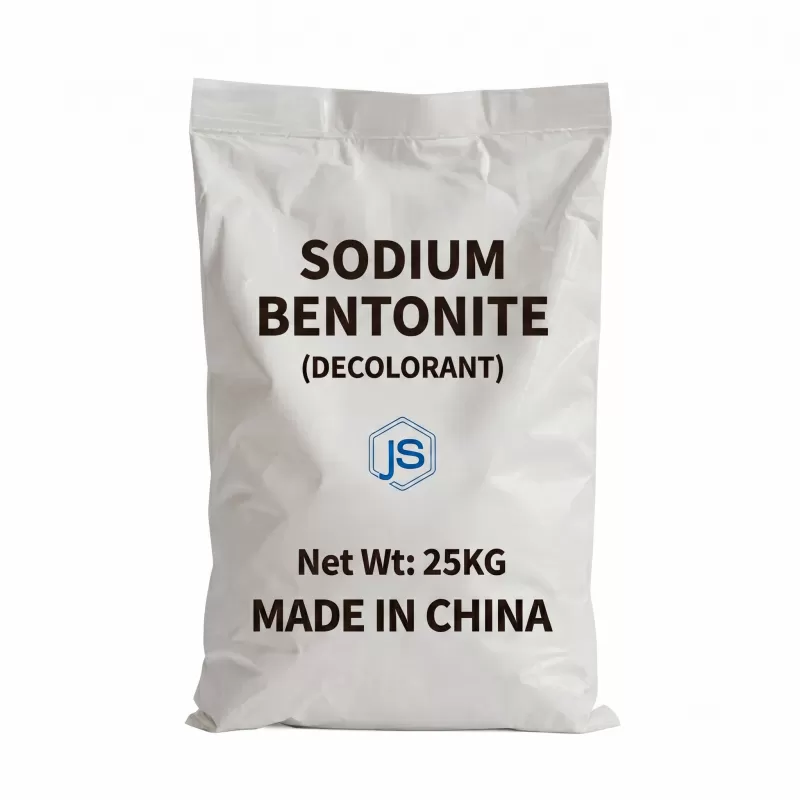
A5: Industrial shipments are tailored to customer handling systems. The clay is commonly packaged in 25 kg multi-wall paper bags for smaller batch operations, or in 1,000 kg to 1,250 kg flexible intermediate bulk containers (jumbo bags) equipped with discharge spouts for automated manufacturing lines. Bulk pneumatic tanker shipments are also utilized for large-scale construction or drilling projects with onsite silo storage.
B2B Procurement and Custom Formulation Inquiries
Sourcing high-performance mineral materials requires a partner capable of delivering consistent quality alongside scalable production. Jinshi specializes in the mining, processing, and distribution of custom-graded sodium bentonite clay tailored to the technical requirements of global industries, including geotechnical engineering, drilling, metal casting, and consumer pet products.
To request technical data sheets, mineralogical analyses, or customized sample formulations for laboratory evaluation, please contact our technical sales division. Our team is prepared to assist in optimizing grain size distribution, swelling indices, and packaging specifications to align with your specific manufacturing standards. Please submit your technical requirements and volume specifications through our inquiry portal to receive a detailed quotation.