
4 Key Parameters Deciding the Quality of Industrial Na Bentonite
2026-06-22
Industrial applications requiring reliable hydraulic sealing, high viscosity suspension, or robust binding properties frequently rely on specialized clay minerals. Among these, na bentonite stands out as a highly versatile raw material due to its unique mineralogical structure. Often referred to as sodium bentonite, this naturally occurring clay mineral consists primarily of montmorillonite. The specific presence of sodium ions within the interlayer spacing of the clay crystal lattice governs its distinctive physical properties, notably its ability to swell to several times its dry volume when hydrated.
For procurement professionals, engineers, and product manufacturers, understanding the science behind this material is a fundamental step in choosing the correct grade for specific project requirements. Jinshi processes and supplies high-grade industrial clays, ensuring consistent performance across diverse operational environments. Selecting the appropriate mineral composition directly affects the efficiency of drilling operations, the integrity of environmental barriers, and the quality of manufactured consumer goods.
Mineralogical Composition and Hydration Mechanics
To understand the industrial value of na bentonite, one must examine its crystalline makeup. The clay is composed of three-layer sheets where an octahedral alumina sheet is sandwiched between two silica tetrahedral sheets. This structural arrangement is classified as a 2:1 phyllosilicate. Isomorphous substitution within these crystal layers—where lower-valence cations replace higher-valence ones—creates a net negative charge across the clay platelets. This negative charge is balanced by exchangeable cations located in the interlayer spaces between the sheets.
In na bentonite, sodium is the dominant exchangeable cation. The sodium ion possesses a relatively low charge density and a large hydration shell. When water is introduced, these sodium ions readily hydrate, forcing the individual clay platelets apart. This process occurs in two distinct phases:
Crystalline Swelling: Water molecules enter the interlayer spaces, forming sequential monomolecular layers of water that expand the basal spacing up to approximately 2 nanometers.
Osmotic Swelling: The concentration of sodium ions between the clay sheets exceeds the concentration in the surrounding bulk water. This concentration gradient drives water into the interlayer regions, pushing the clay platelets even further apart and creating a highly dispersed colloidal suspension.
This dual swelling mechanism allows the clay to swell up to fifteen to twenty times its original dry volume. The resulting gel exhibits high plasticity, high liquid limit, and low hydraulic permeability, making it highly valuable for sealing and suspension applications.
Comparative Analysis: Sodium vs. Calcium Bentonite
Industrial users must distinguish between naturally occurring sodium clays and calcium-based clays. While both share the basic montmorillonite structure, their performance characteristics differ significantly due to the nature of their exchangeable cations.
Calcium bentonite contains divalent calcium ions within its interlayer spaces. Because calcium ions carry a double positive charge, they bind the negatively charged clay platelets together much more tightly than monovalent sodium ions. Consequently, calcium clay exhibits limited hydration and swelling capacity, usually expanding to only a few times its dry volume. While calcium clays are highly effective as decolorizing agents or catalysts due to their acid-activation potential, they cannot match the sealing and suspension performance of natural na bentonite.
Some suppliers offer sodium-activated bentonite, which is produced by treating calcium bentonite with sodium carbonate (soda ash). While this chemical modification improves the swelling capacity of calcium clay, the activation is reversible. Over time, or when exposed to groundwater containing dissolved calcium or magnesium ions, the sodium ions in activated clay can undergo cation exchange, reverting the clay to a low-swelling calcium state. Naturally occurring na bentonite processed by suppliers like Jinshi maintains long-term structural and chemical stability, resisting ion exchange and preserving its barrier integrity under prolonged exposure to environmental fluids.
Major Industrial Application Scenarios
The unique physical-chemical attributes of sodium montmorillonite make it a preferred material across multiple heavy industries and consumer product manufacturing sectors.
Civil Engineering and Geotechnical Barriers
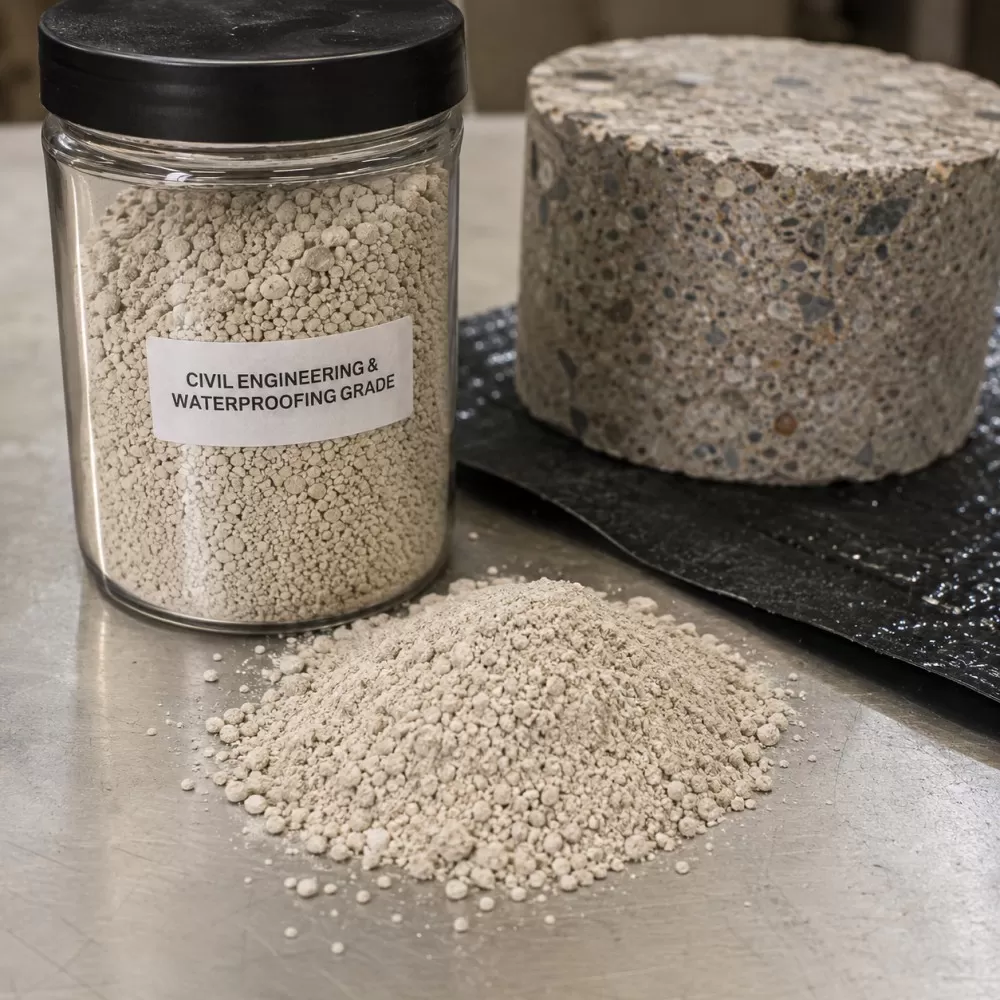
In environmental containment and civil construction, maintaining low hydraulic conductivity is a primary objective. Engineers incorporate na bentonite into geosynthetic clay liners (GCLs), slurry cut-off walls, and pond sealants. When these barrier systems encounter moisture, the clay hydrates and swells within the confined space of the soil or geotextile matrix. This expansion fills void spaces and pores, reducing the hydraulic conductivity of the barrier to values below 1 x 10^-11 meters per second.
This extremely low permeability prevents the migration of contaminants and leachate from municipal solid waste landfills into neighboring groundwater tables. The self-healing property of the hydrated clay also ensures that minor punctures or shifts in the surrounding soil structure do not result in immediate barrier failure, as the swelling clay naturally flows to seal voids.
Drilling Fluids and Suspension Rheology
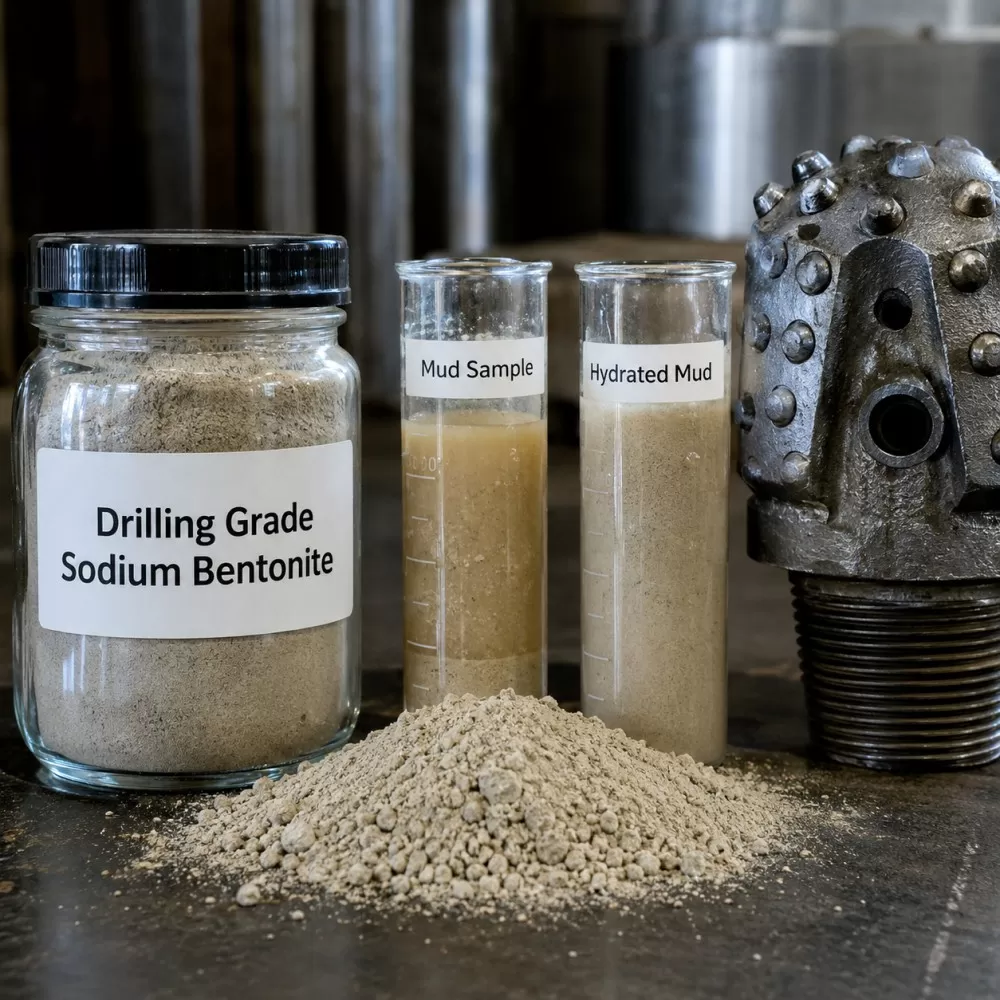
The petroleum, geothermal, and water-well drilling industries use bentonite-based drilling muds to facilitate operations. Formulated according to industry specifications such as API Standard 13A, these muds utilize na bentonite to achieve specific rheological characteristics. The primary functions of the drilling mud include:
Cuttings Transport: High viscosity suspensions carry drilled rock cuttings from the bottom of the wellbore to the surface.
Thixotropic Gel Strength: When drilling fluid circulation stops, the mud transitions from a liquid state to a semi-solid gel. This gel structure holds the heavy cuttings in suspension, preventing them from settling around the drill bit and causing stuck pipe incidents.
Filtration Control: The clay platelets align against the porous walls of the borehole, forming a thin, low-permeability filter cake. This cake prevents the liquid phase of the drilling fluid from escaping into the surrounding geological formations, maintaining borehole pressure and wall stability.
Foundry Sand Binder
In metal casting operations, green sand molds require a binder that can withstand high thermal stress while preserving structural integrity. Combining silica sand, water, and na bentonite creates a moldable mixture with high green compression strength. During the pouring of molten iron or steel, the high dry strength of the sodium clay prevents the mold walls from eroding or collapsing under the pressure of the flowing liquid metal. The thermal stability of the clay ensures that the mold retains its shape until solidification occurs, resulting in cast components with clean surfaces and accurate dimensions.
Commercial Cat Litter Production
In the consumer pet product market, raw clay materials are processed into clumping cat litter. The high moisture absorption rate and rapid hydration of na bentonite enable the production of firm, cohesive clumps upon contact with liquid waste. These clumps encapsulate moisture and odor-causing compounds quickly, making them easy to scoop and remove. Jinshi refines raw clay to ensure optimal particle size distribution, which reduces dust generation and enhances the durability of the granules during packaging and shipping.
Overcoming Common Procurement Challenges
Purchasing managers and quality control engineers often encounter challenges when sourcing large volumes of industrial clay. Variation in raw material deposits can lead to inconsistent performance in downstream manufacturing. The following list outlines major industry pain points and the corresponding quality control measures designed to address them:
Inconsistent Swelling Capacity: Lower-grade deposits may contain high percentages of non-clay minerals like quartz, feldspar, or gypsum. Buyers should verify the swelling index of each batch using standardized tests such as ASTM D5890 to ensure the material meets minimum swelling specifications (typically greater than 24 milliliters per 2 grams of clay).
High Grit Content: Excess sand and grit in the clay can cause premature wear on slurry pumps, drilling equipment, and mixing machinery. Wet sieve analysis (specifically the 200-mesh residue test) is utilized to measure and limit the fraction of coarse particles in fine-milled powders.
Moisture Fluctuations: Excessive moisture in raw shipments increases transportation costs and causes clumping during dry storage. Conversely, over-drying the clay during processing can damage the montmorillonite crystal lattice, permanently reducing its swelling capacity. Sourcing from processors who utilize low-temperature, controlled drying systems preserves the hydration potential of the clay.
Quality Verification Metrics for B2B Buyers
Before confirming a procurement agreement, B2B buyers must establish a rigorous material verification protocol. Testing laboratories should evaluate several key performance indicators to confirm the suitability of the clay for its intended application:
| Test Parameter | Standard Method | Typical Industrial Target Range | Application Relevance |
|---|---|---|---|
| Swelling Index | ASTM D5890 | 20 - 30 mL / 2g | Hydraulic barriers, GCLs, sealing applications |
| Cation Exchange Capacity (CEC) | Methylene Blue Test | 70 - 90 meq / 100g | Indicates montmorillonite purity and binding strength |
| Moisture Content | ASTM D2216 | 8% - 12% | Prevents agglomeration in dry storage systems |
| Wet Sieve Residue (200 Mesh) | API RP 13B-1 | Less than 4.0% | Protects machinery from abrasive sand and grit |
| Yield Point / Plastic Viscosity Ratio | API 13A Section 9 | Min 3:1 | Determines suspension efficiency in drilling muds |
Implementing these standard testing parameters allows quality assurance teams to verify that incoming shipments conform to engineering specifications, eliminating potential downtime or structural failures in the field.
Jinshi Supply Chain Capabilities
To meet the rigorous demands of global infrastructure and manufacturing projects, Jinshi operates dedicated extraction and processing facilities. Our processing methodologies are designed to protect the natural mineralogical characteristics of our deposits, delivering consistent material performance in every batch.
Our facilities utilize low-temperature rotary dryers to reduce moisture content without collapsing the delicate interlayer structure of the montmorillonite. Advanced roller mills grind the dried clay into precise particle size distributions, ranging from coarse granules for agricultural applications to ultra-fine powders for specialized drilling and casting formulations. Our logistics team coordinates bulk shipping, containerized cargo, and moisture-resistant packaging solutions to ensure that the material arrives at your facility dry, intact, and ready for immediate deployment.
B2B Inquiry and Sample Requests
Industrial applications require materials tailored to specific environmental conditions and performance standards. Jinshi provides customized processing of na bentonite to match your precise formulation requirements, mesh sizes, and packaging specifications.
To request technical data sheets, material safety sheets, or to receive a representative sample for laboratory testing, please contact our technical sales team directly. Our specialists are available to review your project specifications and provide detailed pricing structures for both bulk and containerized shipments. Submit your inquiry today to establish a reliable, long-term mineral supply partnership.
Frequently Asked Questions
Q1: What is the main chemical difference between na bentonite and calcium bentonite?
A1: The primary chemical difference lies in the dominant exchangeable cation within the montmorillonite interlayer space. Sodium bentonite contains monovalent sodium ions, which allow for high hydration, swelling, and dispersion. Calcium bentonite contains divalent calcium ions, which hold the clay layers closely together, resulting in very low swelling and lower hydration capacity.
Q2: Can sodium-activated calcium bentonite perform as well as natural na bentonite?
A2: While sodium-activated clay exhibits improved swelling capacity initially, the activation process can be reversed when exposed to groundwater containing hard minerals like calcium or magnesium. Under these conditions, the sodium ions exchange back with calcium, reducing the swelling performance of the barrier. Natural sodium clay provides permanent, long-term swelling stability without the risk of reversing activation.
Q3: How does moisture content affect the storage and handling of milled clay powders?
A3: Maintaining moisture levels between 8% and 12% is ideal for handled powders. If the moisture is too high, the clay can cake, clump, and block silo discharge systems. If the clay is over-dried (below 5%), the crystalline structure of the montmorillonite can be damaged, permanently reducing its swelling capacity when mixed with water in the field.
Q4: Why is wet sieve analysis significant for drilling and slurry trench applications?
A4: Wet sieve analysis measures the percentage of sand and non-clay grit larger than 75 microns (200 mesh) in the clay. High grit content is highly abrasive and can cause rapid wear on slurry pumps, mud valves, and drill strings, leading to increased maintenance costs and operational downtime.
Q5: What is the significance of the Methylene Blue Test for assessing bentonite quality?
A5: The Methylene Blue Test measures the cation exchange capacity (CEC) of the clay, which directly correlates to the concentration of active montmorillonite. Higher methylene blue absorption indicates a higher-purity clay with fewer inert impurities like silica, calcite, or feldspar, translating to superior bonding and sealing performance.