
How Does Sodium Bentonite for Ponds Prevent Seepage in Sandy Soils?
2026-06-30
Water containment poses a continuous challenge for civil engineers, agricultural developers, and land managers. Seepage through porous soils frequently results in dry storage basins, wasted resources, and structural instability in surrounding embankments. Standard synthetic liners offer a temporary fix, but they remain susceptible to punctures, UV degradation, and costly installation procedures. Natural clay materials provide a self-healing, permanent alternative.
High-swell sodium bentonite clay has become the industry standard for sealing earthen reservoirs. This mineral compound expands when hydrated, creating an impermeable barrier that restricts water movement. Understanding the mineralogical properties, application methodologies, and dosage calculations is necessary for achieving a successful seal. This guide analyzes how to utilize sodium bentonite for ponds to control water loss and ensure long-term containment integrity.
Understanding the Mineralogy of Sodium Bentonite
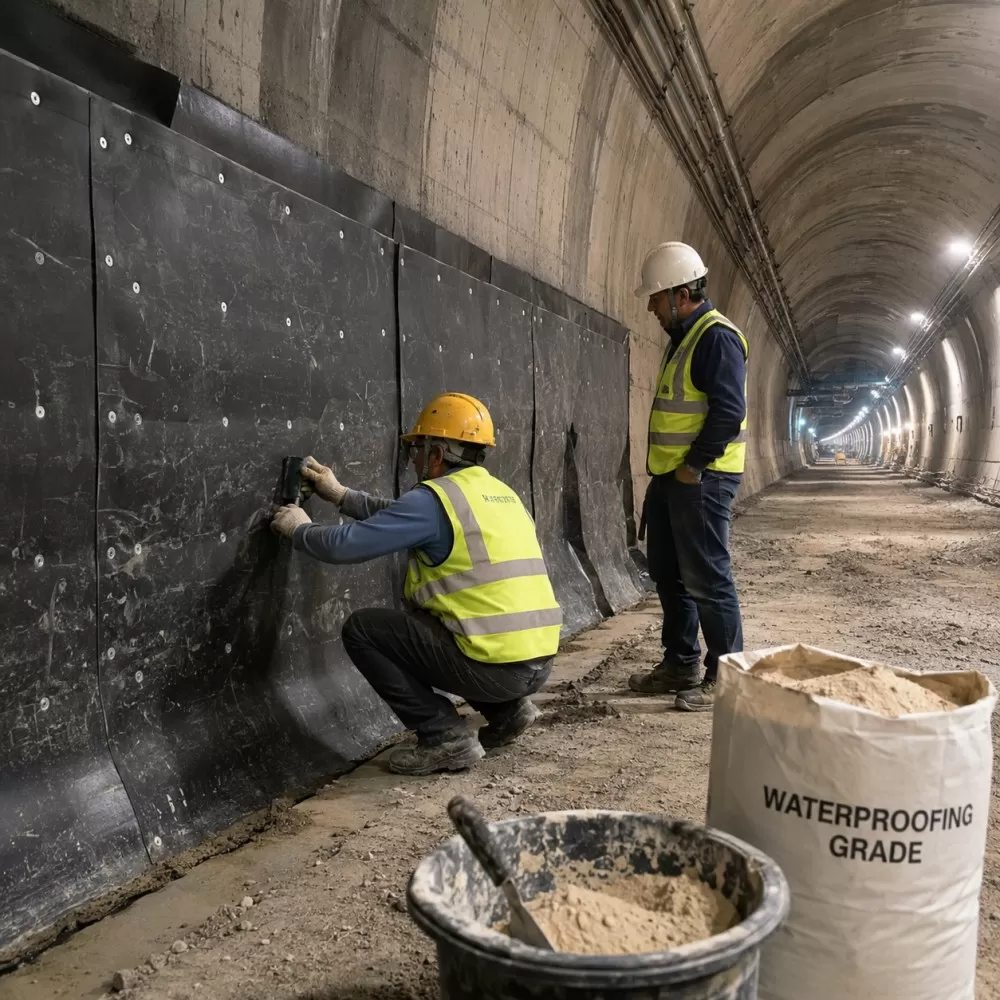
Bentonite is an absorbent aluminum phyllosilicate clay consisting primarily of montmorillonite. The specific geological deposit determines whether the clay is sodium-rich or calcium-rich. Sodium bentonite features high swelling capabilities, whereas calcium bentonite exhibits low swelling capacity. For civil engineering and water retention projects, the sodium-rich variety is required.
The molecular structure of sodium montmorillonite consists of an octahedral sheet of alumina sandwiched between two tetrahedral sheets of silica. This is referred to as a 2:1 clay mineral structure. In the interlayer spaces of this molecular structure, exchangeable sodium cations ($Na^+$) reside. These sodium ions attract water molecules, which force the clay platelets apart during hydration.
When dry, the clay exists as highly condensed platelets. Upon contact with water, the sodium ions pull water molecules into the crystalline lattice, causing the material to swell up to fifteen to twenty times its original dry volume. This expansion converts the dry powder or granules into a dense, cohesive, gelatinous mass. This hydrated gel fills the void spaces within porous soils, drastically reducing the hydraulic conductivity of the soil matrix to rates as low as $1 \times 10^{-7}$ to $1 \times 10^{-9}$ centimeters per second.
Soil Permeability and the Mechanism of Water Loss
Soils are classified based on particle size distribution, ranging from coarse gravel and sand to fine silt and clay. The rate of water movement through these soils is dictated by Darcy's Law, which states that flow rate is proportional to the hydraulic gradient and the hydraulic conductivity of the porous medium. Coarse soils possess high void ratios and large pore channels, allowing water to escape rapidly.
The introduction of sodium bentonite for ponds alters this system. When hydrated clay is blended with porous sand or gravel, the expanding clay platelets lodge themselves within the soil interstices. Rather than acting as a separate membrane, the clay physically blends with the existing soil skeleton, forming a composite liner. This composite structure can withstand significant hydraulic head pressure without washing out or piping.
Soil chemistry also influences this sealing mechanism. The presence of highly saline water or high concentrations of divalent cations, such as calcium ($Ca^{2+}$) or magnesium ($Mg^{2+}$), can hinder the swelling process. These divalent ions can replace the monovalent sodium ions through cation exchange, reducing the hydration sphere and causing the clay to shrink or flocculate. Consequently, analyzing both the local soil chemistry and the source water is an important step prior to installation.
Standard Methodologies for Applying Sodium Bentonite for Ponds
Depending on the condition of the pond, the soil profile, and whether the basin is dry or currently filled with water, operators can choose from three primary application methods. Each process requires specific mechanical equipment and preparation to ensure uniform distribution and performance.
The Soil-Clay Admixture Method (Mixed Blanket)
This method represents the most reliable approach for sealing dry basins. It involves blending the clay directly into the existing floor and slope soils to create a homogeneous, compacted barrier layer.
Site Preparation: Clear the basin of all organic debris, vegetation, tree roots, and large stones exceeding two inches in diameter. Grade the slopes to a stable angle, preferably not exceeding a 3:1 (horizontal to vertical) slope ratio.
Clay Distribution: Spread the specified weight of dry bentonite per square foot evenly across the prepared surface using a drop spreader or agricultural lime distributor. Jinshi recommends using fine granular or powder grades to achieve uniform distribution.
Soil Blending: Incorporate the dry clay into the top four to six inches of the subgrade. This can be accomplished using a rotary tiller, disk harrow, or soil stabilizer. Multiple passes are required to ensure there are no pockets of pure clay or unblended sand.
Compaction: Compact the blended soil-clay layer to at least 90% to 95% of its maximum Standard Proctor dry density. Compaction should be performed using a sheepsfoot roller or a vibratory smooth-drum roller, keeping the moisture content near the optimum level.
Protective Cover: Place a six-inch layer of clean, unblended soil over the compacted liner to protect it from drying, cracking, erosion, or mechanical puncture.
The Pure Clay Liner Method
This approach involves laying down a continuous, uniform sheet of pure bentonite across the basin floor, rather than mixing it with the native soil. It is typically deployed when the native soils are too stony or sandy to allow for proper blending.
Subgrade Grading: Prepare and compact the raw earth subgrade, ensuring a smooth, uniform surface free of sharp protrusions.
Liner Placement: Apply a continuous layer of dry clay, typically one to two inches thick, across the floor and slopes. Care must be taken to maintain a uniform thickness across the entire footprint.
Protective Covering: Immediately cover the pure clay layer with a six-inch to twelve-inch layer of clean sand or gravelly soil. This overburden provides the confining pressure needed to optimize the clay swelling action and prevents the clay from dispersing directly into the water column when the pond is filled.
The Sprinkling Method for Active Seepage
This method is utilized for active, localized leaks in existing reservoirs that cannot be drained. It is a remedial measure rather than a primary engineering method, and its success rate depends on the location and severity of the leak.
Targeting the Leak: Identify the suspected area of seepage, often indicated by dropping water levels, wet spots on embankments, or visible whirlpools.
Granular Application: Broadcast coarse bentonite granules or pellets directly onto the water surface above the leak. Jinshi advises using coarse granules (8 to 20 mesh) or custom pellets for this application, as they sink directly to the bottom before hydrating.
Sealing Process: As the granules sink, the water currents generated by the leak draw the particles into the voids and cracks along the pond bed. The granules swell in place, plugging the leak channels from the wet side.
Calculating the Correct Dosage Rate for Soil Sealing
Applying an inadequate volume of clay is a primary cause of sealing failures. The appropriate application rate depends on the laboratory-tested permeability of the native soil, the depth of the water column, and the chemical composition of the water. Below is an engineering estimation guide based on typical soil classifications:
| Soil Classification | Sieve Analysis / Characteristics | Required Bentonite (Lbs per Sq. Ft.) | Required Bentonite (Kg per Sq. Meter) |
|---|---|---|---|
| Clayey Silt / Silty Clay | Fine particles, low baseline permeability | 2.0 – 3.0 | 9.8 – 14.6 |
| Silty Sand / Fine Sandy Loam | Moderate fines, medium permeability | 3.0 – 4.5 | 14.6 – 22.0 |
| Clean Sand | Mainly sand grains, low clay content | 4.5 – 6.0 | 22.0 – 29.3 |
| Gravelly Sand / Coarse Gravel | High void ratios, rapid water movement | 6.0 – 8.0+ | 29.3 – 39.0+ |
To accurately calculate the total material required for a project, engineers should utilize the following formula:
Total Material Required (Tons) = [Surface Area (Sq. Ft.) × Application Rate (lbs/sq. ft.)] ÷ 2,000
When working with steep slopes, increase the calculation by 10% to 15% to compensate for material slippage and potential uneven application during grading.
Quality Parameters of Industrial-Grade Bentonite
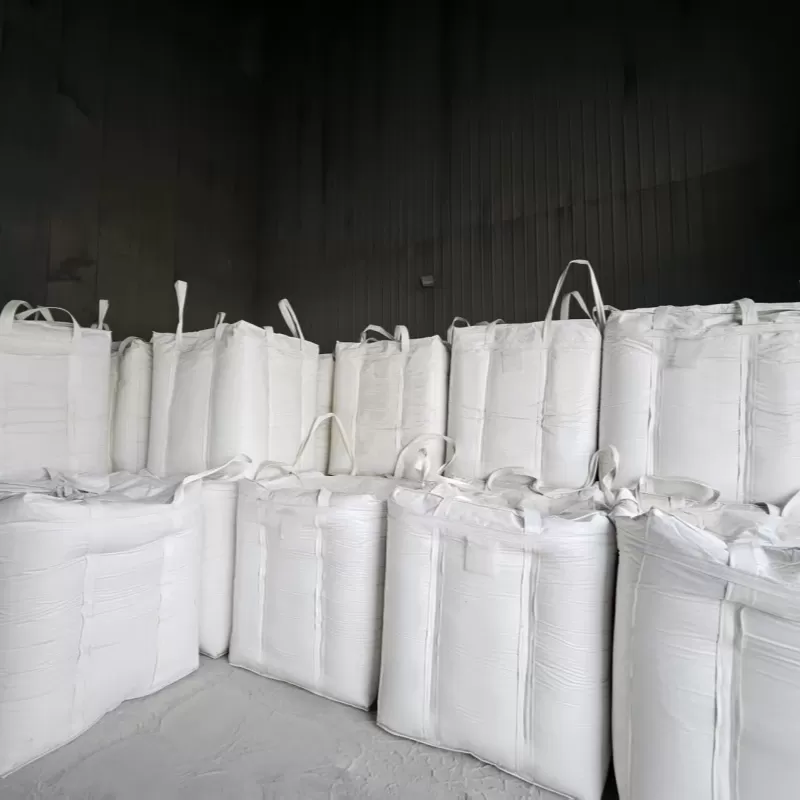
Not all clay minerals perform identically under field conditions. To ensure the integrity of a pond liner, the bentonite must meet specific physical and chemical standards. The mineral processing specialists at Jinshi evaluate material performance based on several standardized parameters:
Free Swell Index (ASTM D5890): This test measures the volume expansion of a 2-gram clay sample in deionized water. High-grade sodium bentonite should exhibit a minimum free swell index of 24 mL, indicating a robust expansion capacity.
Fluid Loss (ASTM D5891): This parameter measures the amount of water that filters through a hydrated clay cake under pressure. Low fluid loss values indicate a dense, low-permeability seal.
Grit Content: The presence of non-clay minerals, such as silica sand, should be minimized. High-quality industrial bentonite typically maintains a grit content of less than 2.5% on a 200-mesh screen.
Moisture Content: Dry packaging requires the clay to maintain a moisture level of 6% to 12%. Excessive moisture can cause premature clumping, while over-drying can damage the crystalline structure, reducing its swelling capacity.
Frequently Asked Questions
Q1: How long does a sodium bentonite seal last in a pond?
A1: A properly installed sodium bentonite clay liner is chemically inert and does not degrade over time. Because it is a natural volcanic mineral, its physical sealing properties remain active indefinitely, provided the clay remains hydrated and is protected from physical erosion or drying out by a proper soil overburden layer.
Q2: Can I use sodium bentonite in a pond that contains fish and aquatic plants?
A2: Yes. Sodium bentonite is a naturally occurring, non-toxic clay mineral. It does not introduce hazardous chemicals, heavy metals, or synthetic pollutants into the water column. However, during the initial filling phase, some fine clay particles may remain suspended, causing temporary turbidity. This turbidity naturally settles out over several days without harming aquatic life.
Q3: How do I seal a pond that is already full of water?
A3: If draining the pond is not feasible, the sprinkling method can be deployed. Coarse granular bentonite or manufactured pellets are broadcast across the surface of the water directly over the suspected leakage areas. The dense particles sink to the pond bed, hydrate, and get drawn into the soil voids by the downward water flow, slowing or stopping the seepage.
Q4: Will sodium bentonite work in saline or brackish water environments?
A4: High concentrations of salt or calcium ions can interfere with the swelling capacity of standard sodium bentonite. In saltwater applications, the ions compete with the clay's hydration mechanism, reducing its expansion. For brackish or highly saline ponds, modified clay formulations or specialized pre-hydration techniques must be utilized to maintain a low-permeability barrier.
Q5: What is the difference between calcium bentonite and sodium bentonite?
A5: The difference lies in the dominant exchangeable cation within the clay's crystal lattice. Sodium bentonite has sodium as its primary exchangeable ion, allowing it to absorb large volumes of water and swell up to twenty times its dry volume. Calcium bentonite has calcium as its primary ion, which limits its swelling capacity to only a few times its dry volume, making it unsuitable for forming impermeable pond seals.
Commercial Procurement and Engineering Support from Jinshi
Industrial containment systems demand consistent raw materials. Natural variations in clay deposits can impact project outcomes if left unmonitored. Jinshi maintains strict processing control over our premium sodium bentonite mineral reserves, ensuring uniform swelling indices, low fluid loss properties, and optimal particle size distribution for municipal, industrial, and agricultural clients worldwide.
Whether you are designing a wastewater containment basin, a farm reservoir, or an ornamental lake, our team can assist with laboratory testing of native soil samples, sizing recommendations, and logistics support for bulk shipments. For bulk pricing, material safety datasheets, or technical specifications, please contact the Jinshi commercial team to submit your inquiry.