
Bulk Sodium Bentonite Clay for Sale: Industrial Specifications and Sourcing Guide
2026-07-16
Industrial procurement of raw mineral materials requires a deep understanding of geological composition and performance parameters. Sodium bentonite, a naturally occurring clay mineral dominated by sodium montmorillonite, serves as a foundation for civil engineering, foundry casting, environmental containment, and drilling applications. Securing high-yield bulk sodium bentonite clay for sale involves analyzing chemical profiles, hydration behaviors, and logistical variables rather than relying solely on market pricing.
For global procurement managers and process engineers, the performance of bentonite directly influences the viscosity of drilling fluids, the green compression strength of foundry molds, and the hydraulic conductivity of environmental barriers. Jinshi provides processed and raw sodium bentonite designed to meet strict industrial specifications, ensuring stable mineral properties across large-volume shipments.
The Mineralogical Structure of High-Grade Sodium Bentonite
To understand why sodium bentonite behaves differently from other clay minerals, one must look at its crystalline structure. Bentonite is a 2:1 expandable phyllosilicate. Each individual clay platelet consists of an octahedral sheet containing alumina sandwiched between two tetrahedral sheets containing silica. Within this atomic matrix, isomorphous substitution occurs naturally, where divalent magnesium cations replace trivalent aluminum ions in the octahedral layer. This substitution leaves a net negative charge on the surface of the clay platelet.
In sodium bentonite, this negative charge is balanced primarily by sodium cations ($Na^+$) situated within the interlayer spaces between the platelets. This mineralogical configuration differs significantly from calcium bentonite, which contains divalent calcium cations ($Ca^{2+}$). The single valence of the sodium ion, combined with its high hydration energy, allows water molecules to easily penetrate the interlayer space. This process initiates osmotic swelling, separating the clay platelets and allowing the mineral to expand up to fifteen to twenty times its dry volume.
When sourcing bulk sodium bentonite clay for sale, the percentage of active montmorillonite within the raw ore dictates the final swelling capability. High-purity deposits yield clay with superior cation exchange capacity (CEC), typically ranging from 70 to 100 milliequivalents per 100 grams. This high exchange capacity directly translates to better suspension properties, lower hydraulic permeability, and stronger binding properties under thermal stress.
Key Performance Parameters for Industrial Applications
Different industrial sectors exploit specific aspects of sodium bentonite’s hydration and structural properties. Understanding these distinct application requirements helps procurement teams specify the correct grind, moisture level, and swelling index when placing bulk orders.
1. Drilling Fluids and Civil Engineering Slurries
In rotary drilling operations, bentonite slurry performs multiple tasks: it carries drill cuttings to the surface, exerts hydrostatic pressure to prevent wellbore collapse, and seals the porous formations of the borehole wall. The American Petroleum Institute (API) establishes specific parameters for these materials under the API 13A standard.
Yield Point and Plastic Viscosity: The slurry must demonstrate thixotropic properties. It should behave as a fluid under shear stress (pumping) and transition to a gel state when static to prevent cuttings from settling.
Filtrate Loss: High-quality clay forms a thin, low-permeability filter cake on the borehole wall, minimizing water loss into surrounding formations.
Marsh Funnel Viscosity: This field test measures the flow rate of the slurry, serving as an immediate indicator of the clay's suspension quality.
2. Environmental Containment and Geosynthetic Clay Liners (GCL)
Environmental engineering relies on the low hydraulic conductivity of sodium bentonite to isolate contaminants. Landfills, tailing ponds, and industrial reservoirs utilize bulk clay or GCLs to construct impermeable barriers.
Hydraulic Conductivity: Properly hydrated sodium bentonite can achieve a hydraulic conductivity rating as low as $1 \times 10^{-9}$ centimeters per second, effectively preventing the migration of leachate.
Self-Sealing Capacity: If a physical puncture occurs in a composite liner, the high swelling pressure of the adjacent sodium bentonite allows it to expand into the void, sealing the breach naturally under hydrostatic pressure.
Chemical Compatibility: The presence of high salt concentrations or acidic chemicals in the contained liquid can affect the swelling of the clay. Engineers must analyze the chemical makeup of the leachate to ensure the clay maintains its swelling properties under site-specific conditions.
3. Metal Casting and Foundry Sand Binder
In green sand molding, sodium bentonite functions as the binding agent that holds silica sand grains together under the thermal and mechanical stresses of molten metal pouring.
Green Compression Strength (GCS): This parameter measures the ability of the sand-clay mixture to maintain the mold shape before pouring when the sand is damp.
Dry and Hot Strength: Once the molten metal enters the mold, the clay must withstand thermal shock without collapsing prematurely, ensuring dimensional accuracy of the cast metal.
Thermal Durability: Superior sodium bentonite retains its binding properties through multiple casting cycles, reducing the volume of fresh clay required in the sand reclamation system.
Factors Affecting the Pricing and Performance of Bulk Sodium Bentonite Clay for Sale
Sourcing raw materials on a global scale requires an understanding of the variables that influence both the landed cost and the operational consistency of the mineral. Not all bentonite deposits are identical, and processing methodologies heavily influence the utility of the delivered product.
Natural geological variations mean that clay veins within the same mining site can display different montmorillonite concentrations. Mining operations managed by Jinshi utilize strict deposit mapping and selective mining strategies. Raw ore is stockpiled according to swelling capacity, moisture content, and grit levels before processing. This selective blending reduces variance between production runs, ensuring that bulk shipments maintain consistent performance parameters throughout the contract period.
Processing steps also affect the material's performance. After mining, the raw clay contains 25% to 35% natural moisture. Drying must be handled carefully; overheating the clay during the drying phase can permanently dehydrate the interlayer spaces, collapsing the montmorillonite structure and destroying its swelling capacity. Jinshi employs controlled rotatory drying systems that reduce moisture to the target 8% to 12% range while preserving the crystalline structure of the clay.
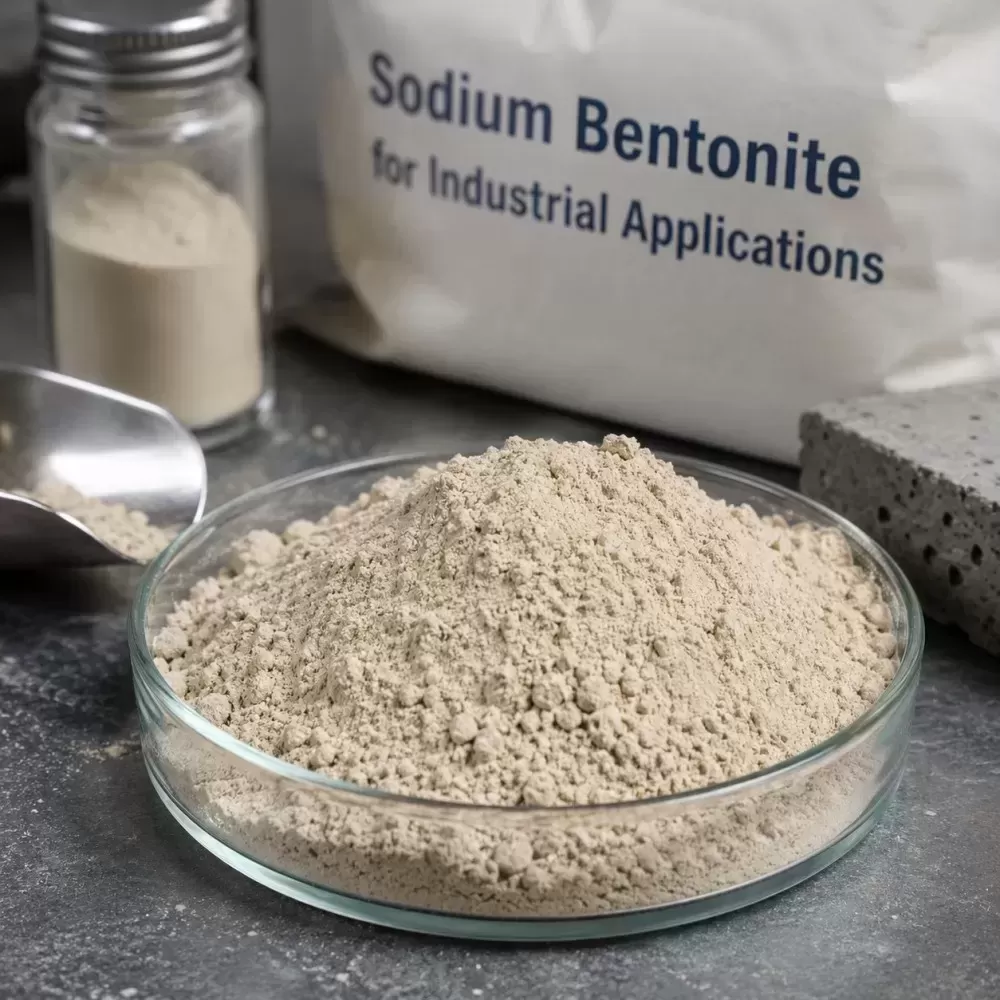
The final particle size distribution, or mesh size, is adjusted based on the end application. Finely milled powder (typically 200 mesh or 325 mesh) is ideal for drilling muds and foundry binders because it hydrates rapidly. Conversely, granular bentonite is preferred for agricultural applications, environmental soil mixing, and cat litter production because it minimizes airborne dust and allows for controlled hydration rates.
Typical Specifications for Industrial-Grade Sodium Bentonite
When comparing bulk sodium bentonite clay for sale, procurement agents should request analytical lab reports detailing the following standard parameters. The table below represents the typical range of high-yield sodium bentonite processed for industrial applications.
| Parameter Evaluated | Typical Range (High-Yield Industrial Grade) | Primary Measurement Method |
|---|---|---|
| Montmorillonite Content | 80% - 92% | X-ray Diffraction (XRD) / CEC Analysis |
| Swelling Index (2g in 100ml water) | 24 ml - 35 ml | ASTM D5890 Standard Test Method |
| Cation Exchange Capacity (CEC) | 75 - 95 meq/100g | Methylene Blue Adsorption / Ammonium Acetate |
| Moisture Content | 8% - 12% | Moisture Balance / Loss on Drying (105°C) |
| pH Value (6% suspension) | 8.5 - 10.5 | Standard pH Meter |
| Free Swell Capacity | ≥ 18 ml / 2g | Hydration Expansion Volume |
Logistical Management and Bulk Packaging Formats
Shipping fine, moisture-sensitive minerals in high volumes presents specific logistical hurdles. Bulk sodium bentonite is highly hygroscopic; exposure to atmospheric moisture during transport can cause clumping, reduced fluid-loss performance, or physical handling issues inside storage silos.
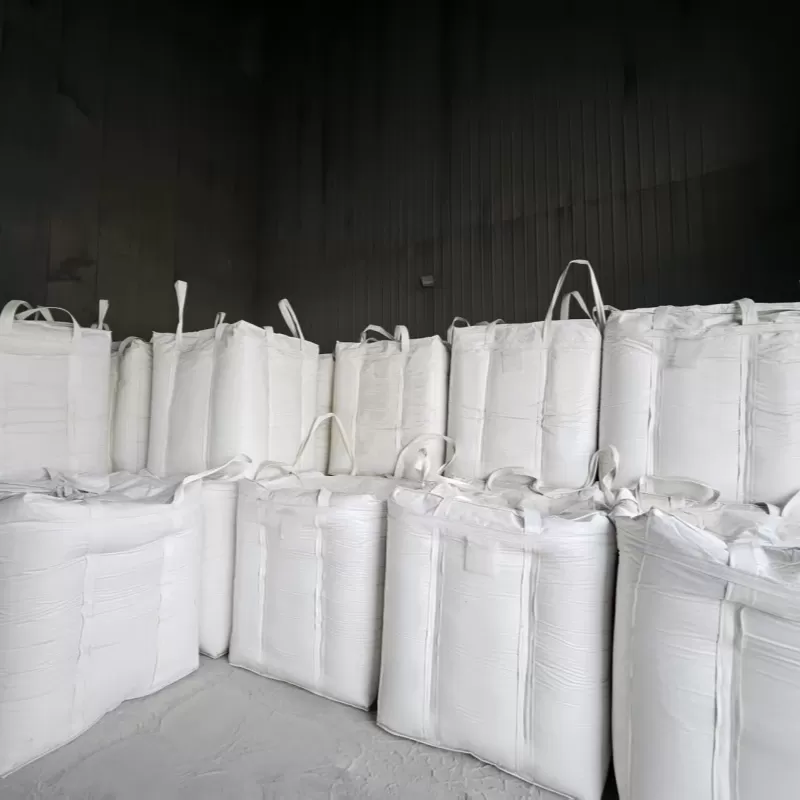
To prevent these issues, Jinshi utilizes multiple packaging configurations tailored to the transport mode and destination facilities. For containerized shipments, heavy-duty woven polypropylene jumbo bags (1.0 to 1.5 metric tons) equipped with internal polyethylene moisture liners are standard. These liners prevent humidity ingress during sea transit. For large-scale civil engineering projects or manufacturing plants equipped with receiving silos, bulk pneumatic tanker delivery or bulk vessel shipments can be arranged, provided the transfer systems are completely dry.
Coordinating shipping schedules with production cycles is another area where experienced suppliers provide value. Delays in raw material arrival can stall construction sites or halt production lines. Maintaining strategic stockpiles of processed raw clay allows Jinshi to fulfill urgent bulk orders while maintaining systematic quality control protocols prior to vessel loading.
Evaluating Long-Term Supply Partnerships with Jinshi
Selecting a supplier for bulk industrial minerals involves looking beyond the cost per metric ton. Consistent rheology, reliable moisture control, and predictable particle size distribution are the factors that prevent operational downtime. When evaluating options for bulk sodium bentonite clay for sale, partnering with a primary processor ensures direct access to quarry data, processing logs, and customized milling services.
Jinshi operates with a focus on mineral quality and stable supply chains. Our laboratory facilities test every batch for swelling capacity, viscosity, and moisture retention before dispatch. This systematic approach ensures that the clay delivered to your production facility or construction site behaves exactly as specified in the contract documents, reducing the need for formulation adjustments on the shop floor.
Submit an Inquiry for Bulk Sodium Bentonite Sourcing
Industrial operations require customized material formulations to meet specific application demands. Whether your project requires API-compliant drilling bentonite, high-strength foundry clay, or customized packaging formats for bulk distribution, our engineering team is available to assist with material specifications and shipping logistics.
Please contact our procurement support desk to request physical samples, detailed mineral analyses, or a comprehensive quote for your specific volume requirements. Let our team know your target mesh size, packaging preferences, and destination port to receive a tailored logistics plan. Send your detailed requirements directly to the Jinshi raw materials division to begin the quotation process.
Frequently Asked Questions Regarding Bulk Sodium Bentonite
Q1: What is the main structural difference between sodium bentonite and calcium bentonite?
A1: The primary difference lies in the dominant exchangeable cation within the interlayer spaces of the montmorillonite clay. Sodium bentonite contains single-valent sodium ions ($Na^+$), which allow for significant hydration, swelling, and suspension properties. Calcium bentonite contains divalent calcium ions ($Ca^{2+}$), which hold the clay platelets together more tightly, resulting in much lower swelling capacities and different hydration characteristics.
Q2: How does moisture level affect the storage life of bulk sodium bentonite?
A2: Industrial-grade sodium bentonite is typically processed to a moisture content of 8% to 12%. This level keeps the clay stable without causing dust handling issues or premature hydration. When stored in a dry, covered warehouse in sealed jumbo bags with moisture-proof liners, the clay can be kept indefinitely without losing its swelling capacity or rheological properties.
Q3: Can sodium bentonite be customized to meet specific mesh sizes?
A3: Yes. While standard industrial applications utilize a 200-mesh powder, processing plants can adjust the pulverizing systems to yield granular formats (such as 8-to-30 mesh or 16-to-40 mesh) for environmental liners or agricultural applications. Fine powders up to 325 mesh are also processed for specialized applications requiring immediate dispersion and rapid hydration.
Q4: Why is the swelling index of bentonite measured in milliliters per 2 grams?
A4: This test, standardized under ASTM D5890, measures the volume of hydrated gel formed when 2 grams of dried clay powder is added in small increments to 100 milliliters of deionized water over a set period. It is a reliable index for evaluating the purity and swelling potential of the montmorillonite fraction within the clay sample.
Q5: How does Jinshi ensure batch consistency across multi-thousand-ton shipments?
A5: Consistency is achieved by selective mining, pre-blending raw stockpiles based on laboratory tests, and continuous monitoring during the drying and milling phases. Each production run undergoes automated sampling to verify swelling index, particle size distribution, and moisture content before being approved for packaging and shipping.