
Why is Bulk Sodium Bentonite the Standard for Low-Permeability Barriers?
2026-07-15
Large-scale industrial projects requiring superior swelling clays rely heavily on specific mineral characteristics. Natural sodium bentonite, a clay mineral primarily composed of sodium montmorillonite, is valued for its high swelling capacity, thermal stability, and low hydraulic conductivity. Procurement officers and civil engineers looking to source bulk sodium bentonite must evaluate several physical and chemical properties to ensure the material performs as intended under field conditions. Jinshi provides processed clay materials tailored to meet diverse industrial needs, balancing quality consistency with efficient logistics.
Understanding the mineralogical differences between sodium and calcium variants is necessary before selecting a bulk supplier. While both are smectite clays, the presence of sodium ions as the dominant exchangeable cation gives sodium bentonite its characteristic high swelling ratio. This swelling ability makes the material highly effective for sealing, binding, and suspending applications across various industrial sectors.
The Mineralogical Properties of Bulk Sodium Bentonite
To understand why bulk sodium bentonite behaves as a highly effective barrier, one must look at its molecular structure. Montmorillonite consists of an octahedral sheet sandwiched between two tetrahedral silica sheets, commonly referred to as a 2:1 layer structure. The negative charge resulting from isomorphous substitution within these crystal lattices is balanced by exchangeable cations, primarily sodium (Na+), located in the interlayer spaces.
When exposed to water, these sodium ions hydrate, causing the interlayer spacing to expand. This process leads to significant swelling, with high-quality sodium bentonite capable of expanding to many times its dry volume. This hydration creates a highly viscous, low-permeability gel that acts as a robust hydraulic barrier.
Examining the cation exchange capacity (CEC) reveals the clay's ability to hold and exchange cations. A higher CEC typically indicates a higher concentration of active montmorillonite, which directly correlates with the clay’s swelling performance and sealing efficiency. For large-scale environmental or civil engineering projects, verifying the CEC ensures that the bulk material will maintain its structural integrity when exposed to different groundwater chemistries.
Particle size distribution is another key parameter that influences hydration kinetics. Depending on the final application, the clay is processed into different particle size distributions, ranging from fine powders to granular forms. Fine powders are typically utilized in drilling fluids and civil engineering slurries where rapid hydration is needed. Granular variations are often preferred for pond sealing, agricultural soil modification, and cat litter formulations, as they generate less dust during handling and allow for controlled hydration.
Major Industrial Applications of Bulk Sodium Bentonite
The versatility of this clay mineral allows it to serve multiple functions across distinct industries. Bulk procurement requires a clear understanding of how these properties manifest in specific applications.
Environmental and Civil Engineering Containment
In the field of environmental containment and civil engineering, bulk sodium bentonite plays a central role in constructing low-permeability barriers. Landfill lining systems utilize the clay either as a soil-bentonite mixture or within geotextile clay liners (GCLs).
Landfill Liners: The low hydraulic conductivity of hydrated sodium bentonite prevents contaminated leachate from migrating into local aquifers.
Pond and Reservoir Sealing: Applying granular bentonite to the bottom of a pond creates an impermeable layer that mitigates water loss through seepage.
Slurry Walls: In deep excavations, bentonite slurries support trench walls, preventing collapse while creating a barrier against groundwater flow.
Drilling and Boring Fluids
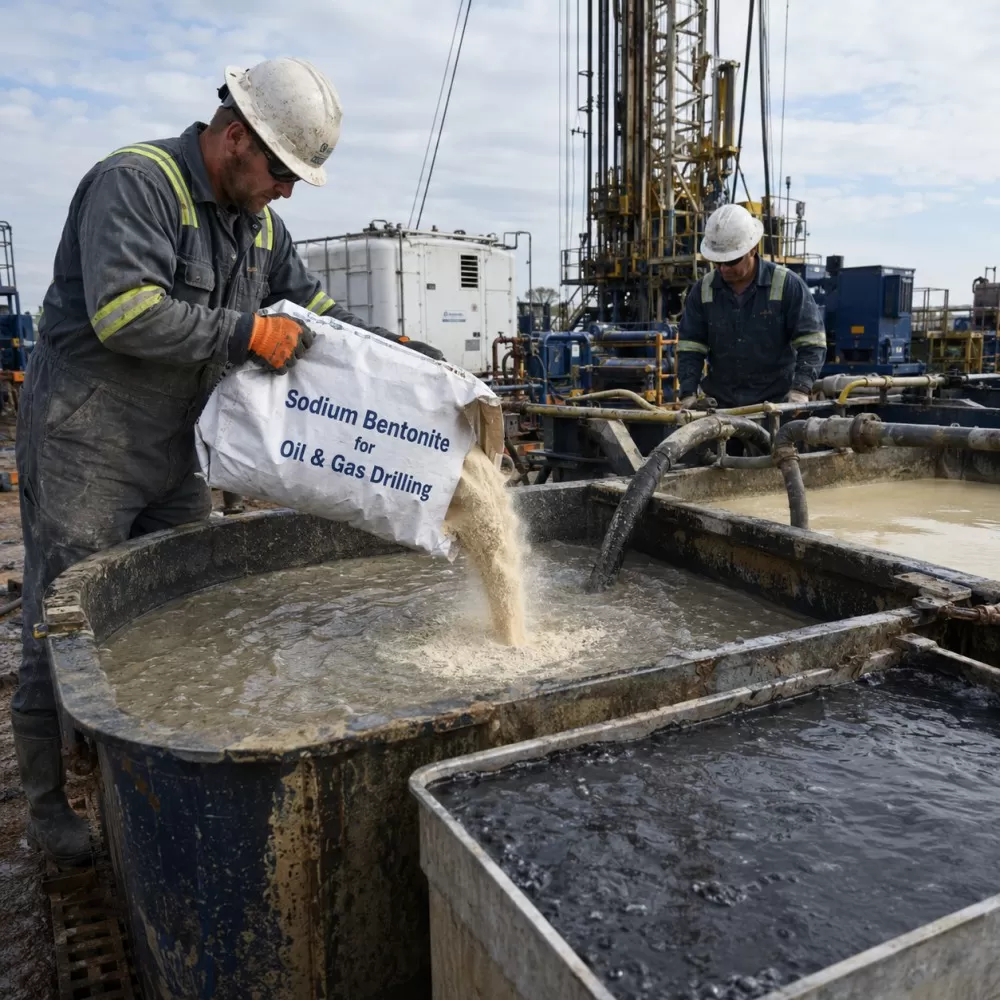
In the drilling and boring industries, the clay serves as a primary component of water-based drilling muds. The material performs several functions during drilling operations. It imparts thixotropic properties to the drilling fluid, allowing it to thin under shear stress and gel when static, which keeps drill cuttings in suspension. The clay forms a thin, low-permeability filter cake on the borehole wall, preventing fluid loss into surrounding formations. The fluid absorbs heat generated by the drill bit, extending the lifespan of downhole equipment.
Foundry Operations and Metal Casting
Foundry operations and metal casting rely on bulk sodium bentonite as a binder for molding sand. The clay provides the necessary green strength, dry strength, and hot strength to hold the sand mold together during the pouring of molten metal. Its high thermal stability ensures that the mold retains its shape under extreme temperatures, minimizing casting defects.
Formulation of Absorbent Products
For manufacturers of absorbent products, particularly clumping cat litter, the material is highly valued. The rapid absorption and strong clumping properties of sodium bentonite make it the ideal base ingredient. It encapsulates moisture and odors quickly, forming solid clumps that are easy to remove. Jinshi processes specific granulations that balance dust reduction with rapid clumping performance, meeting the high standards of global pet care brands.
B2B Sourcing Challenges and Solutions with Jinshi
Procuring clay minerals in bulk presents several operational hurdles for B2B buyers. Quality variation, moisture control, and logistics often complicate large-scale purchasing.
Managing quality consistency is a common challenge because natural clay deposits vary in mineral purity. Buyers frequently face situations where one shipment performs well, while the next exhibits lower swelling capacity. Jinshi addresses this variance by implementing raw material testing at the quarry level. By monitoring the montmorillonite content and moisture levels during processing, Jinshi ensures that each batch of bulk sodium bentonite meets consistent industry benchmarks.
Moisture control is a delicate balance in clay processing. If the clay is dried excessively, it can lose some of its crystalline structure and swelling capacity. If it remains too wet, it tends to clump during storage and transit, making unloading and pneumatic conveying difficult. Maintaining a stable moisture range, typically between 8% and 12%, prevents these handling issues while preserving the clay’s intrinsic properties.
Shipping bulk minerals requires coordinated logistics planning. High-volume buyers require flexible packaging solutions to match their handling equipment. Jinshi offers several packaging and transport methods:
Flexible Intermediate Bulk Containers (FIBCs): Often referred to as jumbo bags, these are suitable for operations with crane or forklift unloading systems.
Pneumatic Bulk Tankers: Ideal for large-scale industrial plants with dedicated storage silos, allowing dust-free transfer of powdered bentonite.
Bulk Vessel Shipping: For international shipments, bulk vessel transport provides the most economical freight rates for multi-thousand-ton orders.
Performance Evaluation and Quality Assurance Standards
To verify that bulk sodium bentonite is suitable for a specific application, buyers must reference recognized testing standards. The physical properties should be verified using standardized testing protocols before dispatch.
The API Specification 13A defines the requirements for drilling grade bentonite. This specification includes viscometer readings at specific shear rates to determine plastic viscosity and yield point, along with filtrate volume measurements to assess fluid loss. Sieve analysis is also used to ensure the particle size is fine enough to hydrate rapidly without clogging equipment.
For civil engineering and environmental applications, the Swell Index (ASTM D5890) is used to measure the volume of swell obtained from 2 grams of dry clay in water. High-grade sodium bentonite typically exhibits a swell index of 24 mL/2g or higher, confirming its capability to form a dense hydraulic seal. Fluid Loss (ASTM D5891) measures the water-retaining capacity of a clay slurry under pressure, where lower fluid loss values indicate a higher quality clay that forms a more efficient barrier.
FAQ: Common Questions Regarding Bulk Sodium Bentonite
Q1: What is the main difference between sodium bentonite and calcium bentonite?
A1: The primary difference lies in the dominant exchangeable cation in the clay matrix. Sodium bentonite contains sodium ions, which allow the clay to absorb large amounts of water and swell up to 15 times its dry volume. Calcium bentonite contains calcium ions, which limit its swelling capacity to roughly 2 to 3 times its volume. Sodium bentonite is preferred for sealing and suspension applications, while calcium bentonite is often used for adsorption, refining, and clarification.
Q2: How does moisture level affect the storage of bulk sodium bentonite?
A2: Bulk clay must be stored in dry, well-ventilated environments. If the moisture level rises due to improper storage, the clay can aggregate or pre-hydrate, significantly reducing its effectiveness when eventually deployed in the field. Jinshi packages bulk shipments in moisture-resistant bags and coordinates covered logistics to maintain the correct dry state during transit.
Q3: Can sodium bentonite be used in saltwater environments?
A3: High concentrations of salt (sodium chloride) or other electrolytes can inhibit the swelling of standard sodium bentonite. The presence of ions in the water compresses the electrical double layer around the clay particles, reducing their hydration capacity. For marine or brackish water applications, specialized salt-resistant clay formulations or pre-hydrated bentonite systems are usually required to maintain barrier integrity.
Q4: What are the standard packaging sizes available for bulk orders?
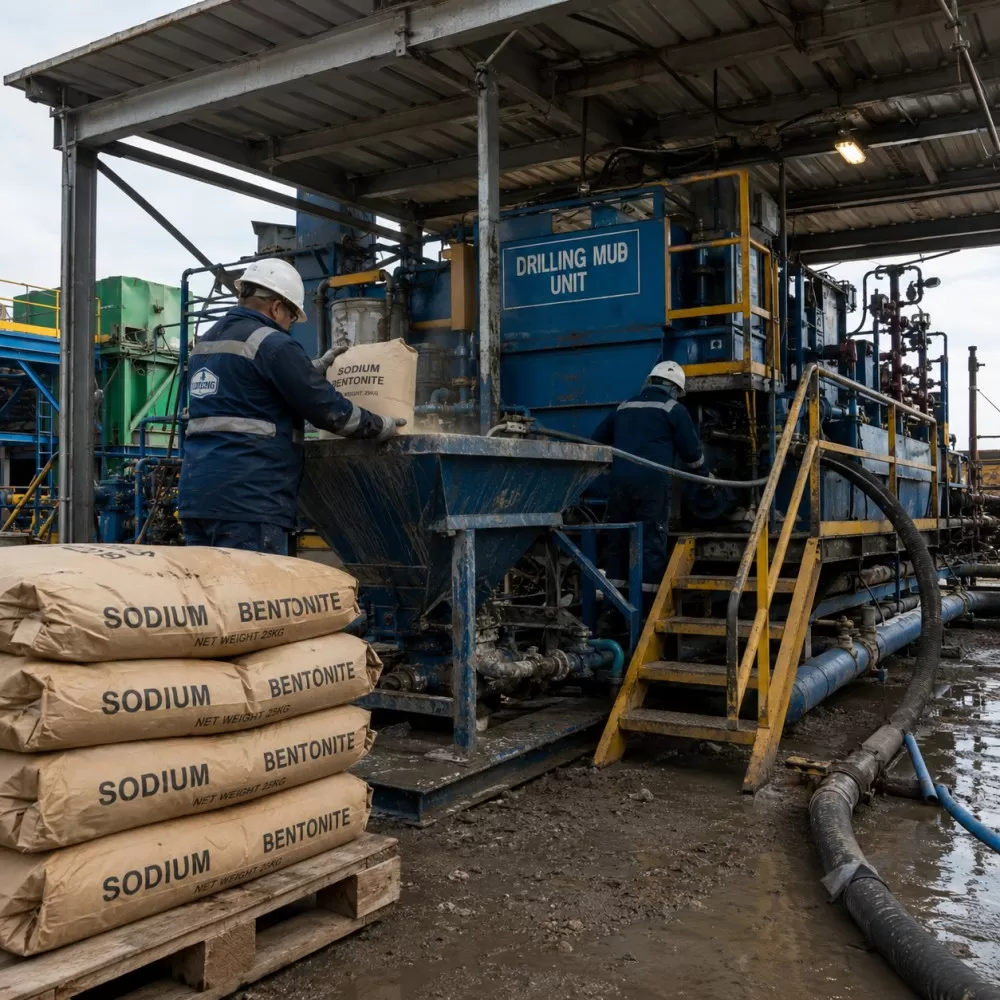
A4: Jinshi offers several packaging configurations to accommodate different logistics setups. These include 25 kg multi-wall paper bags for manual handling, 1,000 kg to 1,250 kg jumbo bags (FIBCs) for industrial mechanical handling, and dry bulk tankers for direct silo delivery. Customized packaging can also be discussed based on the handling capabilities of the receiving facility.
Q5: How is the swelling index of the clay measured to ensure quality?
A5: The swelling index is typically measured using the ASTM D5890 standard test method. In this test, 2 grams of dried, finely ground bentonite is added in small increments to a 100 mL graduated cylinder filled with distilled water. After 24 hours, the volume of the settled, hydrated clay is recorded in milliliters. Quality industrial-grade sodium bentonite generally yields a swell index of 24 mL or higher.
Procurement and Inquiry with Jinshi
Selecting the right grade of bulk sodium bentonite involves balancing mineral performance with supply chain reliability. Factors such as particle size distribution, swelling index, and cation exchange capacity must align with the specific demands of your project or manufacturing process. Jinshi works closely with B2B clients to provide consistent clay materials that meet rigorous industrial standards.
If you are planning a large-scale project, formulating a new product, or require detailed specification data sheets for our clay materials, please contact our engineering sales team. We can provide custom product specifications, shipping logistics solutions, and representative samples for laboratory verification. Send an inquiry today to discuss your project requirements and receive a detailed quotation.