
3 Methods to Seal Leaky Basins Using Granular Bentonite for Ponds
2026-07-20
Water retention is a primary concern for agricultural, industrial, and recreational reservoir management. When soils lack the natural clay content required to prevent downward water movement, seepage occurs. This loss of volume not only impacts operations but can also lead to structural instability of surrounding embankments. To mitigate this issue, utilizing granular bentonite for ponds has emerged as a reliable, long-term solution for creating impermeable barriers.
As a natural clay mineral consisting primarily of sodium montmorillonite, sodium bentonite exhibits unique physical properties when exposed to water. Jinshi supplies graded bentonite products processed specifically to address varying soil permeabilities and application conditions. Understanding the physical mechanics, soil compatibility, and proper application protocols of this material is necessary for achieving a successful seal.
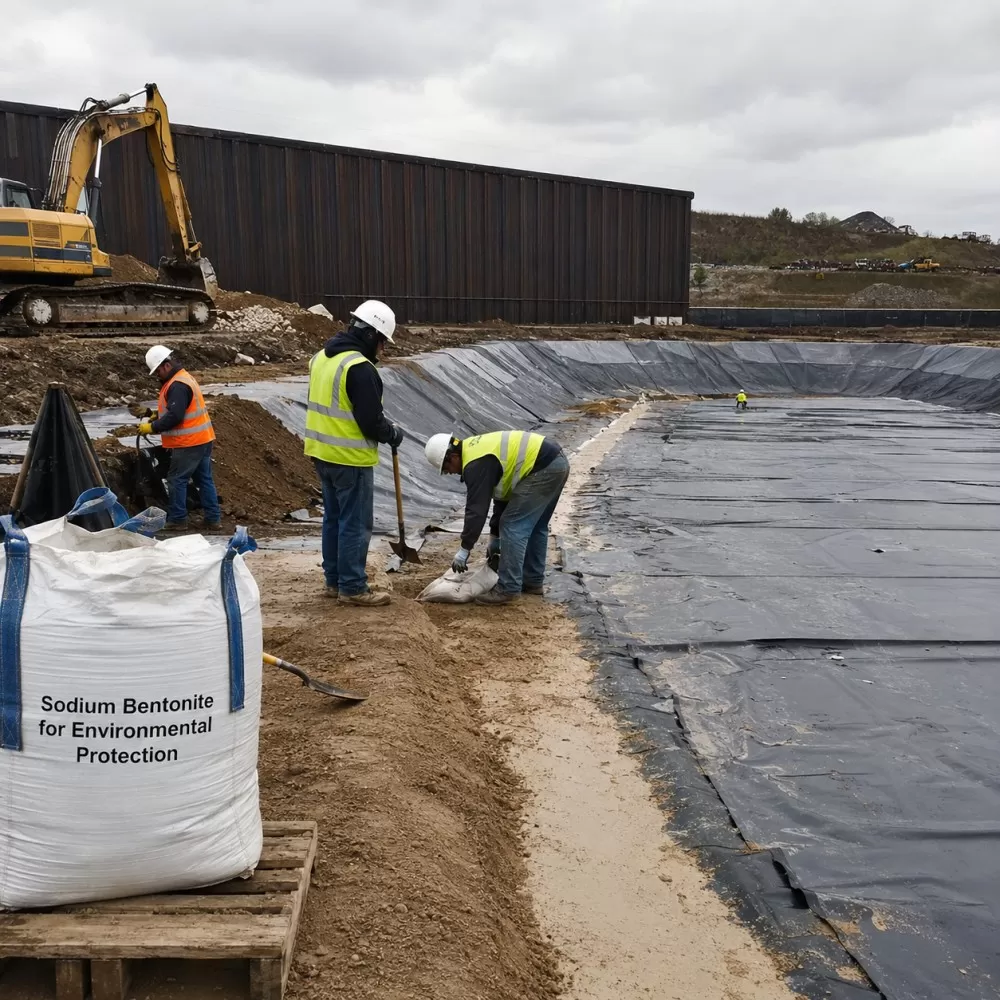
The Science of Bentonite Swelling and Seepage Control
Sodium bentonite is characterized by its three-layer clay mineral structure, consisting of an alumina octahedral sheet sandwiched between two silica tetrahedral sheets. The negative electrical charge on these platelets attracts water molecules and exchangeable cations, primarily sodium (Na+), into the interlayer spaces. This molecular structure allows the clay to absorb several times its dry weight in water, resulting in significant volumetric expansion.
When hydrated, the clay swells to fill the interstitial voids between soil particles. This swelling action transforms the porous soil matrix into a highly dense, low-permeability barrier. The hydraulic conductivity of a properly compacted bentonite-soil mixture can decrease to less than 1 x 10^-7 centimeters per second. Unlike synthetic liners, which are susceptible to tears and UV degradation, a natural clay barrier remains stable over indefinite geological periods, provided it remains hydrated or is protected by a soil cover.
Granular formulations offer distinct physical advantages over powdered bentonite in specific field applications. The larger particle size reduces dust generation during handling and application, minimizing product loss due to wind drift. Additionally, the settling velocity of granules is higher than that of powder, allowing the material to sink directly to the pond bed when applied through a standing water column rather than remaining suspended as a colloidal gel.
Evaluating Soil Compatibility and Application Rates
A successful sealing project requires a thorough assessment of the existing soil profile. Soil texture, grain size distribution, and chemical composition directly influence how much clay is needed to achieve the target permeability rate.
Soil Classification and Texture
Coarse-grained soils, such as clean sands and gravels, possess large void spaces that require higher concentrations of bentonite to seal effectively. Conversely, fine-grained soils containing natural silts and clays require significantly less amendment. A standard sieve analysis helps determine the percentage of fines (particles passing the No. 200 sieve) present in the basin substrate.
Determining the Correct Application Rate
While general guidelines exist, precise application rates should be determined through laboratory permeability testing or field trials. The following ranges serve as a baseline for different soil classifications:
Silty Clay or Clayey Silt: 2 to 3 pounds of granular bentonite per square foot (approx. 10 to 15 kg/m²).
Sandy Silt or Silty Sand: 3 to 5 pounds of granular bentonite per square foot (approx. 15 to 25 kg/m²).
Clean Sand: 5 to 8 pounds of granular bentonite per square foot (approx. 25 to 40 kg/m²).
Gravelly Soils and Fractured Formations: 8 to 12+ pounds of granular bentonite per square foot (approx. 40 to 60+ kg/m²), often requiring a multi-layered clay blanket or concrete-bentonite slurry.
Water Quality Considerations
The chemical composition of the pond water can affect the swelling capability of sodium bentonite. High concentrations of dissolved solids, particularly divalent cations such as calcium (Ca2+) and magnesium (Mg2+), can undergo ion exchange with the sodium ions in the clay. This ion exchange reduces the thickness of the diffuse double layer surrounding the clay platelets, resulting in diminished swelling capacity. If the pond water is highly saline or brackish, specialized polymer-treated bentonites may be required to maintain barrier integrity.
Methods for Applying Granular Bentonite for Ponds
Depending on whether the pond is dry during construction or currently holds water, different installation techniques are employed. Each method demands careful execution to ensure a continuous, defect-free seal.
1. The Mixed Blanket Method (Dry Application)
This is the most reliable method for sealing newly excavated or completely drained basins. It involves blending the granular clay directly into the existing soil to create a homogenous barrier layer.
Site Preparation: Clear the basin of all vegetation, large rocks, roots, and organic debris. Grade the slopes to a stable angle, typically no steeper than a 3:1 (horizontal to vertical) ratio, to prevent sliding of the cover soil.
Clay Distribution: Distribute the granular bentonite for ponds evenly across the dry basin floor and slopes. Mechanical spreaders, such as agricultural lime spreaders or fertilizer distributors, help achieve uniform coverage.
Blending: Use a rototiller, disc harrow, or grader to thoroughly mix the bentonite into the top 4 to 6 inches (10 to 15 cm) of soil. Care must be taken to ensure the mixing depth is consistent across the entire treatment area.
Moisture Adjustment: The soil-bentonite mixture should be at or slightly wet of optimum moisture content (typically between 12% and 18% depending on soil type) to facilitate maximum compaction. If the soil is too dry, apply a fine water spray; if too wet, allow it to air-dry.
Compaction: Compact the blended layer using a sheepsfoot roller, vibratory smooth-drum roller, or heavy pneumatic compactor. Achieve at least 90% to 95% of Standard Proctor Density to eliminate macro-voids.
Protective Cover: Place a 4 to 6-inch (10 to 15 cm) layer of clean, non-expansive soil or gravel over the compacted barrier. This layer protects the clay liner from drying out, cracking, erosion, and physical damage from livestock or maintenance equipment.
2. The Pure Blanket Method (Dry Application)
In situations where the existing soil is highly permeable, such as fractured rock or coarse gravel, mixing may not be practical. The pure blanket method creates a continuous, unmixed layer of clay directly over the prepared subgrade.
The subgrade must first be compacted and smoothed to remove any sharp protrusions. Granular bentonite is then applied evenly at the specified rate to form a continuous layer of dry clay, typically 1/2 to 1 inch (1.25 to 2.5 cm) thick. This layer is immediately covered with a minimum of 6 to 12 inches (15 to 30 cm) of protective soil, placed carefully to avoid displacing or tearing the underlying clay blanket. Slow hydration from the bottom up is preferred to allow the clay to swell into a cohesive, contiguous gel layer without piping.
3. The Sprinkle or Cast Method (Wet Application)
When a pond cannot be drained, or when localized leaks occur in an active reservoir, the sprinkle method is used. This technique relies on gravity to deposit the clay granules directly over the leaking areas.
The operator casts granular bentonite onto the water surface above the suspected leak site. Because granular bentonite has a higher density than water, the particles sink to the bottom. As they travel through the water, hydration begins slowly, but the granules remain intact enough to reach the pond bed. Once settled, the granules hydrate fully, swelling in place to plug the pores and crevices in the soil matrix. This method is highly dependent on identifying the exact location of the leak and is generally reserved for targeted repairs rather than sealing entire large basins.
Addressing Common Challenges and Structural Risks
While granular clay is highly effective, failure to adhere to physical principles and engineering standards can lead to localized failures or systemic leaks. Managing these challenges during the design and installation phases is necessary for long-term performance.
Desiccation Cracking
If a bentonite-sealed pond is allowed to dry out, the clay will lose its hydrated water and shrink, leading to desiccation cracks. While sodium bentonite has self-healing properties upon re-wetting, severe or repeated drying cycles can allow soil particles to slough into the cracks, permanently compromising the barrier's integrity. Maintaining a consistent water level or ensuring an adequate protective soil cover over the liner prevents drying.
Slope Stability and Erosion
Submerged clay layers can become slippery and reduce the shear strength of the slope. If embankments are constructed too steeply, the weight of the water and the overlying soil cover can cause the slope to slide. Maintaining gentle slopes (3:1 or flatter) and implementing erosion control measures, such as rip-rap or geotextiles around the high-water line, protects the liner from wave action and physical weathering.
Subgrade Piping and Seepage Forces
High hydraulic pressures can cause "piping," where water forces fine clay particles out of the soil matrix into coarse gravel layers below. In highly permeable subgrades, installing a geotextile filter fabric beneath the bentonite-soil layer prevents the migration of clay particles, keeping the barrier intact under high hydraulic heads.
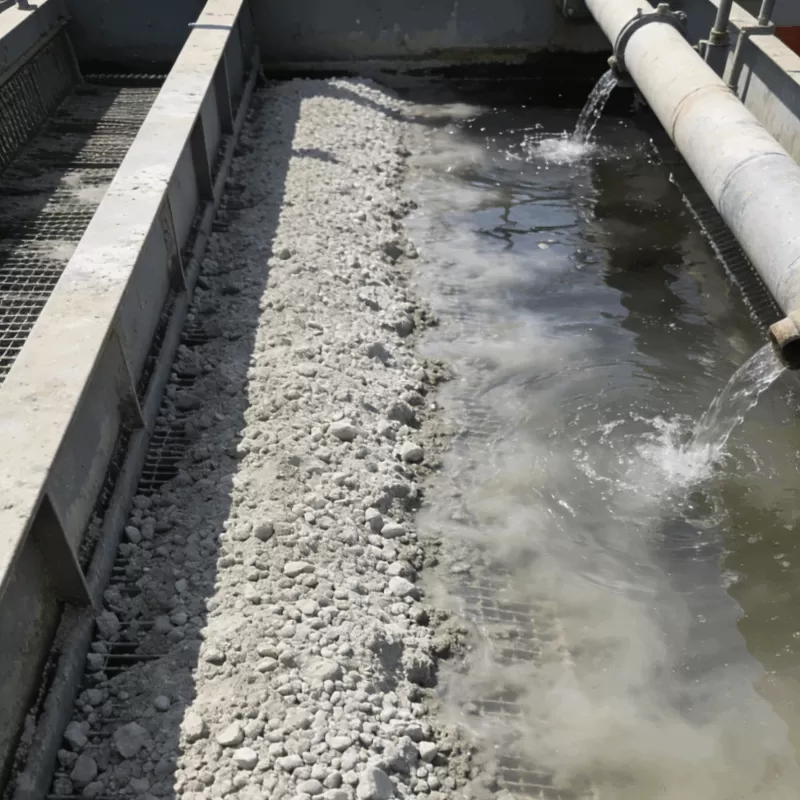
Physical Specification Standards for Commercial Procurement
For industrial and commercial projects, the quality of the raw clay material must meet strict physical parameters. Procuring graded granular bentonite from a reliable source like Jinshi ensures consistency in particle size distribution and chemical performance.
| Physical Parameter | Standard Test Method | Typical Target Range |
|---|---|---|
| Montmorillonite Content | XRD / Methylene Blue Active Clay | > 75% |
| Free Swell Index | ASTM D5890 | ≥ 16 mL / 2 grams |
| Moisture Content | ASTM D2216 | 8% - 12% (at packaging) |
| Sieve Analysis (Granular) | ASTM C136 | 8/30 Mesh (90% passing 8 mesh, <10% passing 30 mesh) |
| Fluid Loss | ASTM D5891 | ≤ 18 mL |
Monitoring these specifications ensures that the clay delivered to the project site will perform predictably under field hydration conditions. Lower-grade clays containing high percentages of sand, gypsum, or calcium carbonate will not provide the same swelling volume, requiring significantly higher application rates to achieve equivalent sealing performance.
Sourcing and B2B Procurement
Successfully sealing a reservoir requires high-performance raw materials and precise technical alignment. Jinshi manufactures and processes high-yield sodium bentonite granules designed specifically for civil engineering, agricultural, and industrial water containment applications. We provide standard grading as well as customized particle size distributions to match specific soil conditions and project specifications.
For large-scale commercial projects, agricultural distributors, and civil engineering firms requiring bulk quantities, we offer detailed technical datasheets, material safety data, and project-specific application estimates. If you require guidance on application rates, soil testing analysis, or bulk logistics, please submit an inquiry with your project specifications and volume requirements to receive a detailed technical proposal from our engineering team.
Frequently Asked Questions
Q1: Can granular bentonite for ponds be used in a pond that already contains fish and vegetation?
A1: Yes, sodium bentonite is a naturally occurring clay mineral that does not contain chemical additives. It is non-toxic to fish, aquatic plants, and livestock. However, during wet application (sprinkling), the water may become temporarily turbid or cloudy as fine clay particles settle, which usually clears within a few days without harming the aquatic ecosystem.
Q2: How long does it take for granular bentonite to fully hydrate and seal a leak?
A2: Hydration begins immediately upon contact with water. The clay granules typically swell to their near-maximum volume within 24 to 48 hours under normal temperature conditions. However, the complete sealing process—where the clay swells into the microscopic void spaces of the surrounding soil under compaction or gravitational pressure—can take several days to a few weeks to reach minimum permeability.
Q3: What is the difference between granular bentonite and powdered bentonite for pond sealing?
A3: Powdered bentonite has a much larger surface area-to-volume ratio, meaning it hydrates very rapidly. While excellent for dry mixing, it is difficult to handle in windy conditions and cannot be used for wet applications because it clumps on the water surface. Granular bentonite, with its larger particle size, sinks directly through standing water to target leaks at the bottom and is much easier to apply evenly in dry conditions without wind loss.
Q4: Will tree roots or burrowing animals damage a bentonite pond liner?
A4: Yes, plants with aggressive root systems can penetrate the clay liner, creating pathways for water to escape when the roots decay. Similarly, burrowing animals like muskrats or crawfish can dig through the compacted clay layer. To prevent this, a protective layer of soil, gravel, or rip-rap (at least 6 to 12 inches deep) should always be placed over the compacted bentonite barrier.
Q5: How can I determine if my pond water chemistry is compatible with sodium bentonite?
A5: A standard water analysis measuring total dissolved solids (TDS), electrical conductivity, and the concentration of calcium and magnesium ions will indicate compatibility. If the calcium levels are high, or if the water is highly saline, the swelling capacity of standard sodium bentonite may be reduced. In such cases, a pre-hydration process with fresh water or the use of modified bentonite formulas is recommended.