
Sodium Bentonite Price per Ton: Global Industrial Purchasing & Specs Guide
2026-08-22
Industrial procurement of clay minerals demands a clear understanding of market dynamics, purity levels, and logistics. For corporate procurement officers, drilling contractors, civil project engineers, and foundry managers, calculating the exact sodium bentonite price per ton requires analyzing mineral properties, extraction sources, processing methods, and global shipping variables. Sodium bentonite is a high-swelling montmorillonite clay valued for its water absorption, colloidal suspension, and binding capabilities. Because its applications range from heavy industrial slurry walls to fine metal casting, baseline costs fluctuate based on raw deposit quality and end-product processing.
Industrial Benchmarks for Sodium Bentonite Price per Ton
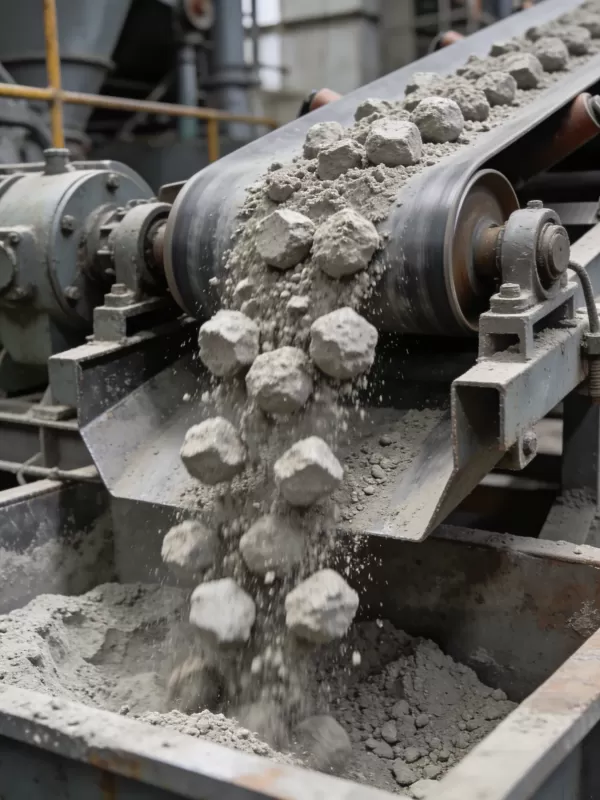
Commercial transactions for natural and activated bentonite reflect distinct quality tiers. Across international trade routes, baseline bulk raw clay costs differ substantially from highly processed, polymer-modified mineral powders. The baseline sodium bentonite price per ton typically spans several commercial brackets depending on the degree of refining, packaging, and specification compliance.
Crude, Unprocessed Crushed Bentonite: $45 to $75 per metric ton (FOB mine site). This material contains natural quarry moisture (often 20% to 30%) and is traded in bulk shipments for secondary processing, bulk land reclamation, or agricultural soil conditioning.
Standard Civil and Pond Sealing Grade: $90 to $150 per metric ton (FOB port). Milled to standard particle distributions (typically 80 to 200 mesh) with natural swelling indexes ranging between 16 and 24 ml/2g.
API 13A Compliant Drilling Mud Grade: $130 to $220 per metric ton (FOB port). This grade meets strict rheological requirements, including specific 600 rpm viscometer readings, yield points, and fluid loss limits under standard filter press testing.
Foundry Grade High-Thermal Bentonite: $160 to $260 per metric ton (FOB port). High-durability natural sodium bentonite exhibiting elevated wet tensile strength and thermal stability during repeated casting cycles.
Specialized and Chemically Modified Grades: $280 to $550+ per metric ton. Bentonite treated with organic polymers, soda ash activation compounds, or acid-activated clarifying agents for horizontal directional drilling (HDD), tunneling, or environmental geosynthetic clay liners (GCL).
Producers such as Jinshi process raw ores to meet these target industrial specifications, aligning mineral processing costs with the project requirements of international buyers.
Primary Mineralogical Cost Drivers
The chemical and geological profile of a bentonite deposit directly dictates processing costs and downstream market pricing. True natural sodium bentonite, dominated by exchangeable sodium ions ($Na^+$) in the interlayer space of the smectite crystal lattice, exhibits natural swelling capacity exceeding 15 to 30 times its dry volume. Calcium bentonite, which is naturally more common worldwide, exhibits low swelling capacity and requires sodium activation—a chemical cation exchange process using sodium carbonate ($Na_2CO_3$) to replace exchangeable calcium ($Ca^{2+}$) ions.
Montmorillonite Purity and Smectite Content
The montmorillonite fraction is the primary determinant of commercial value. High-grade deposits feature smectite purity above 75% to 85%, determined through Methylene Blue Absorption (MBA) testing and X-ray Diffraction (XRD) analysis. Deposits with high non-clay mineral contaminants (such as quartz, calcite, feldspar, and gypsum) require extensive hydro-cyclone separation, air classification, or blending, which increases final production costs. A higher smectite percentage translates to greater yield per ton, reducing the overall volume of clay required by end users to achieve targeted viscosity or sealing thresholds.
Rheology and Fluid Loss Parameters
Drilling and civil engineering applications rely on rheological performance governed by the American Petroleum Institute (API) Specification 13A. When calculating the commercial sodium bentonite price per ton for deep-well drilling or slurry trench excavation, buyers evaluate several metrics:
Plastic Viscosity (PV) and Yield Point (YP): Determines the slurry's capacity to lift rock cuttings at controlled flow velocities.
Filtrate Volume (Fluid Loss): API specifications dictate a maximum fluid loss volume (typically under 12.5 to 15.0 cm³ under 100 psi differential pressure). Producing clays that meet this limit without excessive synthetic additive blending requires higher-purity raw ores.
Marsh Funnel Viscosity: Slurry readiness in civil diaphragm walls demands rapid hydration and consistent suspension properties over extended hold times.
Thermal Stability and Wet Tensile Strength in Foundry Systems
Foundry molding sand applications present distinct mineral requirements. Green sand casting operations require bentonite that maintains cohesive binding strength under exposure to molten metal temperatures. Natural sodium bentonites with high thermal durability retain their crystalline structure at temperatures surpassing 500°C to 600°C. Clays that degrade rapidly under heat increase bentonite consumption rates per ton of metal poured. Premium foundry grades command higher market prices because they preserve binding capability across multiple sand reclamation loops.
Manufacturing, Milling, and Logistics Infrastructure
Raw ore extraction represents only the initial phase of production expenses. Transforming raw overburden into consistent industrial powders requires significant thermal and mechanical energy, making processing facilities sensitive to energy and transportation costs.
Drying and Moisture Management
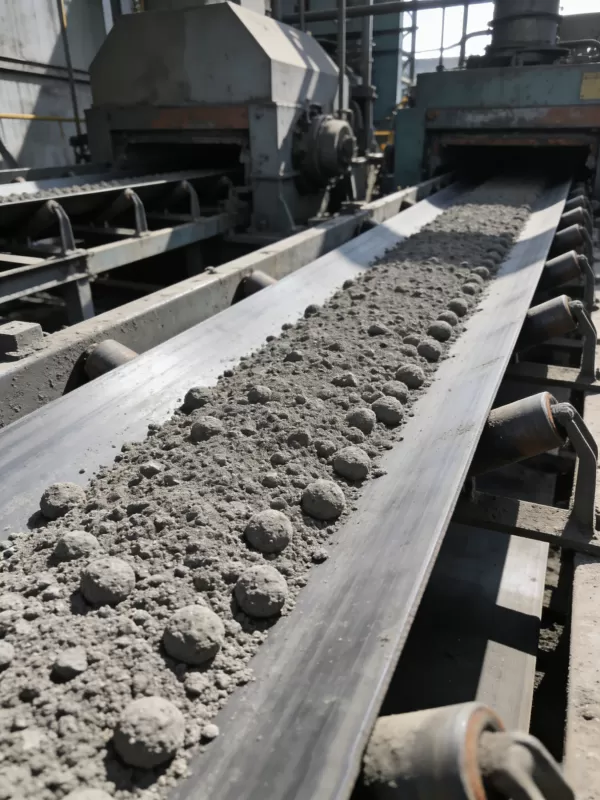
Freshly mined bentonite carries moisture levels between 25% and 35%. Lowering this water content to industrial shipping standards (typically 8% to 12%) requires heavy thermal processing in rotary dryers. Operational fuel costs (natural gas, heavy fuel oil, or coal) represent a sizable percentage of manufacturing overhead. Overheating during drying can destroy the interlayer crystal lattice and reduce natural swelling performance, requiring calibrated, low-temperature drying protocols that balance energy input with mineral preservation.
Particle Size Distribution and Milling Precision
Different industrial processes require distinct granulometries, influencing grinding and classification costs:
Granular Grades (8 to 30 mesh): Produced for easy handling in pond sealing, environmental monitoring wells, and civil backfill where dust control and slow settling through water columns are desired.
Standard Powder (200 mesh, 90% passing): Standard industrial particle size for drilling fluid preparation, foundry green sand blending, and pelleted ore concentrate binding.
Micro-Fine Powders (325 mesh, 95%+ passing): Requires high-energy air-swept roller mills or ball mills with dynamic classifiers, adding milling cost to support rapid hydration applications.
Packaging Formats and Bulk Handling
Packaging selection impacts loading efficiency, container payload utilization, and material preservation during ocean transit:
Bulk Jumbo Bags (1.0 to 1.2 Metric Ton): Polypropylene woven FIBC bags with moisture-resistant PE inner liners. This is the most cost-effective packaging for high-volume drilling projects and batch mixing plants.
25 kg Multi-Wall Paper Bags: Palletized, shrink-wrapped, and strapped. Preferred for smaller-scale civil contractors, casting shops, and distribution warehouses requiring manual handling. Adds $15 to $30 per metric ton compared to FIBC bulk bags.
Pneumatic Tanker and Breakbulk Shipping: Used for large domestic infrastructure or high-volume port-to-port shipments, eliminating packaging costs but requiring dedicated port silo infrastructure.
Packaging integrity is vital when importing bentonite across long ocean voyages, as ambient moisture absorption causes premature hydration, caking, and handling issues upon arrival.
Application Profiles and Procurement Selection
Selecting the correct material grade prevents overpaying for unnecessary synthetic additives or using under-performing clay that causes project downtime.
Civil Engineering, Slurry Walls, and GCL Manufacturing
Civil projects use sodium bentonite for deep cutoff walls, microtunneling lubrication, and geosynthetic clay liners. The material's primary value is low hydraulic conductivity (typically achieving values below $1 \times 10^{-9}$ cm/sec when consolidated). Bentonite used in GCL production must feature uniform swelling capacity and clean granule profiles to integrate evenly between needle-punched geotextiles without generating excess dust during processing.
Horizontal Directional Drilling (HDD) and Geothermal Borehole Grouting
HDD operations often encounter varying subsoil formations, from loose gravel to swelling reactive shales. Basic untreated sodium bentonite can be enriched with specific water-soluble polymers to create high-yield drilling fluids (200-barrel to 300-barrel yield). These polymer-fortified systems increase gel strength rapidly, keep drilled cuttings suspended during operational pauses, and minimize fluid loss into porous sands.
Pond Sealing, Dam Linings, and Agricultural Containment
For agricultural retention basins, municipal wastewater lagoons, and irrigation canal sealing, material volume requirements can be high. In these installations, natural granular sodium bentonite is incorporated into the native soil matrix using rotary tillers and compacted with padfoot rollers. Slower-hydrating granular profiles allow deep incorporation before water contact initiates swelling, creating an impermeable barrier across broad surface areas.
Suppliers like Jinshi supply targeted granular profiles suited for bulk agricultural and containment projects, balancing particle distribution with cost-effective bulk shipping options.
Purchasing Strategies for Industrial Buyers
Global ocean freight rates, container availability, and seasonal mining constraints impact final landed product costs. Implementing structured procurement strategies allows industrial buyers to control input expenses over multi-quarter delivery schedules.
Spot Purchases vs. Annual Supply Agreements
Spot market purchasing exposes buyers to short-term ocean freight spikes and sudden raw material price adjustments. For operations with predictable baseline consumption—such as casting foundries, continuous pipe-jacking contractors, or mortar formulators—entering fixed-term supply agreements establishes pricing stability. Long-term agreements also secure consistent ore batches from designated mining seams, reducing the need to adjust plant mixing formulas for variable clay chemistries.
Verification Protocols and Quality Assurance
Before confirming bulk purchasing orders, standard laboratory verification protocols should be executed on representative pre-shipment samples:
Free Swell Index (ASTM D5890): Testing minimum swelling volume in graduated cylinders to verify smectite activity.
Fluid Loss and Rheology (API RP 13B-1): Measuring filtration control and shear properties under calibrated viscometer rotation.
Moisture Content (ASTM D2216): Ensuring moisture stays within the contracted range (typically 8% to 12%) to avoid paying for excess water weight during freight handling.
Grit Content (Sieve Analysis over 200 mesh): Quantifying abrasive silica or quartz residues that accelerate wear on slurry pumps, mud motors, and sand delivery systems.
Mineral suppliers such as Jinshi manage systematic quality control tracking across all export batches, providing third-party verification to confirm specification compliance prior to port departure.
Frequently Asked Questions
What is the typical sodium bentonite price per ton for bulk export orders?
The standard export price for industrial sodium bentonite generally ranges from $90 to $260 per metric ton FOB, depending on whether the clay is standard civil grade, API 13A oilfield grade, or specialized high-durability foundry grade. Highly modified or polymer-treated grades can exceed $400 to $500 per ton.
How does natural sodium bentonite differ in value from activated calcium bentonite?
Natural sodium bentonite possesses intrinsic, long-lasting thermal stability and persistent swelling characteristics due to native sodium ions in its interlayer. Activated calcium bentonite is modified using soda ash to force ion replacement. While activated clay can achieve comparable initial swelling and viscosity, its rheological stability degrades faster under high temperatures and salinity, making natural sodium clay more valuable for foundry and drilling uses.
How does packaging selection influence the landed price per ton?
Standard 1-ton or 1.2-ton FIBC jumbo bags represent the most cost-effective packaging for international container shipping. Opting for 25 kg small paper bags adds roughly $15 to $30 per metric ton in packaging and palletizing labor. Bulk sea containers without palletization maximize tonnage per container but require specialized discharge equipment at destination facilities.
What testing metrics indicate if a bentonite price matches its industrial quality?
Key parameters include smectite purity (via Methylene Blue Absorption), Free Swell Index (ml/2g), API filtrate loss volume, marsh funnel viscosity, and residue percentage on a 200-mesh sieve. Low-cost bentonite that contains excessive non-clay grit or lower swelling capacity often results in higher overall material consumption on the job site.
Why do ocean freight fluctuations affect the final delivered cost of bentonite so significantly?
Because bentonite is a dense, high-weight, low-unit-cost mineral, ocean freight can constitute 30% to 60% of total delivered CIF/CFR pricing depending on shipping distance. Changes in international container shipping rates or bulk charter fees directly influence landed mineral costs more than those of higher-value specialty chemicals.
Industrial Supply and Direct Procurement Inquiries
Procuring industrial clay minerals requires consistent specifications, reliable mine production capacity, and dependable international shipping execution. Whether your application demands API-compliant drilling muds, high-durability foundry sand binders, or low-permeability civil sealing clays, our processing facilities deliver consistent quality across full container loads and vessel charters.
Submit your target specifications, required mesh sizing, packaging preferences, and destination port details to receive a formal quotation and current global sodium bentonite price per ton schedule. Our mineral specialists provide complete chemical assays, technical datasheets, and pre-shipment laboratory samples to support your procurement process.