
Sodium Bentonite Powder Properties, Applications, and Industrial Selection Criteria
2026-08-17
Industrial procurement of sodium bentonite powder requires a systematic understanding of its colloidal behavior, cation exchange capacity, and rheological stability under varying physicochemical conditions. This grade of bentonite, characterized by sodium as the dominant exchangeable cation, exhibits distinct swelling dynamics and thixotropic properties that differentiate it from calcium-based or activated variants. For engineering applications ranging from drilling fluids to geosynthetic clay liners, the consistency of sodium bentonite powder performance directly influences operational reliability and project economics.
Mineralogical Composition and Cation Exchange Chemistry
The smectite group mineral montmorillonite constitutes the primary phase in sodium bentonite deposits, with a layered silicate structure that accommodates water molecules and exchangeable cations within the interlayer spacing. Sodium ions, owing to their smaller hydrated radius compared to calcium or magnesium, permit extensive interlayer expansion upon hydration. This fundamental crystal-chemical property translates into measurable parameters: free swell index values typically range between 24 and 32 mL/2g for high-quality sodium bentonite powder, while the cation exchange capacity (CEC) often exceeds 85 meq/100g.
Impurity phases, including cristobalite, feldspar, and accessory carbonates, exert a measurable influence on rheological performance. Suppliers such as Jinshi implement differential X-ray diffraction (XRD) and thermal gravimetric analysis (TGA) as routine characterization tools to quantify mineralogical purity. A loss on ignition (LOI) below 8% and montmorillonite content above 75% represent baseline acceptance criteria for most industrial tenders.
Physical and Rheological Parameters
Specification sheets for sodium bentonite powder typically report the following physical properties:
Particle size distribution: 200-mesh passing rate of 95% minimum (for rapid hydration in aqueous systems)
Moisture content: controlled within 8–12% to prevent premature agglomeration during storage
pH of 5% slurry: 9.0–10.5, reflecting the alkaline environment that enhances dispersion
Viscosity (600 rpm, Fann rheometer): 30–45 cP for standard-grade material
Filtration loss (API procedure): less than 15 mL/30 min for drilling-fluid applications
These parameters are interdependent. A reduction in particle fineness elevates the surface-area-to-volume ratio, accelerating hydration kinetics but potentially increasing filtration loss unless polymer additives are introduced. Conversely, coarser fractions improve permeability in barrier applications, where controlled water absorption and low hydraulic conductivity are prioritized over viscosity build.
Application Domains and Engineering Requirements
Drilling Fluids and Well Construction
In rotary drilling operations, sodium bentonite powder functions as the viscosifying and fluid-loss control agent in water-based mud systems. The yield point and gel strength development under shear conditions determine the suspension capacity for drill cuttings and the pressure transmission efficiency along the borehole. Industry practice distinguishes between sodium bentonite powder grades for freshwater, seawater, and salt-saturated environments. The latter demands a grade with enhanced tolerance to electrolyte flocculation, often achieved through beneficiation that preserves the sodium montmorillonite structure while minimizing soluble salt content.
Geosynthetic Clay Liners (GCLs)
Hydraulic barrier performance in landfill caps and secondary containment systems relies on the self-sealing behavior of sodium bentonite when confined between geotextile layers. The swell index under confining stress directly correlates with the liner's ability to bridge cracks and maintain a permeability coefficient below 5 × 10⁻¹¹ m/s. Specifications for GCL-grade sodium bentonite powder emphasize uniformity of mass per unit area and resistance to ion exchange when exposed to leachate with elevated calcium or magnesium concentrations.
Foundry Bonding Agents
Green sand molding in ferrous and non-ferrous foundries exploits the thermal stability and cohesive strength of sodium bentonite. The material's ability to retain binding properties after exposure to elevated temperatures (up to 550°C) distinguishes it from organic binders. Foundry-grade powder requires controlled mulling characteristics and a methylene blue index (MBI) of 30–40, indicating active montmorillonite content sufficient for repeated sand reclamation cycles.
Environmental Remediation and Grouting
Permeable reactive barriers and soil-bentonite slurry walls utilize sodium bentonite to reduce hydraulic conductivity in porous media. The thixotropic nature of the hydrated slurry ensures pumpability during emplacement and subsequent strength gain as the gel structure recovers. For grouting applications, low-viscosity grades of sodium bentonite powder are specified to penetrate fine fractures without causing excessive back-pressure during injection.
Quality Assurance Protocols and Industry Standards
Procurement contracts for sodium bentonite frequently reference ASTM D5890 (swell index), D4380 (density), and D6181 (permeability of GCLs). A robust supplier quality program incorporates:
Lot-to-lot consistency monitoring of viscosity and filtration properties
X-ray fluorescence (XRF) analysis for major oxide composition (SiO₂, Al₂O₃, Fe₂O₃, Na₂O, CaO)
Performance verification in simulated downhole or field conditions
Particle-size validation using laser diffraction or sieve analysis
Manufacturing facilities that maintain ISO 9001 certification and implement statistical process control (SPC) deliver material with coefficient of variation (CV) below 5% for critical parameters. Jinshi operates a dedicated quality laboratory where each production batch undergoes sequential testing prior to release, ensuring compliance with both API Specification 13A and European Standard EN 14196 for geosynthetic barriers.
Logistical Considerations and Storage Stability
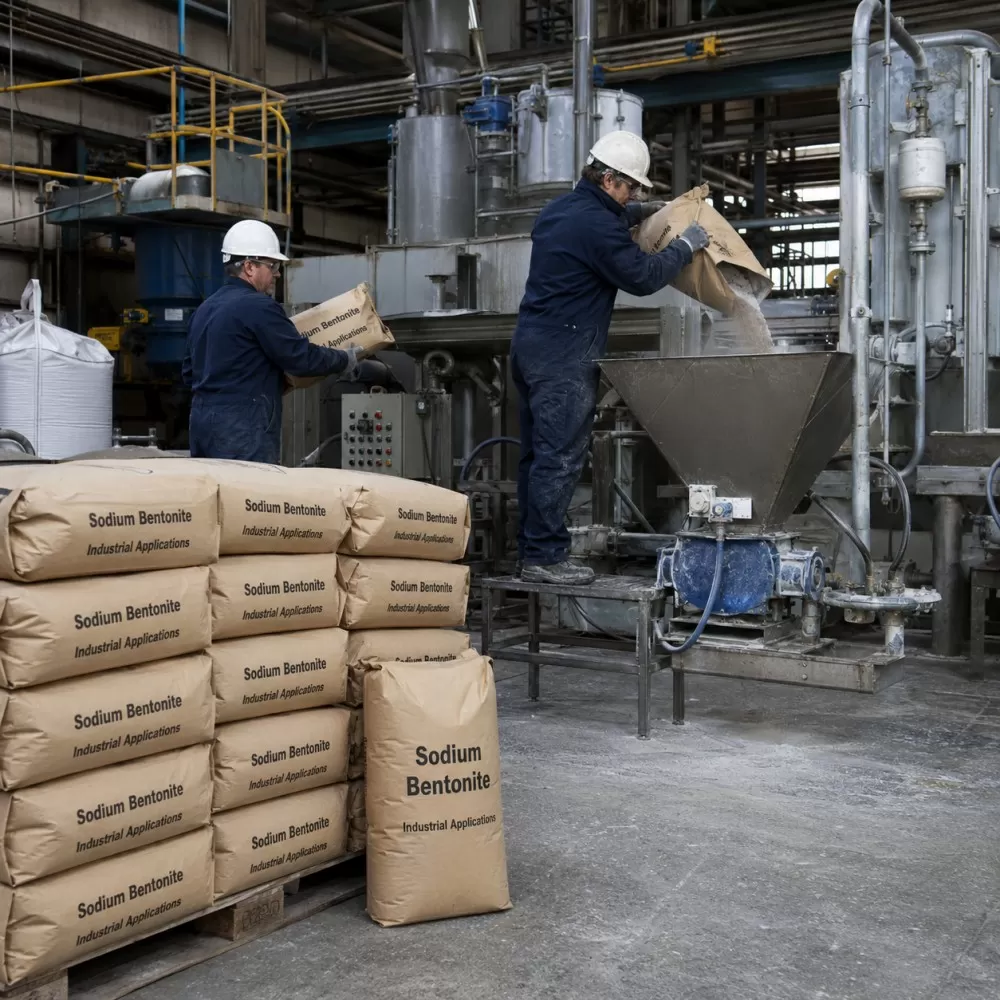
Bulk shipping of sodium bentonite powder in 1.5-tonne super sacks or pneumatic tankers demands attention to moisture ingress and compaction during transit. Upon arrival at site, storage in covered, well-ventilated areas with palletized stacking prevents caking and preserves flowability. The material's affinity for water vapor means that prolonged exposure to ambient humidity reduces the swelling capacity, a phenomenon confirmed by thermoporosimetry that detects pore-water redistribution in stored powder. Inventory rotation on a first-in, first-out (FIFO) basis, combined with periodic re-testing of residual moisture content, mitigates performance drift over extended storage periods.
Factors Influencing Hydration Kinetics and Dispersion Efficiency
The hydration rate of sodium bentonite powder in mixing systems is governed by:
Water temperature: optimal dispersion occurs between 15°C and 35°C
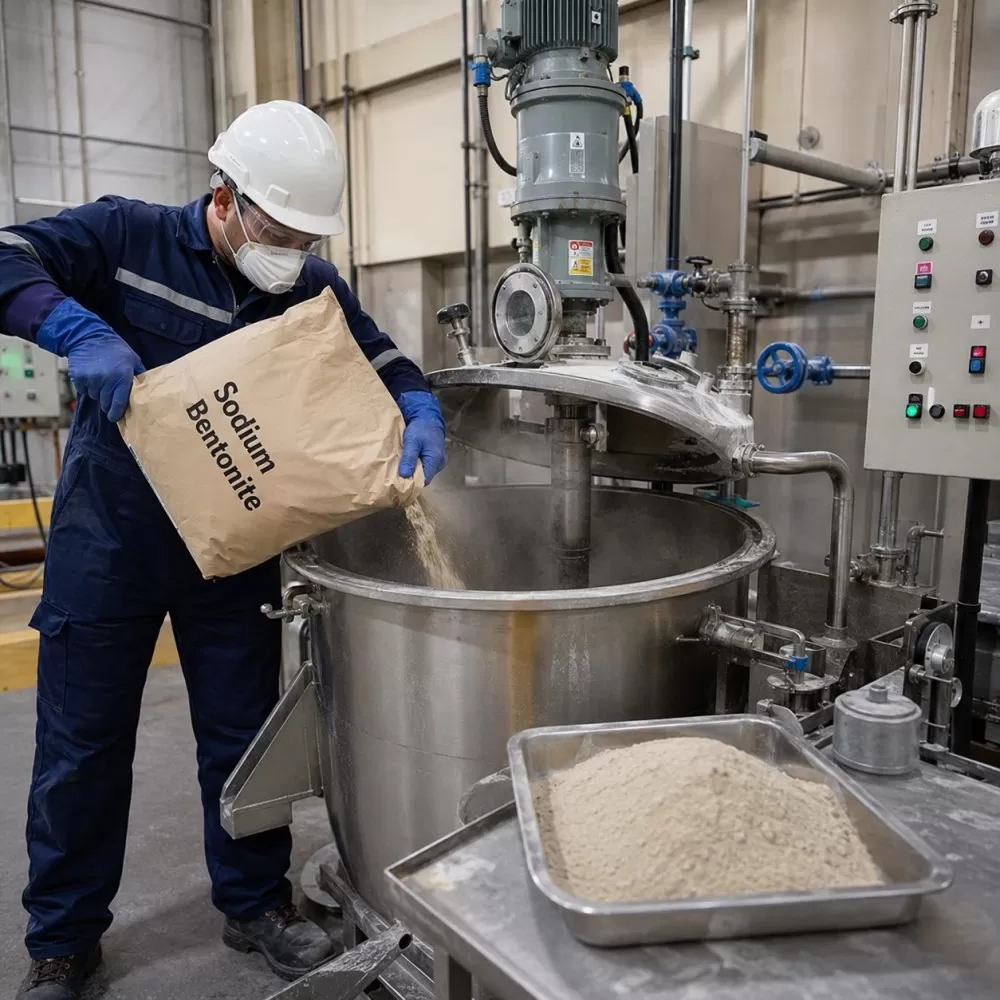
Agitation intensity: high-shear mixers reduce hydration time from 60 minutes to under 15 minutes
Water chemistry: hardness above 200 ppm CaCO₃ prolongs hydration and may require pre-treatment with soda ash
Addition sequence: introducing powder to water, rather than water to powder, prevents agglomerate formation
Process engineers often employ a hydration index test, measuring the time required to achieve 80% of maximum viscosity under controlled stirring. This index serves as a quick verification tool for incoming material, complementing the more elaborate API viscosity profiling.
Comparative Evaluation: Sodium vs. Calcium Bentonite
While both sodium and calcium varieties belong to the smectite family, their engineering behaviors diverge considerably. Sodium-rich bentonite exhibits a high swell index (≥ 24 mL/2g) and forms a translucent, highly viscous gel even at low solids concentration. Calcium bentonite, by contrast, produces a lower-viscosity slurry with a firmer, more thixotropic gel structure that finds application in bonding and pelletizing, where water absorption control is less demanding. For applications requiring rapid sealing and low hydraulic conductivity, sodium bentonite powder remains the preferred choice; where thermal stability and dry strength dominate, calcium grades may be specified with equal justification.
Additive Interactions and System Compatibility
In complex fluid formulations, sodium bentonite interacts with polymers, surfactants, and biocides. Common combinations include:
Carboxymethyl cellulose (CMC) or polyanionic cellulose (PAC) to reduce filtration loss
Xanthan gum to enhance low-shear viscosity without increasing yield point excessively
Starch derivatives for temporary viscosity suppression in high-temperature wells
Organic amine inhibitors to mitigate clay hydration in reactive shale formations
Each additive modifies the colloidal equilibrium. A systematic approach to formulation optimization involves measuring the zeta potential of the bentonite suspension before and after additive introduction, ensuring that the dispersion remains stable over the intended operating temperature range. Suppliers with in-house rheology laboratories, such as Jinshi, provide formulation guidance that aligns the powder's properties with the specific downhole or environmental conditions of each project.
Common Questions from Procurement and Engineering Teams
What is the typical shelf life of sodium bentonite powder under proper storage?
When stored in dry conditions with relative humidity below 65% and protected from direct sunlight, sodium bentonite powder maintains its specified properties for 24 months from the date of manufacture. Periodic verification of moisture content and swell index is recommended for material stored beyond 18 months, particularly in tropical climates where diurnal temperature fluctuations may promote condensation within packaging.
How does particle fineness affect the performance of sodium bentonite in drilling fluids?
Finer particle distributions accelerate hydration and provide higher initial viscosity, but they also increase the surface area available for filtration, potentially raising fluid loss unless compensated by appropriate polymer additives. Coarser grades, while slower to hydrate, yield lower fluid loss and may be preferred in water-sensitive formations where excessive dispersion is undesirable. The choice between 200-mesh and 325-mesh products depends on the rheological target and the compatibility with other mud components.
What tests are essential for qualifying a new sodium bentonite powder supplier?
A comprehensive qualification protocol should include: (a) mineralogical identification by XRD to confirm montmorillonite as the dominant phase, (b) swell index determination per ASTM D5890, (c) API viscosity and filtration measurements, (d) CEC analysis using the copper ethylenediamine method, and (e) sieve analysis for particle size conformance. A trial lot of 5–10 tonnes run through the actual processing equipment provides the most reliable validation.
Can sodium bentonite powder be regenerated or recycled after use?
In drilling operations, spent bentonite can be reclaimed through dewatering, desanding, and chemical treatment to restore colloidal activity. However, each recycling cycle reduces the montmorillonite content due to mechanical degradation and contamination. In geosynthetic applications, recovery is rarely attempted given the cost and quality uncertainty of reclaimed material. Fresh sodium bentonite powder is typically specified for critical barriers and high-performance drilling fluids to guarantee performance.
How does water salinity influence the selection of sodium bentonite grade?
Elevated salt concentrations in make-up water reduce the swelling capacity of standard sodium bentonite through cation exchange and compression of the diffuse double layer. For seawater or brine-based systems, a salt-resistant grade with pre-hydrated polymers or specially beneficiated sodium montmorillonite is recommended. Laboratory testing at the expected salinity level should form the basis of grade selection, with viscosity and filtration measurements conducted on brine-equivalent samples before procurement.
What are the implications of pH variations on sodium bentonite slurry properties?
pH values below 7.0 promote dissolution of octahedral aluminum and iron species, weakening the layer structure and reducing viscosity. Alkaline pH (9.0–10.5) maintains the silicate framework and maximizes particle dispersion. Sudden pH drops, often due to acidic formation fluids or cement contamination, require immediate adjustment with caustic soda or lime to preserve the rheological properties of the bentonite slurry.
Is there a standard procedure for verifying the sodium content in bentonite powder?
The sodium-to-calcium ratio can be determined by cation exchange capacity combined with atomic absorption spectroscopy (AAS) or inductively coupled plasma (ICP) analysis of the exchangeable cation extract. A sodium adsorption ratio (SAR) above 80% confirms a sodium-dominated exchange complex. This analysis is typically performed during supplier audits and as part of ongoing quality surveillance for high-volume consumers.
Technical Support and Custom Formulation
Each industrial application presents unique constraints—downhole temperatures, pore-fluid chemistry, mixing equipment capabilities, and regulatory requirements all factor into the final product specification. Jinshi maintains a technical service team that collaborates with customers to define performance targets and recommend the optimal grade of sodium bentonite powder for each operational context. This collaborative approach includes sample characterization, pilot-scale testing, and on-site consultation during the commissioning phase.
For procurement managers and project engineers, the selection of sodium bentonite powder extends beyond price comparisons to encompass long-term reliability, consistency of supply, and the availability of validated performance data. A product that meets the printed specification in isolation may still underperform if the manufacturing process lacks statistical control or if the source deposit exhibits inherent variability. Consequently, site-specific qualification trials, supplemented by independent laboratory verification, serve as the foundation for an informed purchasing decision.
To discuss your specific requirements, request product documentation, or arrange for sample evaluation, contact the industrial sales department at Jinshi. Provide your project parameters—including anticipated operating conditions, mixing procedures, and performance benchmarks—to receive a tailored recommendation and a competitive quotation.