
What is Calcium Bentonite? Properties, Processing, and Industrial Applications (2026 Guide)
2026-09-17
Calcium bentonite is a naturally occurring layered aluminosilicate clay dominated by calcium ions within its interlayer spaces. Belonging to the smectite mineral family, its primary active component is montmorillonite. Unlike sodium bentonite, calcium bentonite is classified as a low-swelling or non-swelling clay. It hydrates and adsorbs without forming the expansive, impermeable gels typical of sodium-rich deposits. Manufacturers such as Jinshi process raw deposits of this mineral into refined formats to serve demanding global operations.
For decades, process engineers relied on 200-mesh and 325-mesh fine powders for adsorption and binding. However, global operations increasingly switch to granular bentonite. Fine powders present severe operational challenges: they generate hazardous airborne dust, foul pneumatic transport lines, and cause dangerous blinding in liquid filtration systems.
Granular forms eliminate these bottlenecks. Formulators achieve clean material handling, predictable flowability in bulk silos, and controlled adsorption kinetics. As industrial operations in 2026 focus heavily on workplace safety, automation, and supply chain predictability, processing plants specify granulated calcium clay over dusty milled powders.
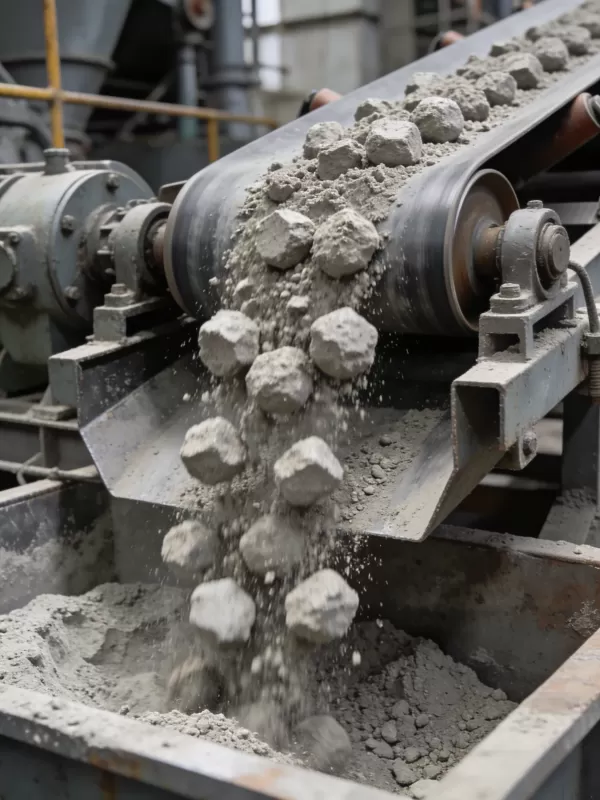
Mineralogical and Chemical Foundations of Calcium Bentonite
The chemical profile of calcium bentonite determines how it performs under heat, shear, and chemical exposure. A standard crystalline sheet consists of an aluminum-magnesium octahedral layer sandwiched between two silicon-oxygen tetrahedral layers (a 2:1 phyllosilicate structure).
Isomorphous substitution within this crystal lattice creates an overall negative charge. In calcium bentonite, divalent calcium ions (Ca2+) and magnesium ions (Mg2+) naturally balance this charge. Because divalent calcium holds two positive charges, it binds structural layers tightly together, preventing water molecules from forcing the layers apart. This mineral structure explains why calcium bentonite exhibits high surface adsorption while maintaining a low swelling volume.
Key Mineral and Physical Specifications
Montmorillonite Content: High-grade industrial lots require a purity level equal to or exceeding 70%. Higher montmorillonite content directly increases overall surface reactivity and processing efficiency.
Cation Exchange Capacity (CEC): Industrial-grade calcium bentonite exhibits a typical CEC range of 60 to 90 meq/100g. Ca2+ represents the dominant exchangeable cation, ensuring superior heavy-metal chelation and polar molecule binding.
Bulk Density: In granulated form, bulk density sits predictably between 800 and 950 kg/m3, allowing efficient storage in standard silos and bulk container bags.
Particle Size Distribution: Depending on the targeted application, standard sizing spans 8-20 mesh (0.85 mm to 2.36 mm) for filtration beds, down to 10-40 mesh or 20-60 mesh for soil dispersion and chemical carrying.
Attrition Resistance and Hardness: High mechanical strength prevents granules from degrading into powder during pneumatic blowing, ship loading, and mechanical conveying.
Adsorptive Affinity: Exhibits high retention capacities for mineral oils, moisture, surfactants, and toxic heavy-metal cations without liquefying or slumping into mud.
Processing: How Raw Clay Becomes Engineered Granular Bentonite
Transforming crude mined clay into durable, dust-free granular bentonite requires precise mechanical and thermal processing. Crude bentonite contains 25% to 35% natural moisture along with quartz and feldspar impurities. Processing plants must dry, refine, and shape the material without degrading its mineral lattice.
1. Mining, Blending, and Primary Crushing
Open-pit mines yield raw clay blocks. Technicians test core samples to map montmorillonite consistency. At the plant, heavy roll crushers reduce foot-sized clay boulders into coarse aggregate under 50 mm. Blending beds ensure chemical homogeneity across large production lots.
2. Chemical Modification and Activation (Optional)
Depending on buyer specifications, processors introduce soda ash (sodium carbonate) during mixing. This controlled semi-activation replaces some calcium ions with sodium ions. The process modifies swelling rates, plastic limits, and green compression strength for specific foundry or civil engineering applications.
3. Extrusion and Granulation
To produce consistent granular bentonite, the clay enters high-pressure extruders or pan granulators. Extrusion presses dense noodles through industrial dies, which revolving blades cut into uniform cylindrical pellets. Alternatively, mechanical granulators tumble moist clay into irregular, rounded shapes favored for rapid liquid absorption.
Jinshi utilizes dedicated granulation lines designed to calibrate internal pore volume while compacting the outer shell to stop premature degradation.
4. Rotary Drying and Calcination
Fresh granules enter direct or indirect rotary industrial dryers. Moisture control is critical here. If moisture falls below 6%, the clay can lose its structural rehydration capacity. If moisture remains above 14%, granules stick together inside transit containers. Industrial dryers maintain free moisture strictly between 8% and 12%.
5. Precision Screening and Multi-Stage De-dusting
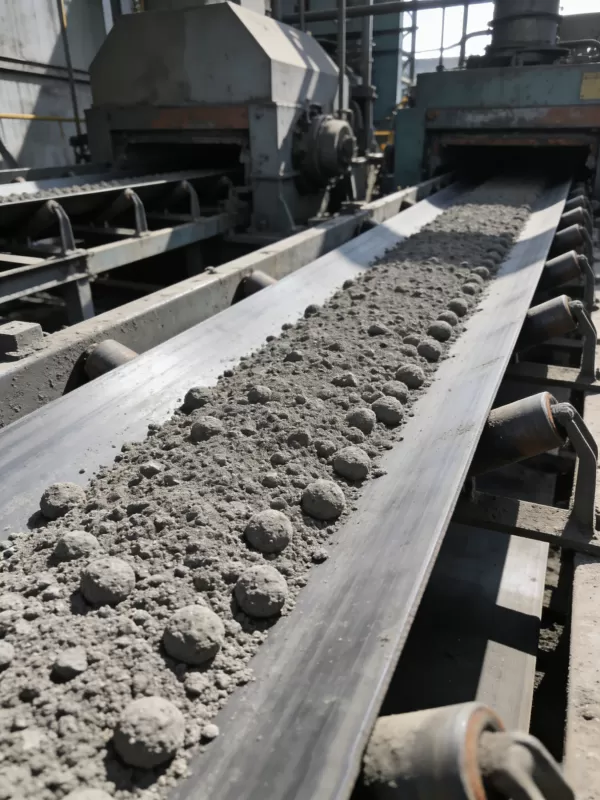
Dried product passes through dynamic multi-deck vibrating screens that separate off-spec fractions. Oversized lumps return to impact mills; undersized fines re-enter the extrusion cycle. High-velocity air separators extract micro-fines. This step ensures that bulk containers deliver clean, durable granules with minimal dust levels.
Industrial Applications of Granular Calcium Bentonite
Soil Remediation and Agricultural Carriers
Modern commercial farming depends on balanced soil moisture and steady nutrient delivery. Powdered bentonite washes away in heavy rains or blows away in wind storms. In contrast, granular bentonite drops cleanly through standard commercial fertilizer spreaders.
Mixed directly into sandy or degraded soils, it integrates into the root zone to build durable soil aggregate structures. Its high CEC captures cationic nutrients—such as ammonium (NH4+), potassium (K+), and magnesium (Mg2+)—preventing fertilizer runoff into surrounding watersheds. Chemical manufacturers also use porous granular particles as carrier substrates for crop pesticides, micro-nutrients, and beneficial microbial inoculants, enabling steady, controlled release.
Industrial Wastewater and Filtration Beds
Environmental remediation contractors avoid using fine powders in continuous wastewater systems because powders cause filter-cake blinding and line blockages. Granular calcium bentonite solves this challenge inside packed-bed adsorption columns.
Contaminated wastewater passes through the granular bed without causing high pressure drops. As water flows through the media, active montmorillonite layers extract heavy metals (lead, cadmium, nickel), emulsified fats, and organic surfactants via ion exchange and chemisorption. The high physical hardness of the granules prevents them from collapsing under continuous liquid pressure.
Metallurgical Pellets and Specialty Foundries
Sodium bentonite remains the standard binder for green sand casting molds. However, specialty foundries blend calcium bentonite granules into their systems to lower shake-out resistance and simplify core removal after casting. In iron ore pelletization, precise additions of calcined granular clay maintain green pellet porosity, reducing thermal fracturing inside blast furnaces.
Commercial Desiccants and High-Performance Absorbents
Calcium bentonite acts as an exceptional industrial desiccant. At relative humidity levels below 40%, it matches or outperforms synthetic silica gels at a lower raw-material cost. Its stable layered crystal structure traps water vapor molecules inside micro-pores without expanding or breaking down. Packagers use these hard, non-bleeding granules to protect export machinery, military hardware, and electronic components from rust and moisture damage.
Comparative Analysis: Material Forms and Chemistry
Selecting the right clay requires matching physical form and chemical behavior to your plant's handling equipment and operating conditions. The comparative tables below highlight the practical trade-offs between chemical variants and physical particle sizes.
Calcium Bentonite vs. Sodium Bentonite (Granular Form)
| Performance Property | Granular Calcium Bentonite | Granular Sodium Bentonite |
|---|---|---|
| Free Swell Volume | Low (typically 2 to 5 mL/2g) | High (typically 20 to 30 mL/2g) |
| Viscosity in Water Slurry | Low viscosity; settles out cleanly | High viscosity; forms thick thixotropic gel |
| Moisture Adsorption Kinetics | Rapid surface uptake; does not surface-seal | Forms a gel barrier that slows interior wetting |
| Thermal Stability Limit | Retains structure up to ~700°C | Loses structural swelling water around 400°C–500°C |
| Primary Target Uses | Filtration beds, soil conditioning, carriers, desiccants | Drilling fluids, civil waterproofing, green sand foundries |
Operational Efficiency: Granular Bentonite vs. Milled Powder
| Operational Parameter | Granular Format (8–40 Mesh) | Milled Powder (200–325 Mesh) |
|---|---|---|
| Airborne Dust Hazards | Minimal; protects plant operator health | Severe; requires baghouses and dust extractors |
| Pneumatic Conveying Reliability | Free-flowing; will not bridge or rat-hole | Prone to wall bridging, caking, and clogging |
| Filtration Flow Rates | Maintains high hydraulic permeability | Blinds filter presses; causes high backpressure |
| Storage and Handling Losses | Under 1% material loss during transport | Can exceed 5% loss from wind, spills, and residue |
Procurement and Supply Chain Checklist for 2026
Securing bulk minerals across overseas borders requires close attention to technical consistency and cargo protection. Sourcing engineers should require suppliers to verify three key logistics benchmarks before signing long-term purchasing agreements:
Moisture-Barrier Bulk Packaging: Ensure your vendor ships in heavy-duty 1,000 kg or 1,200 kg woven polypropylene Jumbo Bags fitted with heat-sealed polyethylene liners. Calcium bentonite is naturally thirsty; shipping without sealed barriers results in water absorption and weakened granules before customs clearance.
Strict Particle Distribution Tolerances: Request dynamic sieve analyses for each lot. A supplier must guarantee that fines (material passing through a 60-mesh screen) make up less than 2% to 3% of your shipments upon port arrival. Low fines verify that granules possess sufficient crush strength.
International Regulatory Compliance: Verify full compliance with international standards, including REACH registration in the EU and RoHS certifications. Mineral testing should show zero free asbestos fibers and heavy metal contamination safely below accepted international environmental thresholds.
Mining operations like Jinshi deliver high chemical uniformity and steady vessel loading schedules, helping industrial buyers protect their manufacturing margins from unexpected supply disruptions.
Frequently Asked Questions
Q1: Can granular calcium bentonite substitute for sodium bentonite in
drilling fluids?
A1: No, not directly. Calcium bentonite lacks the
sodium ions needed to build the thick thixotropic gel networks that suspend
drill cuttings. You can only use it in specialty drilling systems if it
undergoes chemical peptization with sodium carbonate (soda ash) before downhole
circulation.
Q2: What is the optimal storage method for bulk granular bentonite
bags?
A2: Store big bags inside a covered, well-ventilated dry
warehouse on raised pallets. Keep pallets away from uninsulated concrete floors
to prevent condensation wicking. Ensure outer plastic wrap stays intact until
the bags move to production hoppers.
Q3: How does mesh size affect adsorption speeds in industrial
columns?
A3: Finer granules (such as 20-40 mesh) offer greater
exterior surface area per unit volume, speeding up target molecule adsorption.
Coarser cuts (such as 8-16 mesh) provide lower total exterior surface area but
preserve superior liquid throughput and resist clogging in dirty wastewater
lines.
Q4: Why does calcium bentonite resist breaking down in liquid
filtration systems?
A4: Because divalent calcium bonds
montmorillonite layers firmly together, preventing deep water penetration and
structural swelling. The granules remain hard and preserve their shape instead
of softening into an impermeable gel under continuous liquid flow.
Q5: Can processors customize granule hardness for specialized
applications?
A5: Yes. Adjusting mechanical compaction during
extrusion and modifying thermal calcination temperatures produces tailored
hardness profiles. Thermal calcination drives off structural water, permanently
hardening granules for rigorous high-shear industrial use.
Scale Your Bulk Mineral Supply Chain with Jinshi
Sourcing steady, high-grade granular bentonite should never compromise your operational schedule or bottom line. Jinshi supplies industrial-grade calcium and modified bentonite solutions engineered to your exact mesh size, hardness, and adsorption requirements.
Contact our engineering sales team today to request certified Technical Data Sheets (TDS), review Material Safety Data Sheets (MSDS), or order factory-sealed evaluation samples. Let us prepare a competitive FOB or CIF freight quote for your upcoming 2026 production campaigns.